element14 Community
element14 Community
    Register Log In
  • Site
  • Search
  • Log In Register
  • Community Hub
    Community Hub
    • What's New on element14
    • Feedback and Support
    • Benefits of Membership
    • Personal Blogs
    • Members Area
    • Achievement Levels
  • Learn
    Learn
    • Ask an Expert
    • eBooks
    • element14 presents
    • Learning Center
    • Tech Spotlight
    • STEM Academy
    • Webinars, Training and Events
    • Learning Groups
  • Technologies
    Technologies
    • 3D Printing
    • FPGA
    • Industrial Automation
    • Internet of Things
    • Power & Energy
    • Sensors
    • Technology Groups
  • Challenges & Projects
    Challenges & Projects
    • Design Challenges
    • element14 presents Projects
    • Project14
    • Arduino Projects
    • Raspberry Pi Projects
    • Project Groups
  • Products
    Products
    • Arduino
    • Avnet & Tria Boards Community
    • Dev Tools
    • Manufacturers
    • Multicomp Pro
    • Product Groups
    • Raspberry Pi
    • RoadTests & Reviews
  • About Us
    About the element14 Community
  • Store
    Store
    • Visit Your Store
    • Choose another store...
      • Europe
      •  Austria (German)
      •  Belgium (Dutch, French)
      •  Bulgaria (Bulgarian)
      •  Czech Republic (Czech)
      •  Denmark (Danish)
      •  Estonia (Estonian)
      •  Finland (Finnish)
      •  France (French)
      •  Germany (German)
      •  Hungary (Hungarian)
      •  Ireland
      •  Israel
      •  Italy (Italian)
      •  Latvia (Latvian)
      •  
      •  Lithuania (Lithuanian)
      •  Netherlands (Dutch)
      •  Norway (Norwegian)
      •  Poland (Polish)
      •  Portugal (Portuguese)
      •  Romania (Romanian)
      •  Russia (Russian)
      •  Slovakia (Slovak)
      •  Slovenia (Slovenian)
      •  Spain (Spanish)
      •  Sweden (Swedish)
      •  Switzerland(German, French)
      •  Turkey (Turkish)
      •  United Kingdom
      • Asia Pacific
      •  Australia
      •  China
      •  Hong Kong
      •  India
      •  Japan
      •  Korea (Korean)
      •  Malaysia
      •  New Zealand
      •  Philippines
      •  Singapore
      •  Taiwan
      •  Thailand (Thai)
      •  Vietnam
      • Americas
      •  Brazil (Portuguese)
      •  Canada
      •  Mexico (Spanish)
      •  United States
      Can't find the country/region you're looking for? Visit our export site or find a local distributor.
  • Translate
  • Profile
  • Settings
Personal Blogs
  • Community Hub
  • More
Personal Blogs
John Wiltrout's Blog Learning Circuit Inspires  "The Watch Stand"
  • Blog
  • Documents
  • Mentions
  • Sub-Groups
  • Tags
  • More
  • Cancel
  • New
  • Share
  • More
  • Cancel
Group Actions
  • Group RSS
  • More
  • Cancel
Engagement
  • Author Author: jw0752
  • Date Created: 6 Feb 2019 3:41 PM Date Created
  • Views 1106 views
  • Likes 15 likes
  • Comments 10 comments
  • joule_thief
  • watch_stand
  • battery juicer
Related
Recommended

Learning Circuit Inspires  "The Watch Stand"

jw0752
jw0752
6 Feb 2019

Karen's Learning Circuit Presentation:


The Learning Circuit 39: Inductor Project: Battery Juicer


got me to playing around with the Battery Juicer Circuit also called the "Joule Thief". You can check out her blog for a schematic and some suggestions. For her build she made a flashlight but I had other ideas for a good use.


When I finally crash at night I put my watch next to the bed. Unfortunately it is quite dark in the room so if I wake up and want to know what time it is I have to turn on the light on the table next to the bed. This usually wakes me up more than I want to and it also disturbs the boss. When I saw the nice low level light produced by the LED in Karen's experiment it dawned on me that this would be a perfect night light and watch reading light for the bedroom.


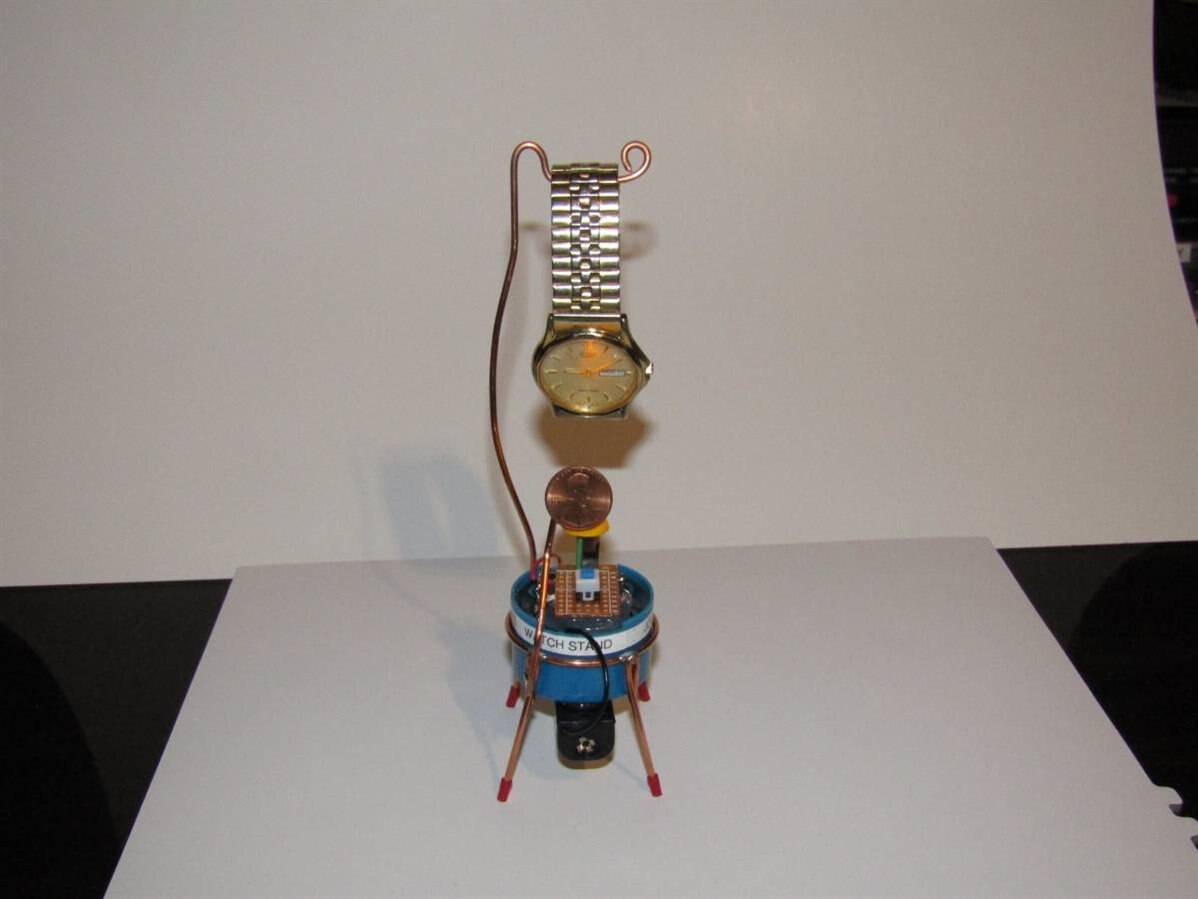
A couple hours and about 3 feet of 12 gauge copper wire later I had "The Watch Stand"


image


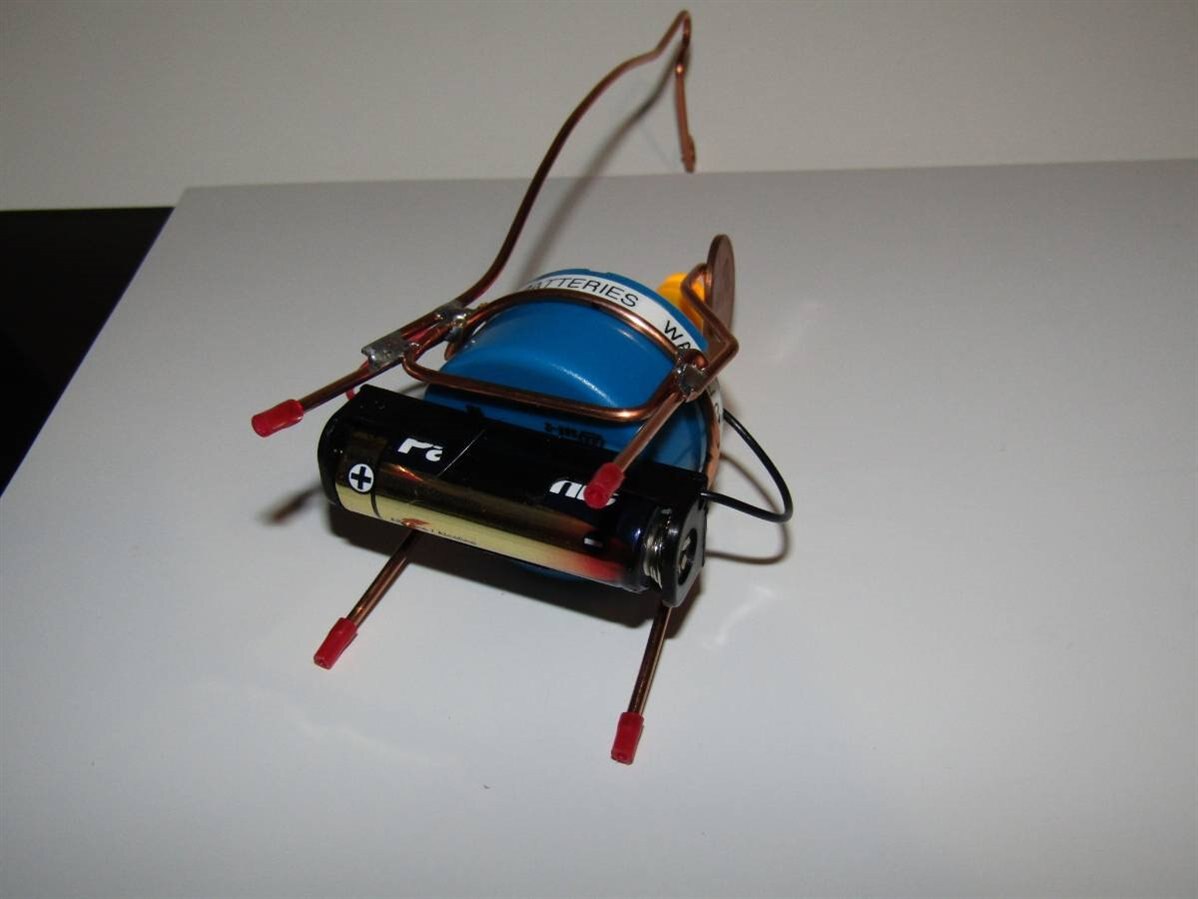
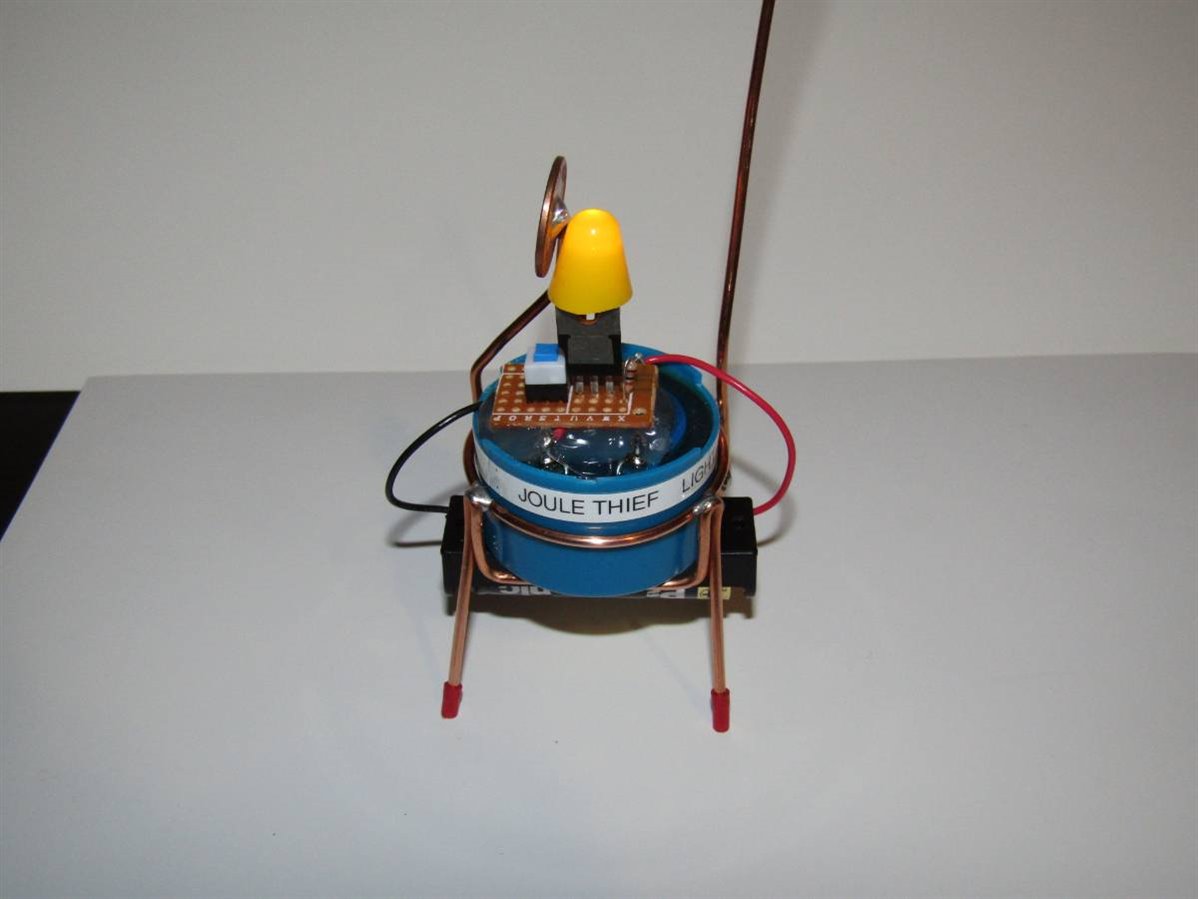
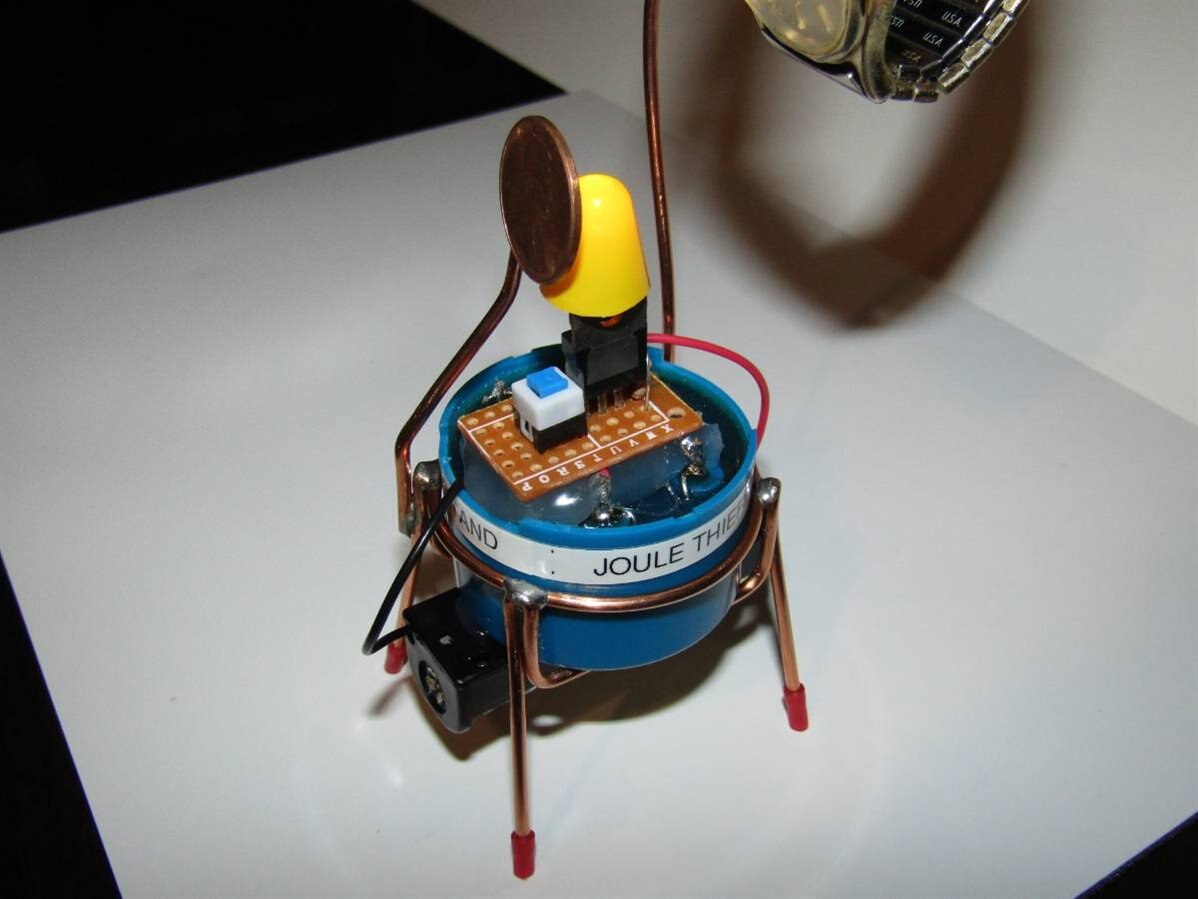
The watch stand runs on dead AA batteries that won't even power a wall clock. The circuit is the same simple circuit demonstrated in the Learning Circuit. I used a common mode inductor from a switching power supply, a salvaged NPN transistor from an old CFL light bulb circuit, a single AA holder, and the other electronic components needed to complete the build. A small push latch switch was also installed so the unit could be turned off when not in use. No sense wasting those stolen joules. It looks a bit strange, perhaps a bit like the Lunar lander, but it fits well with my sense of the aesthetic.


Here are a few more pictures so you can see it from a few different angles:
 

imageimage


imageimage


The yellow light diffuser that I have placed over the LED so that I do not get a sharp reflection off the watch crystal is something that was acquired over 50 years ago and has been patiently waiting in my Bulb Sockets box for a practical use.


Electronics is fun and inspirations are to be found everywhere we look. Thank you to Karen and the element14 Learning Circuit for a fun project.


John

  • Sign in to reply

Top Comments

  • jw0752
    jw0752 over 7 years ago in reply to shabaz +5
    Hi Shabaz, Thanks, I use a combination of vises and clamps. Since it is heavier gauge copper I have a bit of a problem with it self heat sinking so I pre-tin my target area and then come in hot and quick…
  • jw0752
    jw0752 over 7 years ago +5
    Addendum: I have continued to experiment with the Battery Juicer / Joule Thief circuit to learn more about how it is affected by different transistors and different transformers. Obviously the choice of…
  • rachaelp
    rachaelp over 7 years ago +3
    Excellent work John, it looks really cool and very useful to have to see your watch in the night. Definitely a very nice project! Best Regards, Rachael
Parents
  • shabaz
    shabaz over 7 years ago

    Hi John,


    Nice project! How are you holding the shapes together while soldering? You're getting great use out of the round-nose pliers : )

    • Cancel
    • Vote Up +3 Vote Down
    • Sign in to reply
    • More
    • Cancel
Comment
  • shabaz
    shabaz over 7 years ago

    Hi John,


    Nice project! How are you holding the shapes together while soldering? You're getting great use out of the round-nose pliers : )

    • Cancel
    • Vote Up +3 Vote Down
    • Sign in to reply
    • More
    • Cancel
Children
  • jw0752
    jw0752 over 7 years ago in reply to shabaz

    Hi Shabaz,

    Thanks, I use a combination of vises and clamps. Since it is heavier gauge copper I have a bit of a problem with it self heat sinking so I pre-tin my target area and then come in hot and quick. Most of the time perfection isn't necessary as the wire can be adjusted after being soldered to compensate for a slight misalignment.


    John

    • Cancel
    • Vote Up +5 Vote Down
    • Sign in to reply
    • More
    • Cancel
element14 Community

element14 is the first online community specifically for engineers. Connect with your peers and get expert answers to your questions.

  • Members
  • Learn
  • Technologies
  • Challenges & Projects
  • Products
  • Store
  • About Us
  • Feedback & Support
  • FAQs
  • Terms of Use
  • Privacy Policy
  • Legal and Copyright Notices
  • Sitemap
  • Cookies

An Avnet Company © 2026 Premier Farnell Limited. All Rights Reserved.

Premier Farnell Ltd, registered in England and Wales (no 00876412), registered office: Farnell House, Forge Lane, Leeds LS12 2NE.

ICP 备案号 10220084.

Follow element14

  • X
  • Facebook
  • linkedin
  • YouTube