element14 Community
element14 Community
    Register Log In
  • Site
  • Search
  • Log In Register
  • Community Hub
    Community Hub
    • What's New on element14
    • Feedback and Support
    • Benefits of Membership
    • Personal Blogs
    • Members Area
    • Achievement Levels
  • Learn
    Learn
    • Ask an Expert
    • eBooks
    • element14 presents
    • Learning Center
    • Tech Spotlight
    • STEM Academy
    • Webinars, Training and Events
    • Learning Groups
  • Technologies
    Technologies
    • 3D Printing
    • FPGA
    • Industrial Automation
    • Internet of Things
    • Power & Energy
    • Sensors
    • Technology Groups
  • Challenges & Projects
    Challenges & Projects
    • Design Challenges
    • element14 presents Projects
    • Project14
    • Arduino Projects
    • Raspberry Pi Projects
    • Project Groups
  • Products & Partners
    Products & Partners
    • Arduino
    • Avnet & Tria Boards Community
    • Dev Tools
    • Manufacturers
    • Multicomp Pro
    • Product Groups
    • Raspberry Pi
    • RoadTests & Reviews
  • About Us
    About the element14 Community
  • Store
    Store
    • Visit Your Store
    • Choose another store...
      • Europe
      •  Austria (German)
      •  Belgium (Dutch, French)
      •  Bulgaria (Bulgarian)
      •  Czech Republic (Czech)
      •  Denmark (Danish)
      •  Estonia (Estonian)
      •  Finland (Finnish)
      •  France (French)
      •  Germany (German)
      •  Hungary (Hungarian)
      •  Ireland
      •  Israel
      •  Italy (Italian)
      •  Latvia (Latvian)
      •  
      •  Lithuania (Lithuanian)
      •  Netherlands (Dutch)
      •  Norway (Norwegian)
      •  Poland (Polish)
      •  Portugal (Portuguese)
      •  Romania (Romanian)
      •  Russia (Russian)
      •  Slovakia (Slovak)
      •  Slovenia (Slovenian)
      •  Spain (Spanish)
      •  Sweden (Swedish)
      •  Switzerland(German, French)
      •  Turkey (Turkish)
      •  United Kingdom
      • Asia Pacific
      •  Australia
      •  China
      •  Hong Kong
      •  India
      •  Japan
      •  Korea (Korean)
      •  Malaysia
      •  New Zealand
      •  Philippines
      •  Singapore
      •  Taiwan
      •  Thailand (Thai)
      •  Vietnam
      • Americas
      •  Brazil (Portuguese)
      •  Canada
      •  Mexico (Spanish)
      •  United States
      Can't find the country/region you're looking for? Visit our export site or find a local distributor.
  • Translate
  • Profile
  • Settings
Personal Blogs
  • Community Hub
  • More
Personal Blogs
Ralph Yamamoto's Blog Harvesting Mason Bees in Oregon 2026
  • Blog
  • Documents
  • Mentions
  • Sub-Groups
  • Tags
  • More
  • Cancel
  • New
  • Share
  • More
  • Cancel
Group Actions
  • Group RSS
  • More
  • Cancel
Engagement
  • Author Author: ralphjy
  • Date Created: 8 Nov 2026 10:59 PM Date Created
  • Views 44 views
  • Likes 7 likes
  • Comments 4 comments
  • mason bees
  • houdini flies
Related
Recommended

Harvesting Mason Bees in Oregon 2026

ralphjy
ralphjy
8 Nov 2026

In order to advance my efforts in the stewardship of local pollinators, I attended a class on harvesting Mason Bee cocoons yesterday that was led by a local Mason Bee expert.

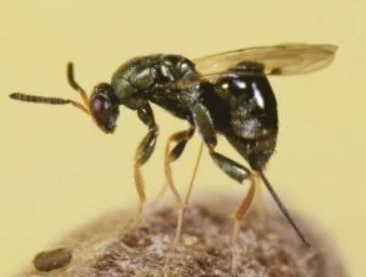
Last year I lost the cocoons from the few nesting tubes that had been filled due to Mono Wasps that penetrated the end mud caps and laid their eggs in the Mason Bee cocoons.  Lesson learned - do not leave the nesting tubes out during the summer unprotected.  The Mono Wasp is much smaller than a Mason Bee and I never noticed them.
image

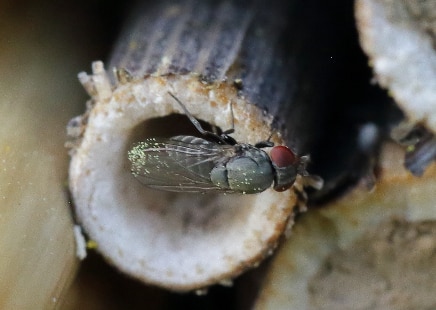
I have been hearing about serious issues in our area with another predator, the Houdini Fly, but I've never experienced them.  The Houdini Fly originated in Europe (also a large problem for Mason Bees in the UK).  In 2011, they were detected in New York and by 2020 there were also found in the Seattle, Washington area north of Oregon where I live.  Here is an interesting video about Houdini Fly research being done in Oregon.  Kind of a jump up is that samples taken in Oregon in 2023 had 1 in 10 Mason Bee larvae affected by the Houdini Fly and in 2025 it was 1 in 3.

The Houdini Fly like the Mono Wasp is much smaller that a Mason Bee.
image

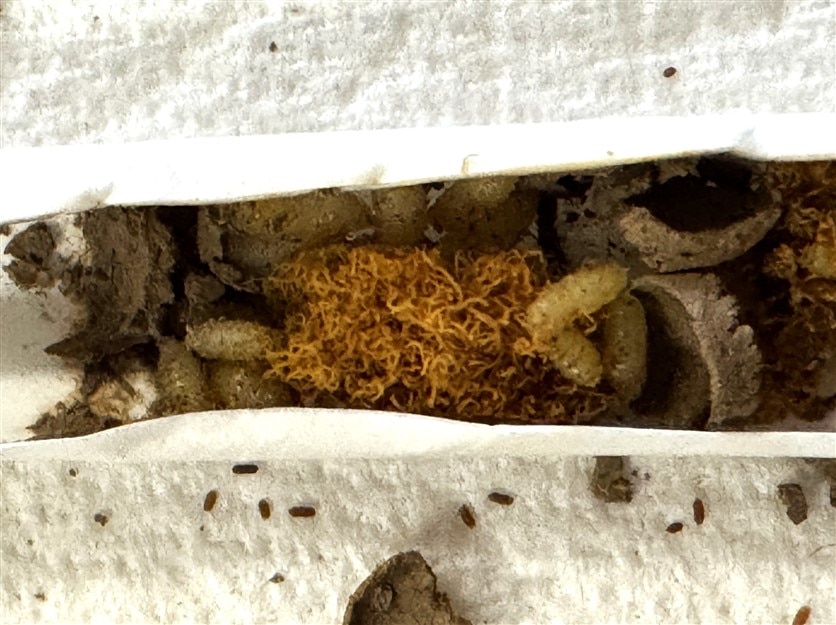
I had never seen these Houdini Fly larvae before, but during this harvesting class - almost every tube that I opened was infested with them.  Interesting thing is that the Houdini Fly eggs are laid in the pollen ball where the Mason Bee also lays its egg.  The pollen ball is the food that the bee larva uses as food when it "hatches".  The fly larvae emerge earlier and in large numbers and consume the pollen ball so that the bee larva basically starves to death.  

Here's a picture of one of the tubes that I opened.
image

When my wife and I harvested the bee cocoons from our backyard bee houses, we didn't find any Houdini Fly larvae - so maybe we have just been lucky.

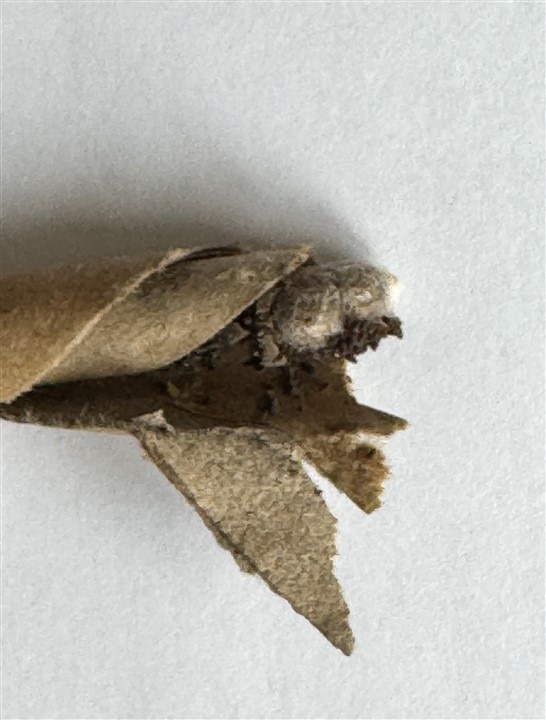
Here is a female cocoon in the back end of a tube (male eggs are deposited in the front and they emerge earlier).
image

We do wash the cocoons in a solution of bleach and soapy water to stop other parasites like pollen mites and chalkbrood.
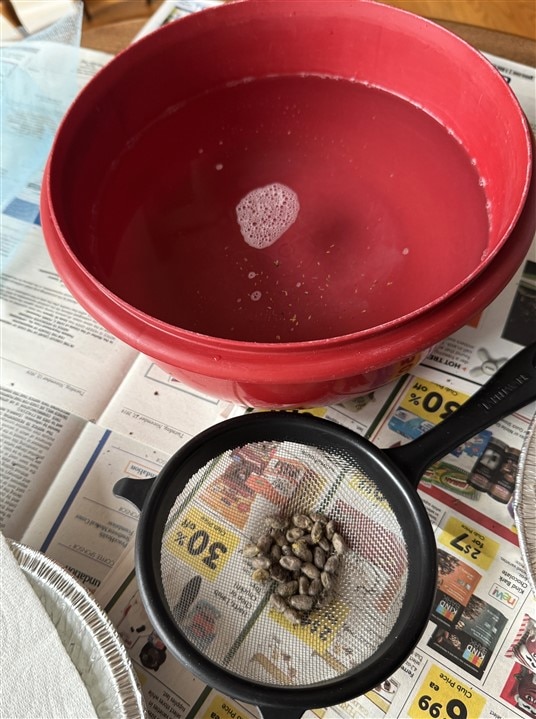
image

Most interesting discovery was that I found an empty cocoon that appeared a bee had been in it, but it was in an intact tube - and no sign of a bee.
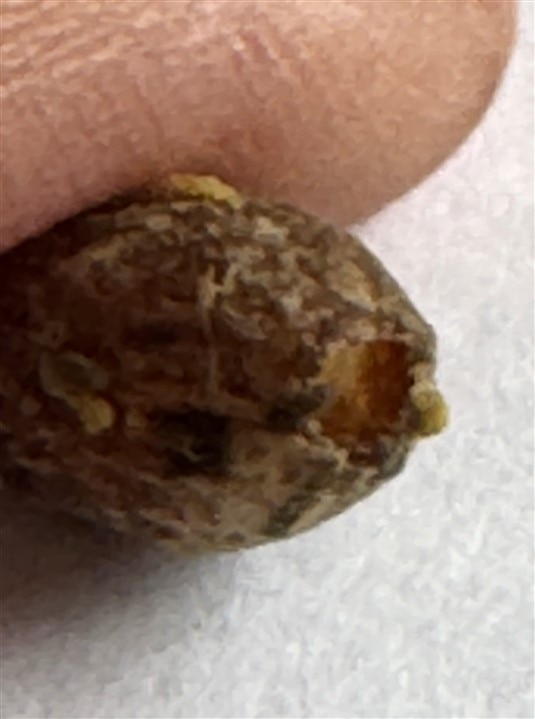
image 

Anyway, I've been thinking about anything I could do proactively to detect these predators next season.  I don't think that I could develop a vision model that could accurately identify these small flies.  I'm definitely going to deploy Malbec traps - the leftover Malbec certainly won't be wasted Joy.

  • Sign in to reply
Parents
  • veluv01
    veluv01 12 hours ago

    Hmm.... Malbec traps are a good monitoring tool (add a drop of dish soap and set them out before nesting starts), but the real protection is bringing filled tubes indoors or into a screened space once nesting ends.

    PS:the larvae are tiny, so give your leftover tubes a second look with a hand lens too.

    • Cancel
    • Vote Up 0 Vote Down
    • Sign in to reply
    • More
    • Cancel
Comment
  • veluv01
    veluv01 12 hours ago

    Hmm.... Malbec traps are a good monitoring tool (add a drop of dish soap and set them out before nesting starts), but the real protection is bringing filled tubes indoors or into a screened space once nesting ends.

    PS:the larvae are tiny, so give your leftover tubes a second look with a hand lens too.

    • Cancel
    • Vote Up 0 Vote Down
    • Sign in to reply
    • More
    • Cancel
Children
  • ralphjy
    ralphjy 9 hours ago in reply to veluv01

    Protecting the tubes after nesting works for the wasps, but the Houdini Fly lays its eggs during the nesting cycle.  I am actually a bit confused as to why I see larvae in the tubes this late - I’ll need to ask.  I also don’t quite understand why there are empty nesting chambers with the end caps intact - I thought maybe the egg wasn’t viable, but there isn’t even a pollen ball.

    • Cancel
    • Vote Up 0 Vote Down
    • Sign in to reply
    • More
    • Cancel
element14 Community

element14 is the first online community specifically for engineers. Connect with your peers and get expert answers to your questions.

  • Members
  • Learn
  • Technologies
  • Challenges & Projects
  • Products
  • Store
  • About Us
  • Feedback & Support
  • FAQs
  • Terms of Use
  • Privacy Policy
  • Legal and Copyright Notices
  • Sitemap
  • Cookies

An Avnet Company © 2026 Premier Farnell Limited. All Rights Reserved.

Premier Farnell Ltd, registered in England and Wales (no 00876412), registered office: Farnell House, Forge Lane, Leeds LS12 2NE.

Follow element14

  • X
  • Facebook
  • linkedin
  • YouTube