


In order to advance my efforts in the stewardship of local pollinators, I attended a class on harvesting Mason Bee cocoons yesterday that was led by a local Mason Bee expert.
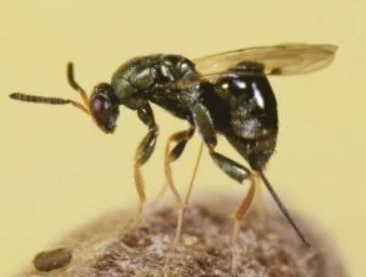
Last year I lost the cocoons from the few nesting tubes that had been filled due to Mono Wasps that penetrated the end mud caps and laid their eggs in the Mason Bee cocoons. Lesson learned - do not leave the nesting tubes out during the summer unprotected. The Mono Wasp is much smaller than a Mason Bee and I never noticed them.
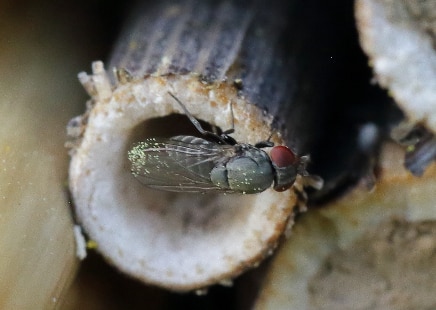
I have been hearing about serious issues in our area with another predator, the Houdini Fly, but I've never experienced them. The Houdini Fly originated in Europe (also a large problem for Mason Bees in the UK). In 2011, they were detected in New York and by 2020 there were also found in the Seattle, Washington area north of Oregon where I live. Here is an interesting video about Houdini Fly research being done in Oregon. Kind of a jump up is that samples taken in Oregon in 2023 had 1 in 10 Mason Bee larvae affected by the Houdini Fly and in 2025 it was 1 in 3.
The Houdini Fly like the Mono Wasp is much smaller that a Mason Bee.
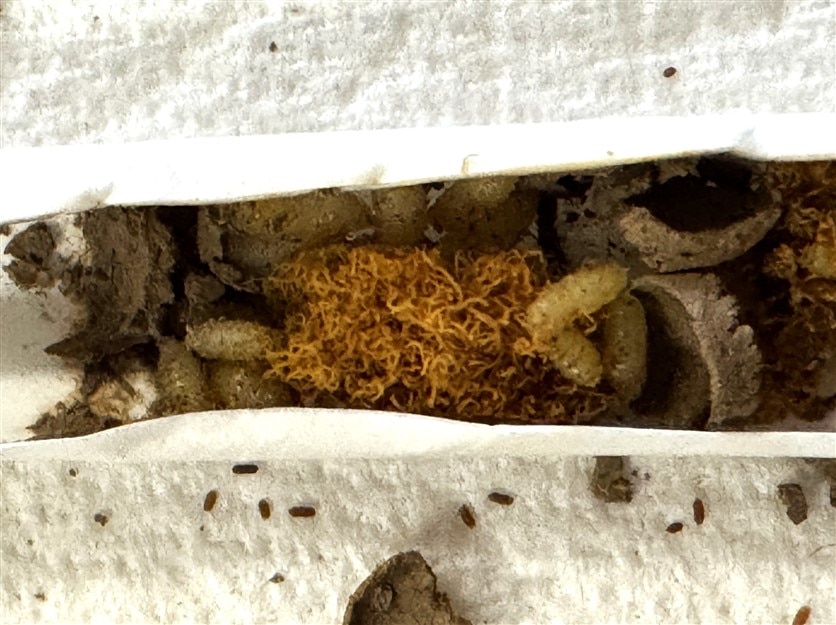
I had never seen these Houdini Fly larvae before, but during this harvesting class - almost every tube that I opened was infested with them. Interesting thing is that the Houdini Fly eggs are laid in the pollen ball where the Mason Bee also lays its egg. The pollen ball is the food that the bee larva uses as food when it "hatches". The fly larvae emerge earlier and in large numbers and consume the pollen ball so that the bee larva basically starves to death.
Here's a picture of one of the tubes that I opened.
When my wife and I harvested the bee cocoons from our backyard bee houses, we didn't find any Houdini Fly larvae - so maybe we have just been lucky.
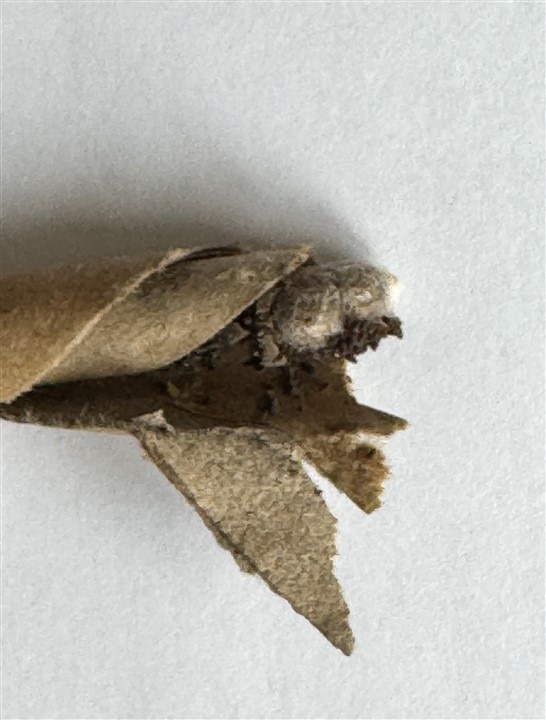
Here is a female cocoon in the back end of a tube (male eggs are deposited in the front and they emerge earlier).
We do wash the cocoons in a solution of bleach and soapy water to stop other parasites like pollen mites and chalkbrood.
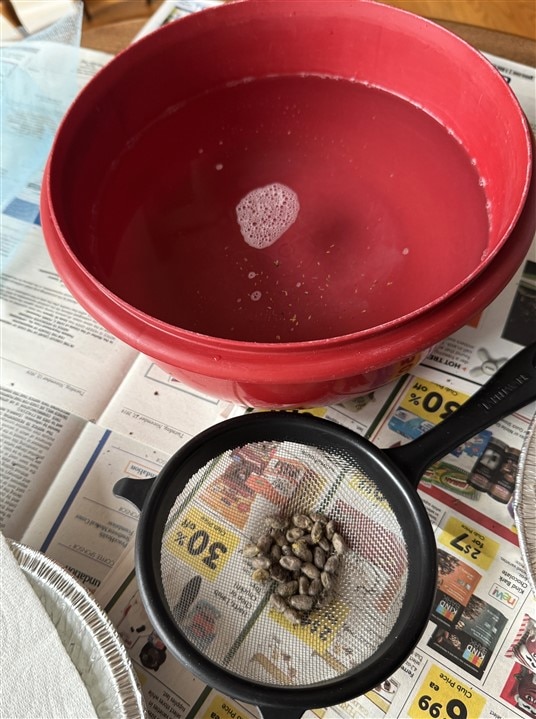
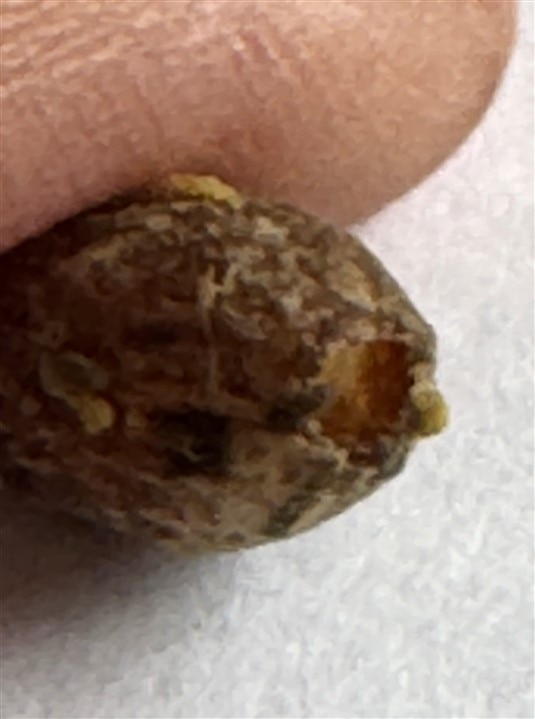
Most interesting discovery was that I found an empty cocoon that appeared a bee had been in it, but it was in an intact tube - and no sign of a bee.
Anyway, I've been thinking about anything I could do proactively to detect these predators next season. I don't think that I could develop a vision model that could accurately identify these small flies. I'm definitely going to deploy Malbec traps - the leftover Malbec certainly won't be wasted  .
-

veluv01
-
Cancel
-
Vote Up
0
Vote Down
-
-
Sign in to reply
-
More
-
Cancel
-

ralphjy
in reply to veluv01
-
Cancel
-
Vote Up
0
Vote Down
-
-
Sign in to reply
-
More
-
Cancel
Comment-

ralphjy
in reply to veluv01
-
Cancel
-
Vote Up
0
Vote Down
-
-
Sign in to reply
-
More
-
Cancel
Children