

 architecture.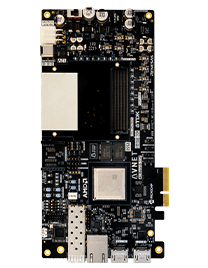
Technical Specification
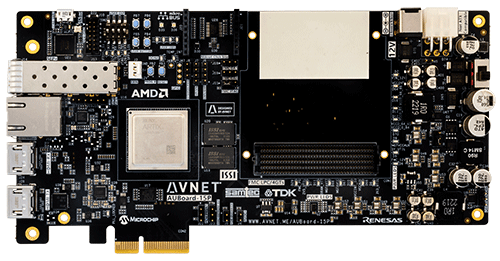
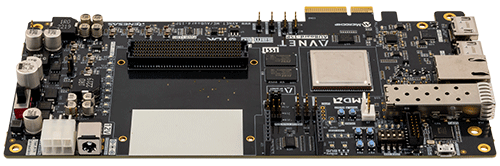
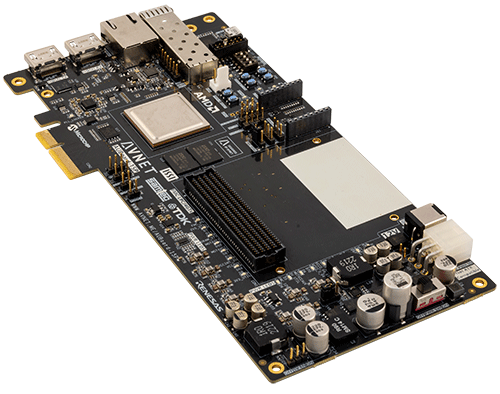
The feature rich AU15P device features 170K programmable logic cells and 12 GTH multi-gigabit transceivers as well as 576 DSP slices and 7.6 Mb of on-chip RAM. The board also features 2GB of ISSI DDR4 and non-volatile configuration and boot from the 512Mb of ISSI QSPI Flash. A Microchip PHY enables the 10/100 Ethernet interface. A microUSB port provides on-board JTAG/UART access. A Renesas clock generator and ECS crystal oscillators provide clocking to the AU15P device, GTH transceivers, JTAG, and communication interfaces. All 12 GTH transceivers are brought out to SFP+ 10 GbE Ethernet (1), HDMI 2.0 Rx & Tx (3), and PCIe end point (4) interfaces and FMC (4) I/O expansion. A combination of slide switches, push buttons, and LEDs (red and RGB) allow user interaction with the board. A temperature sensor from STMicroelectronics adds environmental data to the system. Additionally, 80 FPGA I/Os are exposed through the Samtec connectors for FMC LPC high-speed expansion and one Click Board site. The board is powered from a 60W power supply and Renesas and TDK power devices. With a Vivado-enabled board definition file and PetaLinux BSP, you will be up and running in no time! Whether you want to explore bare metal, RTOS, or Linux software, the AUBoard 15P will give you a solid base foundation to experiment. Product Brief (Datasheet)
Click on the images to enlarge



Applications
- Embedded vision
- Embedded processing
- Wired communications
- Prototyping & experimentation
- Industrial networking
Kit Includes
- AUBoard 15P
- Quick start card
- Power supply
- PCIe power cable dongle
- PetaLinux BSP and reference designs


Top Comments