element14 Community
element14 Community
    Register Log In
  • Site
  • Search
  • Log In Register
  • Community Hub
    Community Hub
    • What's New on element14
    • Feedback and Support
    • Benefits of Membership
    • Personal Blogs
    • Members Area
    • Achievement Levels
  • Learn
    Learn
    • Ask an Expert
    • eBooks
    • element14 presents
    • Learning Center
    • Tech Spotlight
    • STEM Academy
    • Webinars, Training and Events
    • Learning Groups
  • Technologies
    Technologies
    • 3D Printing
    • FPGA
    • Industrial Automation
    • Internet of Things
    • Power & Energy
    • Sensors
    • Technology Groups
  • Challenges & Projects
    Challenges & Projects
    • Design Challenges
    • element14 presents Projects
    • Project14
    • Arduino Projects
    • Raspberry Pi Projects
    • Project Groups
  • Products
    Products
    • Arduino
    • Avnet & Tria Boards Community
    • Dev Tools
    • Manufacturers
    • Multicomp Pro
    • Product Groups
    • Raspberry Pi
    • RoadTests & Reviews
  • About Us
    About the element14 Community
  • Store
    Store
    • Visit Your Store
    • Choose another store...
      • Europe
      •  Austria (German)
      •  Belgium (Dutch, French)
      •  Bulgaria (Bulgarian)
      •  Czech Republic (Czech)
      •  Denmark (Danish)
      •  Estonia (Estonian)
      •  Finland (Finnish)
      •  France (French)
      •  Germany (German)
      •  Hungary (Hungarian)
      •  Ireland
      •  Israel
      •  Italy (Italian)
      •  Latvia (Latvian)
      •  
      •  Lithuania (Lithuanian)
      •  Netherlands (Dutch)
      •  Norway (Norwegian)
      •  Poland (Polish)
      •  Portugal (Portuguese)
      •  Romania (Romanian)
      •  Russia (Russian)
      •  Slovakia (Slovak)
      •  Slovenia (Slovenian)
      •  Spain (Spanish)
      •  Sweden (Swedish)
      •  Switzerland(German, French)
      •  Turkey (Turkish)
      •  United Kingdom
      • Asia Pacific
      •  Australia
      •  China
      •  Hong Kong
      •  India
      •  Japan
      •  Korea (Korean)
      •  Malaysia
      •  New Zealand
      •  Philippines
      •  Singapore
      •  Taiwan
      •  Thailand (Thai)
      •  Vietnam
      • Americas
      •  Brazil (Portuguese)
      •  Canada
      •  Mexico (Spanish)
      •  United States
      Can't find the country/region you're looking for? Visit our export site or find a local distributor.
  • Translate
  • Profile
  • Settings
ams OSRAM
  • Products
  • Manufacturers
  • ams OSRAM
  • More
  • Cancel
ams OSRAM
Blog From distance to depth: The evolution of time-of-flight sensing
  • Blog
  • Forum
  • Documents
  • Events
  • Polls
  • Files
  • Members
  • Mentions
  • Sub-Groups
  • Tags
  • More
  • Cancel
  • New
Join ams OSRAM to participate - click to join for free!
  • Share
  • More
  • Cancel
Group Actions
  • Group RSS
  • More
  • Cancel
Engagement
  • Author Author: CorinnaR.
  • Date Created: 23 Sep 2026 9:26 AM Date Created
  • Views 23 views
  • Likes 2 likes
  • Comments 0 comments
  • dToF
  • direct time-of-flight
  • ams osram
  • sensor
Related
Recommended

From distance to depth: The evolution of time-of-flight sensing

CorinnaR.
CorinnaR.
23 Sep 2026

From distance to depth: The evolution of time-of-flight sensing

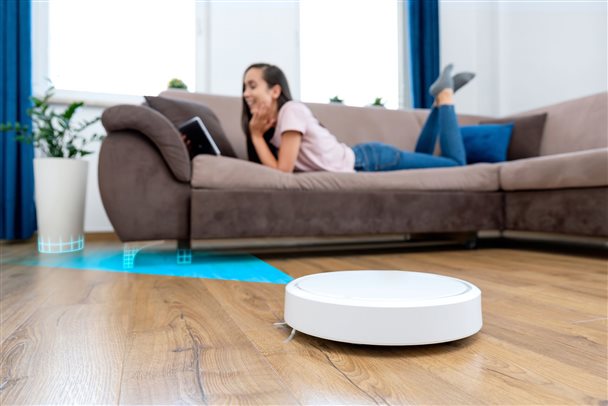
Many embedded systems only need to know whether an object is present. Increasingly, however, applications such as robotics, smart lighting, home appliances, smartphones, wearables, building automation, and industrial equipment require a deeper understanding of their surroundings. Instead of a simple yes-or-no detection, engineers are looking for information about distance, object position, and scene geometry.

Direct Time-of-Flight (dToF) sensing addresses this challenge by measuring the time it takes for a pulse of light to travel to an object and back to the sensor. By measuring this round-trip travel time with extremely high precision, dToF systems can calculate distances accurately and provide spatial information about the environment.
 image

From single-point ranging to depth maps

Historically, dToF sensing has been used in applications where a single distance measurement is sufficient. Examples include smartphone camera autofocus, presence detection, and object ranging. By providing accurate distance information independent of object texture or contrast, dToF can help camera systems achieve fast and reliable autofocus, including in challenging lighting conditions.

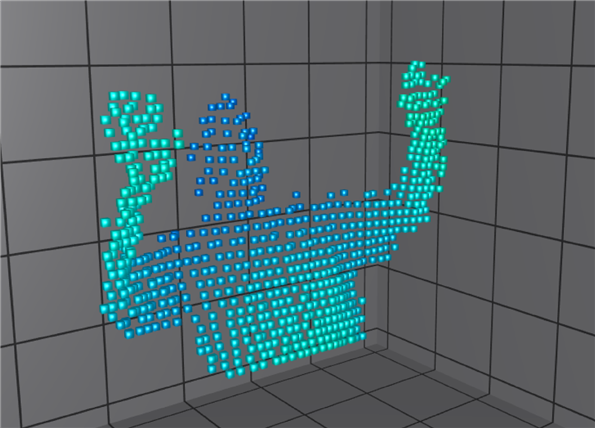
Advances in SPAD (Single-Photon Avalanche Diode) technology and timing electronics are now extending dToF beyond single-point measurements. Modern multi-zone dToF systems divide the field of view into multiple measurement zones, allowing distance information to be captured across a scene simultaneously.

Rather than reporting a single distance value, these systems can generate simplified depth maps that provide spatial awareness.

Applications range from obstacle avoidance in robotics and object tracking in industrial systems to occupancy sensing in smart buildings, gesture recognition in consumer devices, and adaptive smart lighting that reacts to the location and movement of people within a room.
 image

Measuring distance in real-world conditions

Accurate optical ranging becomes more challenging outside the lab. Ambient sunlight, highly reflective or dark surfaces, multiple objects within the field of view, and contamination on the optical window can all affect measurement quality.

To address these challenges, modern dToF architectures combine SPAD-based photon detection with signal-processing techniques that analyze the temporal distribution of returning photons. Histogram-based processing can help distinguish multiple reflections and extract meaningful depth information even in complex environments.

As dToF technology continues to evolve, it is increasingly bridging the gap between simple proximity sensors and vision-based systems. Multi-zone depth sensing enables embedded devices to better understand their surroundings while avoiding the complexity of a full camera-based imaging solution.

 image

Learn more:

Book Direct time-of-flight technology overview
Explore the technology: Direct Time-of-Flight Sensors

Movie camera On-demand webinar: Single-zone direct time-of-flight sensors (dToF)
Watch the webinar: Direct time-of-flight sensors | ams OSRAM

Page facing up White paper on dToF sensing
Access the white paper: Time-of-Flight White Paper


 Text created with AI support.

  • Sign in to reply
element14 Community

element14 is the first online community specifically for engineers. Connect with your peers and get expert answers to your questions.

  • Members
  • Learn
  • Technologies
  • Challenges & Projects
  • Products
  • Store
  • About Us
  • Feedback & Support
  • FAQs
  • Terms of Use
  • Privacy Policy
  • Legal and Copyright Notices
  • Sitemap
  • Cookies

An Avnet Company © 2026 Premier Farnell Limited. All Rights Reserved.

Premier Farnell Ltd, registered in England and Wales (no 00876412), registered office: Farnell House, Forge Lane, Leeds LS12 2NE.

Follow element14

  • X
  • Facebook
  • linkedin
  • YouTube