



element14 Community
element14 Community
    Register Log In
  • Site
  • Search
  • Log In Register
  • Community Hub
    Community Hub
    • What's New on element14
    • Feedback and Support
    • Benefits of Membership
    • Personal Blogs
    • Members Area
    • Achievement Levels
  • Learn
    Learn
    • Ask an Expert
    • eBooks
    • element14 presents
    • Learning Center
    • Tech Spotlight
    • STEM Academy
    • Webinars, Training and Events
    • Learning Groups
  • Technologies
    Technologies
    • 3D Printing
    • FPGA
    • Industrial Automation
    • Internet of Things
    • Power & Energy
    • Sensors
    • Technology Groups
  • Challenges & Projects
    Challenges & Projects
    • Design Challenges
    • element14 presents Projects
    • Project14
    • Arduino Projects
    • Raspberry Pi Projects
    • Project Groups
  • Products
    Products
    • Arduino
    • Avnet & Tria Boards Community
    • Dev Tools
    • Manufacturers
    • Multicomp Pro
    • Product Groups
    • Raspberry Pi
    • RoadTests & Reviews
  • About Us
  • Store
    Store
    • Visit Your Store
    • Choose another store...
      • Europe
      •  Austria (German)
      •  Belgium (Dutch, French)
      •  Bulgaria (Bulgarian)
      •  Czech Republic (Czech)
      •  Denmark (Danish)
      •  Estonia (Estonian)
      •  Finland (Finnish)
      •  France (French)
      •  Germany (German)
      •  Hungary (Hungarian)
      •  Ireland
      •  Israel
      •  Italy (Italian)
      •  Latvia (Latvian)
      •  
      •  Lithuania (Lithuanian)
      •  Netherlands (Dutch)
      •  Norway (Norwegian)
      •  Poland (Polish)
      •  Portugal (Portuguese)
      •  Romania (Romanian)
      •  Russia (Russian)
      •  Slovakia (Slovak)
      •  Slovenia (Slovenian)
      •  Spain (Spanish)
      •  Sweden (Swedish)
      •  Switzerland(German, French)
      •  Turkey (Turkish)
      •  United Kingdom
      • Asia Pacific
      •  Australia
      •  China
      •  Hong Kong
      •  India
      • Japan
      •  Korea (Korean)
      •  Malaysia
      •  New Zealand
      •  Philippines
      •  Singapore
      •  Taiwan
      •  Thailand (Thai)
      • Vietnam
      • Americas
      •  Brazil (Portuguese)
      •  Canada
      •  Mexico (Spanish)
      •  United States
      Can't find the country/region you're looking for? Visit our export site or find a local distributor.
  • Translate
  • Profile
  • Settings
Raspberry Pi
  • Products
  • More
Raspberry Pi
Blog Heatwave no problem for BitScope Blade and Raspberry Pi !
  • Blog
  • Forum
  • Documents
  • Quiz
  • Events
  • Polls
  • Files
  • Members
  • Mentions
  • Sub-Groups
  • Tags
  • More
  • Cancel
  • New
Join Raspberry Pi to participate - click to join for free!
Featured Articles
Announcing Pi
Technical Specifications
Raspberry Pi FAQs
Win a Pi
GPIO Pinout
Raspberry Pi Wishlist
Comparison Chart
Quiz
  • Share
  • More
  • Cancel
Group Actions
  • Group RSS
  • More
  • Cancel
Engagement
  • Author Author: bitscope
  • Date Created: 10 Feb 2017 12:58 PM Date Created
  • Views 1430 views
  • Likes 1 like
  • Comments 5 comments
Related
Recommended
  • bitscope blade
  • raspberry pi
  • bitscope
  • server

Heatwave no problem for BitScope Blade and Raspberry Pi !

bitscope
bitscope
10 Feb 2017

Not even a near record breaking heatwave can stop BitScope Blade hosted Raspberry Pi servers as we discovered by accident when our trusty old Dells came to an ignominious end but the 32 BitScope Blade Raspberry Pi in the same overheating room survived without skipping a beat!


We had an unexpected demonstration of just how robust Raspberry Pi is as a compute platform this week. If you live downunder where our R&D headquarters are, you will know it's been very hot for quite a while. It just seems like it will never end.

image

Recently the mercury topped 40℃ (or about 104℉ for our North American friends) here in Sydney. We know it's hard to imagine from the Northern hemisphere right now but if the airconditioning fails it's quite intolerable, and not just for humans.


Unfortunately, that's just what happened over the weekend just past in our lab and inside it got very hot.


File Server Meltdown


We run a range of computers and some them are servers that run 24x7. Or they're supposed to! Two of them are Dell PowerEdge Blade Servers which have been with us for quite a few years, as you can see.

image

One of them is our office file server and the other is our R&D file server. Both of them are quite important to us.


Unfortunately, the airconditioning failure was just a little bit too much and the R&D server overheated and failed, taking all the data with it, despite our efforts at recovery. The other one also died but (fortunately for us) we managed to relocate the hard disk to another computer and recover the data. Now before you laugh at us for not backing up, we do, and we were able to recover most of the data that would have been lost, but the stuff we'd been working on most recently was, unfortunately, lost.


Raspberry Pi Servers


Meanwhile, on the wall opposite, and in the same overheating conditions, was the pair of Raspberry Pi 2 we threw together up as our redundant office DNS/DHCP server. This little server had been running for 6 months when we wrote about them just after the Raspberry Pi 3 launch last year.

image

They have been running flawlessly since then with no more than a few reboots to upgrade them the entire time. At the time, we added the small hard disk drive with the intention of migrating our file server across to them too, but we never got around to it. Such a shame!


BitScope Blade Duo and Raspberry Pi.


We run about 32 Raspberry Pi in Blade Racks and wall mounted Blade Servers 24x7 in the same office.


Not one of them failed !


We should have moved our office and R&D file servers across already.


We're going to now!


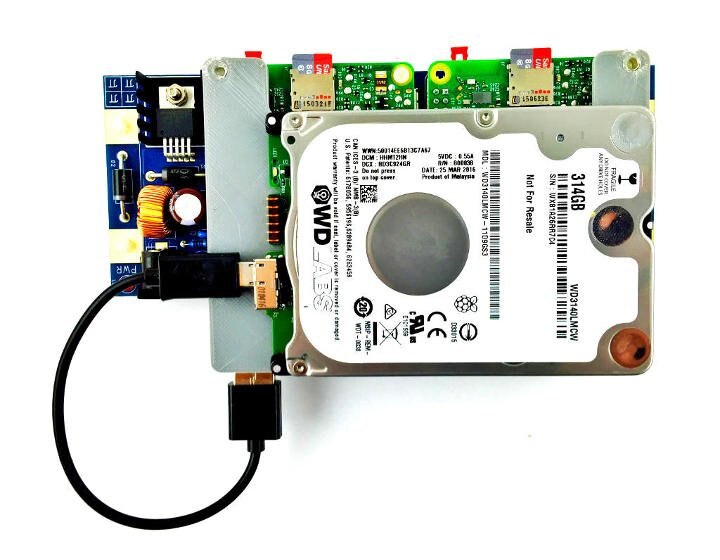
As we wrote a few days ago, we reckon Blade DuoBlade Duo and pair of Raspberry Pi and WDLabs' PiDrive is perfect combination for replacing our old servers.
image

We'll write up what we've done when it's all up and running. There's nothing like a little dogfooding to prove a product idea. In fact, we have a quite a few applications in development together with the software to implement them. We'll post details soon and we'll add our new file server to the list. The fact that we've run our office DNS and DHCP and more recently a pair of WiFi AP from one Blade Duo and pair of Raspberry Pi 3 without a single hitch is testament to the reliability of Raspberry Pi when powered by BitScope Blade. They consume a fraction of the power of x86 based servers, are very low cost, and if last weekend proves anything, they don't need airconditioning or special cooling set ups to work reliably.


Post reprinted with permission from the BitScope Blog.

  • Sign in to reply
  • bitscope
    bitscope over 8 years ago in reply to clem57

    Thanks DAB, Clem, unfortunately we did not capture the peak temperatures in the lab when this happened - it was over the weekend when office was shut but we have found the worst that seems to happen in extreme conditions (with Pi3 at least) as that they slow down. Eben's been pretty adamantArrow upper right about overheating not being a problem but we did (inadvertently) subject them to rather harsh conditions and it's an open question as to whether they might ultimately break in exceptionally hot conditions. All the Blade hosted Pi3s are wall mounted with heatsinks attached (more on this in a future post) or vertically mounted in Blade Racks with convection cooling.

    • Cancel
    • Vote Up 0 Vote Down
    • Sign in to reply
    • More
    • Cancel
  • bitscope
    bitscope over 8 years ago in reply to michaelkellett

    Thanks Michael, you are right, we were a little remiss with our "Dell dusting" image You are right again in that we can say nothing empirical about the survival chances on the basis of this event along (except that none of the 32 Blade hosted Raspberry Pi were affected in this particular case).

    Anecdotally, we have been running several Blade servers for more than a year for DNS/DHCP and WiFi AP without a single failure but we would like to explore this issue more via some case studies at some point.

    Our goal here is to DIY our own NAS solution with Blade and Raspberry Pi because off-the-shell NAS solutions are not a good fit in many cases. We run Macs, Windows machines and Linux (including Raspberry Pi of course) and run a variety of server side software applications on Blades. We'd like a solution that does more than just NAS, a solution which can be replicated itself across multiple Blade systems so we can have hot-swap backups of the backup system.

    We'll have more on these topics soon. In the interim, here are two relatively recent articles on the subject of Raspberry Pi NAS systems:

    • How to build your own Raspberry Pi NAS
    • Create a hardened Raspberry Pi NAS

    Thanks very much for your feedback!

    • Cancel
    • Vote Up 0 Vote Down
    • Sign in to reply
    • More
    • Cancel
  • clem57
    clem57 over 8 years ago in reply to DAB

    I was not so surprised since they are supposed to run without cooling, but we know they perform faster with cooling heat sink/ fans especially within a case as shabaz and others have proven. My guess they started to slow down as the temps got higher.

    Clem

    • Cancel
    • Vote Up 0 Vote Down
    • Sign in to reply
    • More
    • Cancel
  • DAB
    DAB over 8 years ago

    I was a little concerned with the Blade boards, but you have the right setup with the RPi boards open to the air for cooling.


    Did you happen to capture any CPU temperature data during the time they were exposed to the warm air conditions?


    I find it encouraging that the RPI boards continued to function under the extreme temperatures.


    DAB

    • Cancel
    • Vote Up 0 Vote Down
    • Sign in to reply
    • More
    • Cancel
  • michaelkellett
    michaelkellett over 8 years ago

    Sorry about your problems ........ but:


    If those servers are as mucky inside as they are outside I'm not surprised the poor things died.


    Buy a (decent) NAS box and some backup software - and make sure you run it with hard disk redundancy.


    It doesn't make sense to run your backup on anything other than a well proven system - if it's not your real business (to make backup systems) you'll never get round to testing it properly.


    And one more thing while I'm handing out good advice image - don't count on how good stuff is over temperature until you've tested it in a statistically significant way (or seen the data from the supplier).


    MK

    • Cancel
    • Vote Up 0 Vote Down
    • Sign in to reply
    • More
    • Cancel
element14 Community

element14 is the first online community specifically for engineers. Connect with your peers and get expert answers to your questions.

  • Members
  • Learn
  • Technologies
  • Challenges & Projects
  • Products
  • Store
  • About Us
  • Feedback & Support
  • FAQs
  • Terms of Use
  • Privacy Policy
  • Legal and Copyright Notices
  • Sitemap
  • Cookies

An Avnet Company © 2025 Premier Farnell Limited. All Rights Reserved.

Premier Farnell Ltd, registered in England and Wales (no 00876412), registered office: Farnell House, Forge Lane, Leeds LS12 2NE.

ICP 备案号 10220084.

Follow element14

  • X
  • Facebook
  • linkedin
  • YouTube