



element14 Community
element14 Community
    Register Log In
  • Site
  • Search
  • Log In Register
  • Community Hub
    Community Hub
    • What's New on element14
    • Feedback and Support
    • Benefits of Membership
    • Personal Blogs
    • Members Area
    • Achievement Levels
  • Learn
    Learn
    • Ask an Expert
    • eBooks
    • element14 presents
    • Learning Center
    • Tech Spotlight
    • STEM Academy
    • Webinars, Training and Events
    • Learning Groups
  • Technologies
    Technologies
    • 3D Printing
    • FPGA
    • Industrial Automation
    • Internet of Things
    • Power & Energy
    • Sensors
    • Technology Groups
  • Challenges & Projects
    Challenges & Projects
    • Design Challenges
    • element14 presents Projects
    • Project14
    • Arduino Projects
    • Raspberry Pi Projects
    • Project Groups
  • Products
    Products
    • Arduino
    • Avnet & Tria Boards Community
    • Dev Tools
    • Manufacturers
    • Multicomp Pro
    • Product Groups
    • Raspberry Pi
    • RoadTests & Reviews
  • About Us
    About the element14 Community
  • Store
    Store
    • Visit Your Store
    • Choose another store...
      • Europe
      •  Austria (German)
      •  Belgium (Dutch, French)
      •  Bulgaria (Bulgarian)
      •  Czech Republic (Czech)
      •  Denmark (Danish)
      •  Estonia (Estonian)
      •  Finland (Finnish)
      •  France (French)
      •  Germany (German)
      •  Hungary (Hungarian)
      •  Ireland
      •  Israel
      •  Italy (Italian)
      •  Latvia (Latvian)
      •  
      •  Lithuania (Lithuanian)
      •  Netherlands (Dutch)
      •  Norway (Norwegian)
      •  Poland (Polish)
      •  Portugal (Portuguese)
      •  Romania (Romanian)
      •  Russia (Russian)
      •  Slovakia (Slovak)
      •  Slovenia (Slovenian)
      •  Spain (Spanish)
      •  Sweden (Swedish)
      •  Switzerland(German, French)
      •  Turkey (Turkish)
      •  United Kingdom
      • Asia Pacific
      •  Australia
      •  China
      •  Hong Kong
      •  India
      •  Japan
      •  Korea (Korean)
      •  Malaysia
      •  New Zealand
      •  Philippines
      •  Singapore
      •  Taiwan
      •  Thailand (Thai)
      •  Vietnam
      • Americas
      •  Brazil (Portuguese)
      •  Canada
      •  Mexico (Spanish)
      •  United States
      Can't find the country/region you're looking for? Visit our export site or find a local distributor.
  • Translate
  • Profile
  • Settings
Raspberry Pi
  • Products
  • More
Raspberry Pi
Blog Mains power control
  • Blog
  • Forum
  • Documents
  • Quiz
  • Events
  • Polls
  • Files
  • Members
  • Mentions
  • Sub-Groups
  • Tags
  • More
  • Cancel
  • New
Join Raspberry Pi to participate - click to join for free!
Featured Articles
Announcing Pi
Technical Specifications
Raspberry Pi FAQs
Win a Pi
GPIO Pinout
Raspberry Pi Wishlist
Comparison Chart
Quiz
  • Share
  • More
  • Cancel
Group Actions
  • Group RSS
  • More
  • Cancel
Engagement
  • Author Author: shabaz
  • Date Created: 13 Jul 2014 2:30 PM Date Created
  • Views 4087 views
  • Likes 4 likes
  • Comments 17 comments
Related
Recommended
  • mains
  • compliance
  • regulations
  • safety

Mains power control

shabaz
shabaz
13 Jul 2014

(This post was prompted by seeing a recent kickstarter project that some people may wish to use for direct mains control.).


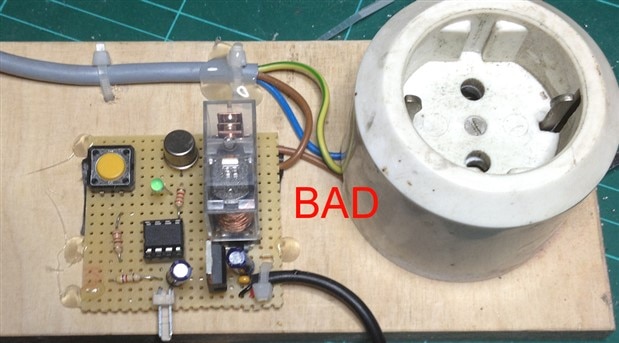
It may be obvious, but using prototyping strip-board is not advisable for mains control.

It may not injure you, but may kill others who use the project, leaving you morally and legally liable.

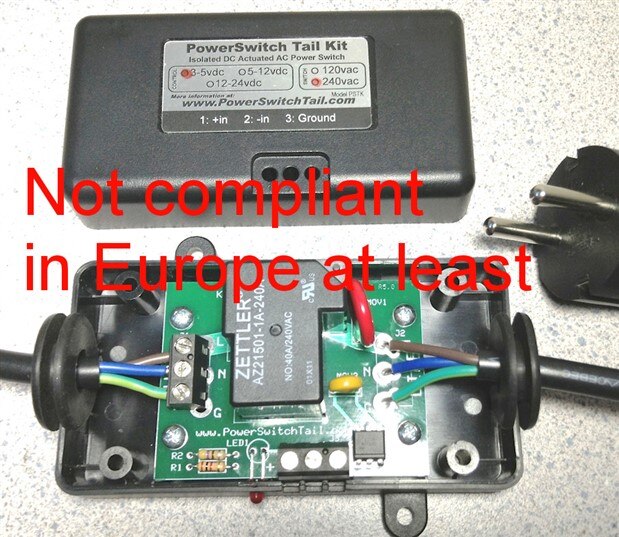
Some less obvious things to non-engineers are things like strain relief, flame retardant materials, poor crimps, insulating barrier requirements and use of badly rated/designed cheap components that will never be compliant.

Here are some examples of designs not compliant in at least Europe (these images are reduced in resolution/cropped for fair use):
image


image

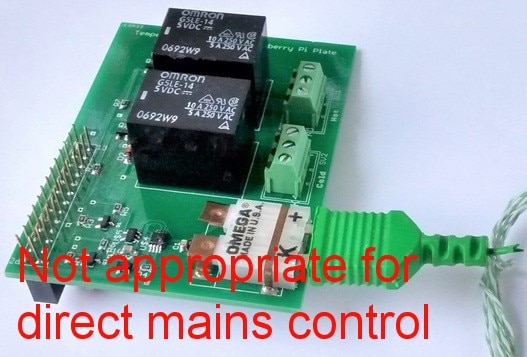
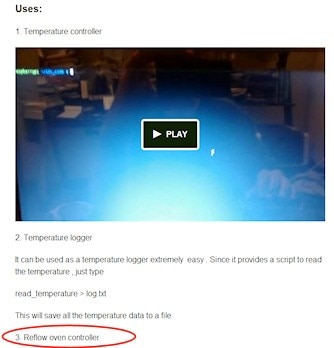
If you want to directly switch mains power, then avoid this type of design too, it is from a recent kickstarter claimed suitable for reflow oven use with a Raspberry Pi:
image

image


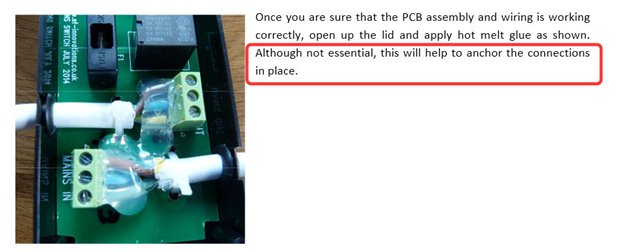
Here is another example of a UK product called the Mains Switch Widget - this extract is from the user documentation (extract is legal under fair use):
image

The above rings alarm bells for several reasons. The text in the user documentation snippet above states "this will help to anchor the connections in place" - is this valid according to standards in Europe? According to my understanding the method of clamping has to be well defined, so suggesting that hot glue is not essential but _may_ be used to help is confusing and not well defined, because either the method of clamping is sufficient to comply, or it is not. Also, how does a user know if it is secure? A cable tie can be tied by some people weakly, and by others more securely. Users will not know the test to apply to ensure it is compliant.

Also, the cable tie is wrongly applied to the cable in the photo above, since it should be further back from the unsheathed end. Note that this is not my photo, it is the photo from the product documentation!


Furthermore, for safety, since this is a permanently attached mains cable, the earth connection in the opinion of several engineers, should be the last to be stressed if there is any issue with the clamping of the cable.


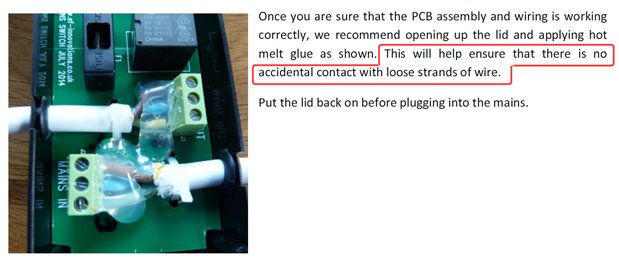
When these points were raised with the creator of the Mains Switch Widget on this forum, the text silently changed in the user documentation - see here:
image

However, it is difficult to see how a documentation change can improve the situation much. The photo still shows the same length wires and cable tie too close to the unsheathed end.


Do check out the comments to the post below, for useful information.

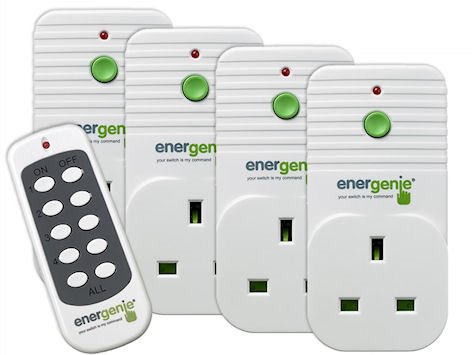
A safe solution that requires no wiring is the Energenie modules - at £16.95+VAT for two of them, it appears well priced and safe. It is also cheaper than the Mains Switch Widget. I tried the Energenie modules out, and it was easy to get them working and controlled by the Raspberry Pi and with other microcontroller boards (they can be controlled via a remote control or via the Raspberry Pi etc.).
image

  • Sign in to reply

Top Comments

  • gadget.iom
    gadget.iom over 11 years ago +2
    In terms of physical design this approach seems to be safer:
  • gadget.iom
    gadget.iom over 11 years ago in reply to shabaz +2
    Indeed. From an electrical safety perspective they seem far superior. A non-electrically minded person can use them without resorting to any mains wiring, and if the relay and wiring/traces are rated over…
  • mcb1
    mcb1 over 11 years ago +1
    Shabaz Looking at them ...(and cringing) they aren't compliant in New Zealand (or Australia) either. The middle one doesn't even have strain relief, and the least they could have done is made the earth…
  • shabaz
    shabaz over 11 years ago in reply to Problemchild

    That's true. It's not a full product, and he may have closely paid attention while he did some brief tests.

    • Cancel
    • Vote Up +1 Vote Down
    • Sign in to reply
    • More
    • Cancel
  • Problemchild
    Problemchild over 11 years ago

    You could forgive the first one Shabaz as a prototype but he's 1 step away from "cooking tonight "if one of the Live wires comes adrift ..nasty especially with the metal buttons as well . Not sure if the chip is an Optoisolator or controller not that this would help the free wire situation on some Vero image

    • Cancel
    • Vote Up 0 Vote Down
    • Sign in to reply
    • More
    • Cancel
  • shabaz
    shabaz over 11 years ago in reply to mcb1

    Hi Mark,


    Thanks for identifying the lack of compliance in NZ/Australia too - I suspected it too, but couldn't say for sure. I suspect none of them are compliant for US, or South America too, but I'm not sure. Which makes me wonder in what country the middle one (which looks like it is supposed to be a retail product) is compliant - nowhere it seems, for the reasons you pointed out. Also there are no plastic divider type barriers when that insulation on the wires creeps up - already can see a few mm in the photo. So it appears they all suck!

    • Cancel
    • Vote Up 0 Vote Down
    • Sign in to reply
    • More
    • Cancel
  • Problemchild
    Problemchild over 11 years ago in reply to mcb1

    Also there is some pre stamped holes for strain relief or some such and they haven't used it.

    • Cancel
    • Vote Up 0 Vote Down
    • Sign in to reply
    • More
    • Cancel
  • Problemchild
    Problemchild over 11 years ago

    It's a pitty that the Kickstarter will probably get massive funding  only to find they then need to do equally massive updates when it fails EU/FCC or what ever regulations. Obviously this shape has been chosen to keep to the Pi  low voltage card shape that isn't that great for 5V never mind 115/240 ... boom boom shake the room image

    • Cancel
    • Vote Up +1 Vote Down
    • Sign in to reply
    • More
    • Cancel
<>
element14 Community

element14 is the first online community specifically for engineers. Connect with your peers and get expert answers to your questions.

  • Members
  • Learn
  • Technologies
  • Challenges & Projects
  • Products
  • Store
  • About Us
  • Feedback & Support
  • FAQs
  • Terms of Use
  • Privacy Policy
  • Legal and Copyright Notices
  • Sitemap
  • Cookies

An Avnet Company © 2026 Premier Farnell Limited. All Rights Reserved.

Premier Farnell Ltd, registered in England and Wales (no 00876412), registered office: Farnell House, Forge Lane, Leeds LS12 2NE.

ICP 备案号 10220084.

Follow element14

  • X
  • Facebook
  • linkedin
  • YouTube