element14 Community
element14 Community
    Register Log In
  • Site
  • Search
  • Log In Register
  • Community Hub
    Community Hub
    • What's New on element14
    • Feedback and Support
    • Benefits of Membership
    • Personal Blogs
    • Members Area
    • Achievement Levels
  • Learn
    Learn
    • Ask an Expert
    • eBooks
    • element14 presents
    • Learning Center
    • Tech Spotlight
    • STEM Academy
    • Webinars, Training and Events
    • Learning Groups
  • Technologies
    Technologies
    • 3D Printing
    • FPGA
    • Industrial Automation
    • Internet of Things
    • Power & Energy
    • Sensors
    • Technology Groups
  • Challenges & Projects
    Challenges & Projects
    • Design Challenges
    • element14 presents Projects
    • Project14
    • Arduino Projects
    • Raspberry Pi Projects
    • Project Groups
  • Products
    Products
    • Arduino
    • Avnet & Tria Boards Community
    • Dev Tools
    • Manufacturers
    • Multicomp Pro
    • Product Groups
    • Raspberry Pi
    • RoadTests & Reviews
  • About Us
  • Store
    Store
    • Visit Your Store
    • Choose another store...
      • Europe
      •  Austria (German)
      •  Belgium (Dutch, French)
      •  Bulgaria (Bulgarian)
      •  Czech Republic (Czech)
      •  Denmark (Danish)
      •  Estonia (Estonian)
      •  Finland (Finnish)
      •  France (French)
      •  Germany (German)
      •  Hungary (Hungarian)
      •  Ireland
      •  Israel
      •  Italy (Italian)
      •  Latvia (Latvian)
      •  
      •  Lithuania (Lithuanian)
      •  Netherlands (Dutch)
      •  Norway (Norwegian)
      •  Poland (Polish)
      •  Portugal (Portuguese)
      •  Romania (Romanian)
      •  Russia (Russian)
      •  Slovakia (Slovak)
      •  Slovenia (Slovenian)
      •  Spain (Spanish)
      •  Sweden (Swedish)
      •  Switzerland(German, French)
      •  Turkey (Turkish)
      •  United Kingdom
      • Asia Pacific
      •  Australia
      •  China
      •  Hong Kong
      •  India
      • Japan
      •  Korea (Korean)
      •  Malaysia
      •  New Zealand
      •  Philippines
      •  Singapore
      •  Taiwan
      •  Thailand (Thai)
      • Vietnam
      • Americas
      •  Brazil (Portuguese)
      •  Canada
      •  Mexico (Spanish)
      •  United States
      Can't find the country/region you're looking for? Visit our export site or find a local distributor.
  • Translate
  • Profile
  • Settings
Raspberry Pi
  • Products
  • More
Raspberry Pi
Blog The Interactive Storytelling Radio
  • Blog
  • Forum
  • Documents
  • Quiz
  • Events
  • Polls
  • Files
  • Members
  • Mentions
  • Sub-Groups
  • Tags
  • More
  • Cancel
  • New
Join Raspberry Pi to participate - click to join for free!
Featured Articles
Announcing Pi
Technical Specifications
Raspberry Pi FAQs
Win a Pi
GPIO Pinout
Raspberry Pi Wishlist
Comparison Chart
Quiz
  • Share
  • More
  • Cancel
Group Actions
  • Group RSS
  • More
  • Cancel
Engagement
  • Author Author: 8bitsandabyte
  • Date Created: 6 Dec 2020 11:03 AM Date Created
  • Views 963 views
  • Likes 1 like
  • Comments 0 comments
Related
Recommended
  • retrofitting
  • Technology
  • ai
  • interactive story

The Interactive Storytelling Radio

8bitsandabyte
8bitsandabyte
6 Dec 2020

In this project we convert a neat looking radio into a voice-enabled, interactive storyteller. Future, here we come!

Supplies

  • Raspberry Pi
  • Google AIY Voice Kit v1
  • Radio
  • Google Cloud Platform
  • Google Dialogflow
  • Screwdriver
  • Soldering Equipment
  • Wiring
  • Speaker
  • Switch

Project Video

You don't have permission to edit metadata of this video.
Edit media
x
image
Upload Preview
image

Radio

image

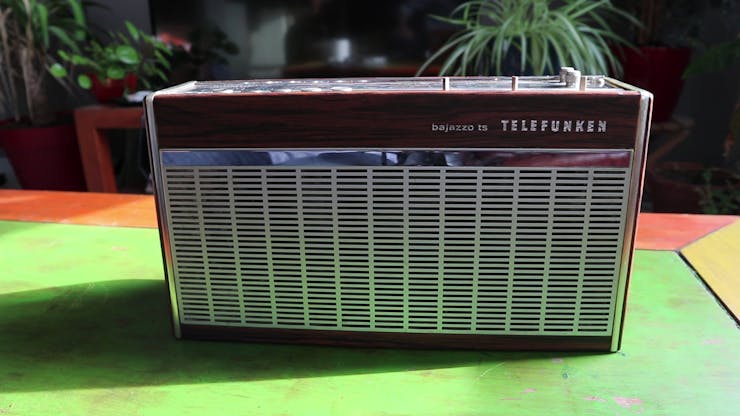
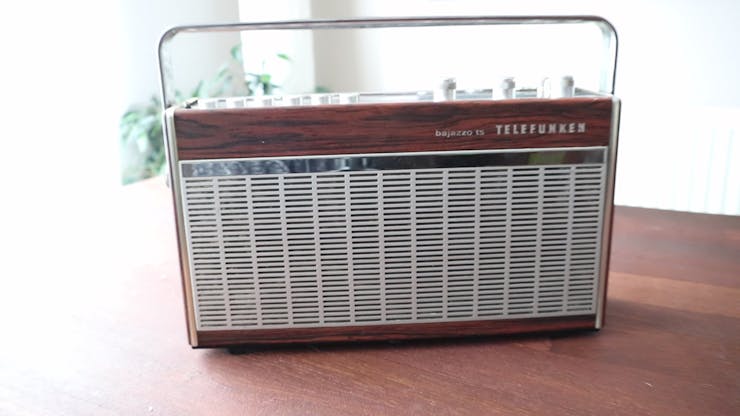
Like most retrofitting projects, this one starts with some old electronics, to be precise, a Bjazzo Ts by Telefunken, made sometime during the 1960's in West-Germany.image
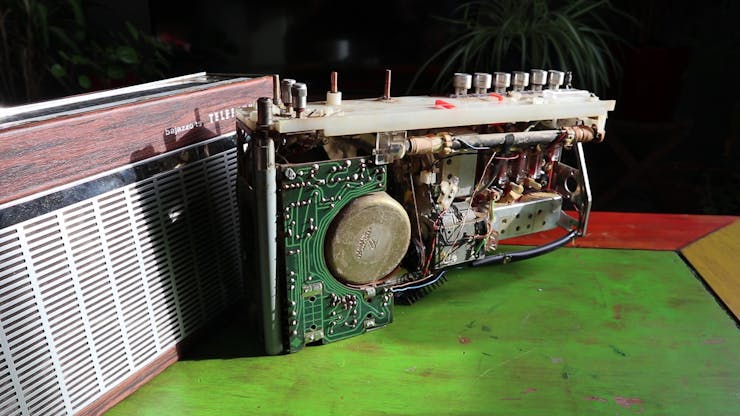
First up is determining what's reusable. The best way to find out is by disassembling our vintage tech. This step is different for every device, but removing all screws you encounter is a great startimage
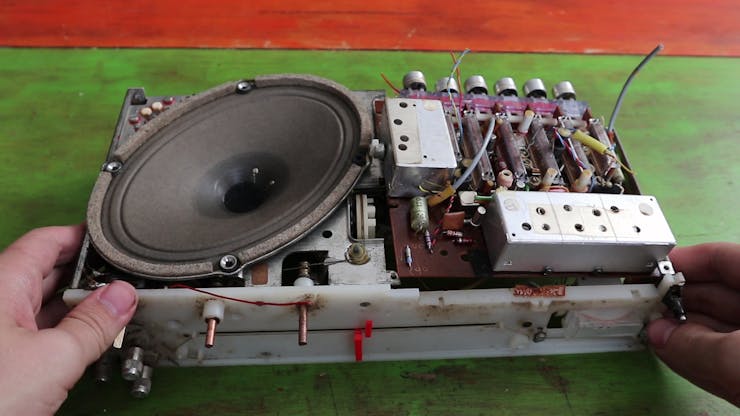
Lucky us, we can salvage both the original speaker and the on/off button. We also keep the part that's holding up all the buttons.
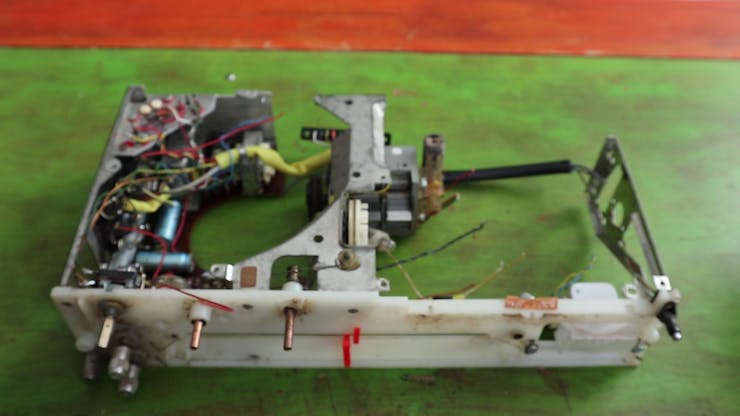
image

After this successful operation we are left with some reusable components and a semi empty frame.


Hardware

With our newly created space and reusable parts we move on to the next step, adding our own hardware.
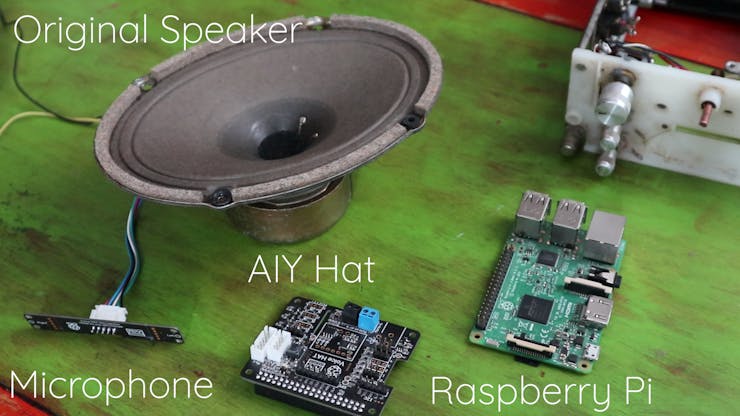
image

The aim is to make a voice controllable, interactive, storytelling device. This means we need a microphone and speaker, combined with some sort of processing power. Que the Google AIY Voice Kit, a hardware package perfect for our endeavor.
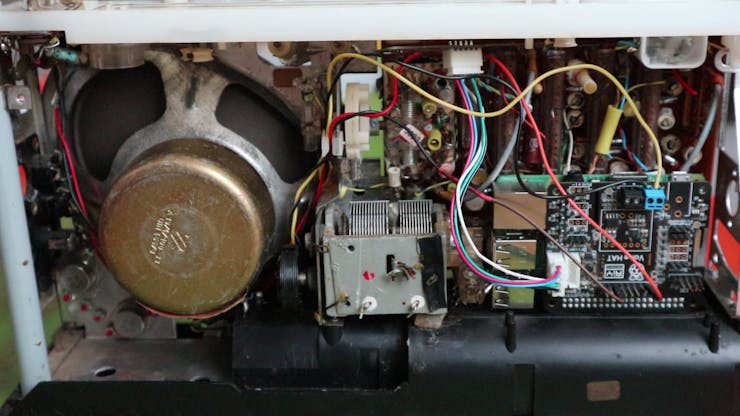
image

Following their build instructions is straightforward, but instead of the provided speaker and button, we connect the ones we recovered from our old radio. With all the hardware assembled and ready, we can now run any of the provided examples.


Story

image

Before we can build our story, we need to come up with a fitting theme.As mentioned before, our radio was made sometime during the 1960's in West-Germany. This was during the cold war in a vital location.

When thinking of the cold war, we think of espionage, and just like that we have our theme, spying!
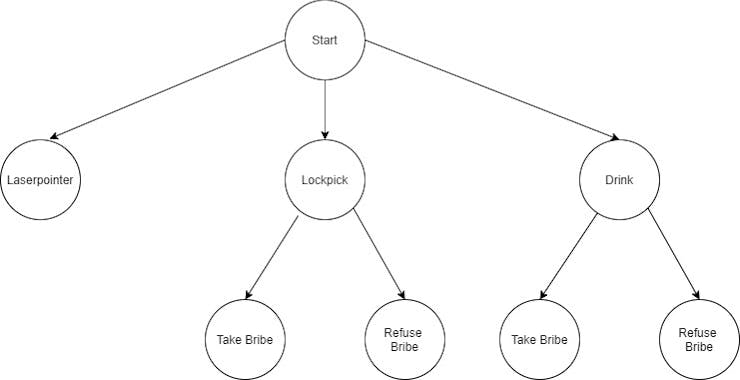
image

There is one more TODO before we move on to the chatbot building, the story structure. Because we want our plot to change based on the users input, we need to design a decision tree. Once finished we're all set to sneak to the next step.


Chatbot
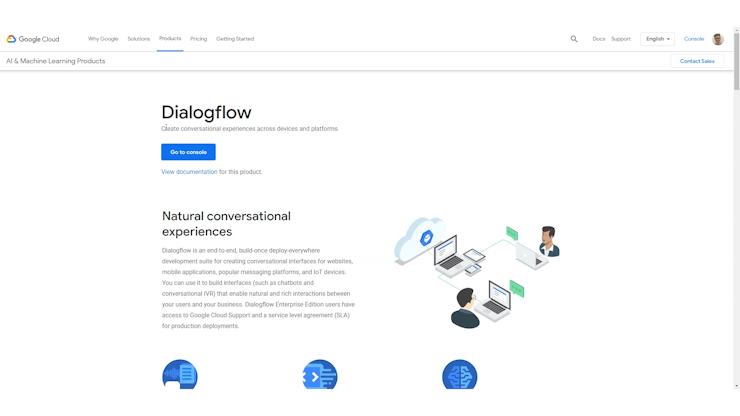
image

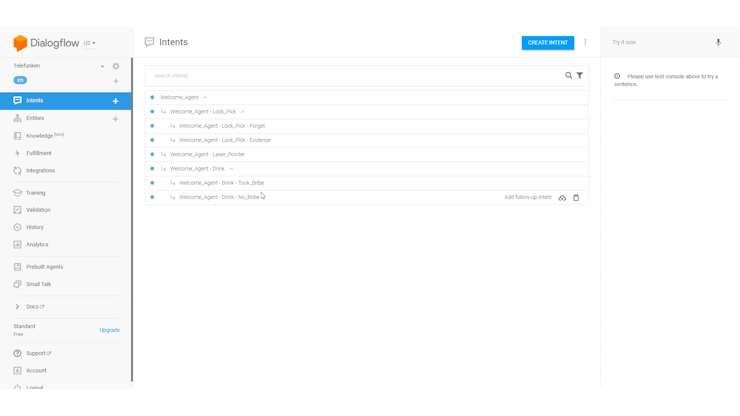
Success, with the story complete we can start on the chatbot.Ideally we'd have a piece of software that helps with picking the right response, both extracting meaning from the spoken text, and making the plot decisions.

This is is exactly what a chatbot platform provides, both detecting meaning in text ('Natural Language Processing') and making decisions.
image

There are many providers out there, and you can pick any of them, however, we picked Google Dialogflow because it's free and easy to use. Dialogflow has a great getting started guide right here.

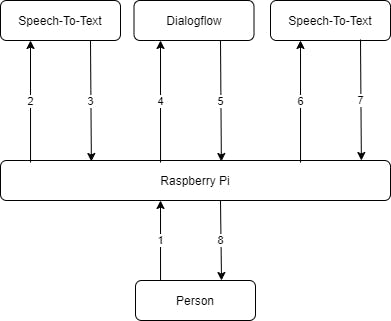
After some setting up and creative writing the chatbot is ready to go. Now we connect the local hardware with the chatbot, transforming our invention into a true voicebot.
image

The complete code is included in this article, this is the data flow:


1

The microphone picks up someone speaking and records the audio.


2-3

Using some Google AI magic (Speech-To-Text) we extract the spoken text from the audio.


4-5

This text is sent to our chatbot (Dialogflow) and is matched with the correct response, which is sent back to the Raspberry Pi.


6-7

Using some more artificial intelligence voodoo, this text is used to generate artificial speech.


8

This audio is broadcast to the person via the speaker.

Note: This whole process in only activated when the radio's button is turned to the 'ON' status.


Result
image

After all this hard work, it's finally time to kick back, relax and explore all the different possibilities our interactive storyteller has to offer.

  • Sign in to reply
element14 Community

element14 is the first online community specifically for engineers. Connect with your peers and get expert answers to your questions.

  • Members
  • Learn
  • Technologies
  • Challenges & Projects
  • Products
  • Store
  • About Us
  • Feedback & Support
  • FAQs
  • Terms of Use
  • Privacy Policy
  • Legal and Copyright Notices
  • Sitemap
  • Cookies

An Avnet Company © 2026 Premier Farnell Limited. All Rights Reserved.

Premier Farnell Ltd, registered in England and Wales (no 00876412), registered office: Farnell House, Forge Lane, Leeds LS12 2NE.

ICP 备案号 10220084.

Follow element14

  • X
  • Facebook
  • linkedin
  • YouTube