I have a raspberry pi and I was wondering if there was a way to make the GPIO pins control a DC motor in both directions.
I came up with a little schematic but I'm sure I did it horribly wrong.
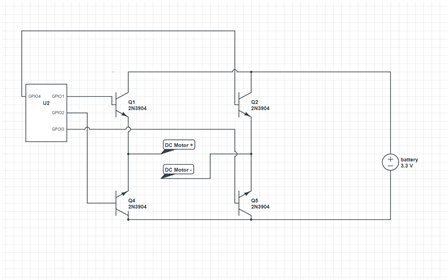
Any suggestions would be greatly appreciated!

I have a raspberry pi and I was wondering if there was a way to make the GPIO pins control a DC motor in both directions.
I came up with a little schematic but I'm sure I did it horribly wrong.
Any suggestions would be greatly appreciated!

I have a project that depended on changing from a Pololu qik 2s9v1 motor controller with a simple logic level motor driver (L293D). It works great and here is my code:
/*
* L293D_rpi_motor test.cpp
*
* Copyright 2017 Brandon Williams <brandon.w2055@gmail.com>
*
* This program is free software; you can redistribute it and/or modify
* it under the terms of the GNU General Public License as published by
* the Free Software Foundation; either version 2 of the License, or
* (at your option) any later version.
*
* This program is distributed in the hope that it will be useful,
* but WITHOUT ANY WARRANTY; without even the implied warranty of
* MERCHANTABILITY or FITNESS FOR A PARTICULAR PURPOSE. See the
* GNU General Public License for more details.
*
* You should have received a copy of the GNU General Public License
* along with this program; if not, write to the Free Software
* Foundation, Inc., 51 Franklin Street, Fifth Floor, Boston,
* MA 02110-1301, USA.
*
*
*/
/* Raspberry Pi Model B2 Pinmap
+-----+-----+---------+------+---+-Model B2-+---+------+---------+-----+-----+
| BCM | wPi | Name | Mode | V | Physical | V | Mode | Name | wPi | BCM |
+-----+-----+---------+------+---+----++----+---+------+---------+-----+-----+
| | | 3.3v | | | 1 || 2 | | | 5v | | |
| 2 | 8 | SDA.1 | ALT0 | 1 | 3 || 4 | | | 5V | | |
| 3 | 9 | SCL.1 | ALT0 | 1 | 5 || 6 | | | 0v | | |
| 4 | 7 | GPIO. 7 | IN | 1 | 7 || 8 | 1 | ALT0 | TxD | 15 | 14 |
| | | 0v | | | 9 || 10 | 1 | ALT0 | RxD | 16 | 15 |
| 17 | 0 | GPIO. 0 | IN | 0 | 11 || 12 | 0 | IN | GPIO. 1 | 1 | 18 |
| 27 | 2 | GPIO. 2 | IN | 0 | 13 || 14 | | | 0v | | |
| 22 | 3 | GPIO. 3 | IN | 0 | 15 || 16 | 0 | IN | GPIO. 4 | 4 | 23 |
| | | 3.3v | | | 17 || 18 | 0 | IN | GPIO. 5 | 5 | 24 |
| 10 | 12 | MOSI | IN | 0 | 19 || 20 | | | 0v | | |
| 9 | 13 | MISO | IN | 0 | 21 || 22 | 0 | IN | GPIO. 6 | 6 | 25 |
| 11 | 14 | SCLK | IN | 0 | 23 || 24 | 1 | IN | CE0 | 10 | 8 |
| | | 0v | | | 25 || 26 | 1 | IN | CE1 | 11 | 7 |
+-----+-----+---------+------+---+----++----+---+------+---------+-----+-----+
| 28 | 17 | GPIO.17 | IN | 0 | 51 || 52 | 0 | IN | GPIO.18 | 18 | 29 |
| 30 | 19 | GPIO.19 | IN | 0 | 53 || 54 | 0 | IN | GPIO.20 | 20 | 31 |
+-----+-----+---------+------+---+----++----+---+------+---------+-----+-----+
| BCM | wPi | Name | Mode | V | Physical | V | Mode | Name | wPi | BCM |
+-----+-----+---------+------+---+-Model B2-+---+------+---------+-----+-----+
*/
/*
The following software is a test for the L293D motor driver
as a greater project objective to integrate this IC into a shield for
the raspberry pi.
Pinout Map [L293D pin# (Function) -- Rpi pin# (Name)]
*
1 (Enable 1) -- 11 (GPIO 2)
2 (Input 1) -- 13 (GPIO 3)
3 (Output 1)
4 (GND)
5 (GND)
6 (Output 2)
7 (Input 2) -- 15 (GPIO 4)
8 (Control V) -- 1 (5V)
9 (Enable 2) -- /
10 (Input 3) -- /
11 (Output 3)
12 (GND)
13 (GND)
14 (Output 4)
15 (Input 4) -- /
16 (Supply V)
*
Truth Table for a Single Motor (F=forward, R=reverse, S=stop)
* Enable | Input 1 | Input 2 | Output 1 | Output 2| Dir.
* H | H | L | H | L | F
* H | L | H | H | L | R
* L | / | / | / | / | S
*/
#include <stdio.h>
#inlcude <wiringPi.h>
#define ENABLEPIN 0
#define INPUT1 2
#define INPUT2 3
int main void{
printf("Raspberry Pi - Motor Control L293D");
wiringPiSetup();
pinMode(ENABLEPIN, OUTPUT);
pinMode(INPUT1, OUTPUT);
pinMode(INPUT2, OUTPUT);
digitalWrite(ENABLEPIN, 1); /*Enable Motor 1 channel active*/
for(int i=0; i>=0; i++){
delay(500);
printf("Forward Motion");
digitalWrite(INPUT1, 1); /*Begin Forward Motion*/
digitalWrite(INPUT2, 0);
delay(1500);
printf("Reverse Motion");
digitalWrite(INPUT1, 0); /*Begin Reverse Motion*/
digitalWrite(INPUT2, 1);
}
/* Stop Motors and Disable Motor 1 */
digitalWrite(INPUT1,0);
digitalWrite(INPUT2,0);
digitalWrite(ENABLEPIN,0);
return 0;
}I have a project that depended on changing from a Pololu qik 2s9v1 motor controller with a simple logic level motor driver (L293D). It works great and here is my code:
/*
* L293D_rpi_motor test.cpp
*
* Copyright 2017 Brandon Williams <brandon.w2055@gmail.com>
*
* This program is free software; you can redistribute it and/or modify
* it under the terms of the GNU General Public License as published by
* the Free Software Foundation; either version 2 of the License, or
* (at your option) any later version.
*
* This program is distributed in the hope that it will be useful,
* but WITHOUT ANY WARRANTY; without even the implied warranty of
* MERCHANTABILITY or FITNESS FOR A PARTICULAR PURPOSE. See the
* GNU General Public License for more details.
*
* You should have received a copy of the GNU General Public License
* along with this program; if not, write to the Free Software
* Foundation, Inc., 51 Franklin Street, Fifth Floor, Boston,
* MA 02110-1301, USA.
*
*
*/
/* Raspberry Pi Model B2 Pinmap
+-----+-----+---------+------+---+-Model B2-+---+------+---------+-----+-----+
| BCM | wPi | Name | Mode | V | Physical | V | Mode | Name | wPi | BCM |
+-----+-----+---------+------+---+----++----+---+------+---------+-----+-----+
| | | 3.3v | | | 1 || 2 | | | 5v | | |
| 2 | 8 | SDA.1 | ALT0 | 1 | 3 || 4 | | | 5V | | |
| 3 | 9 | SCL.1 | ALT0 | 1 | 5 || 6 | | | 0v | | |
| 4 | 7 | GPIO. 7 | IN | 1 | 7 || 8 | 1 | ALT0 | TxD | 15 | 14 |
| | | 0v | | | 9 || 10 | 1 | ALT0 | RxD | 16 | 15 |
| 17 | 0 | GPIO. 0 | IN | 0 | 11 || 12 | 0 | IN | GPIO. 1 | 1 | 18 |
| 27 | 2 | GPIO. 2 | IN | 0 | 13 || 14 | | | 0v | | |
| 22 | 3 | GPIO. 3 | IN | 0 | 15 || 16 | 0 | IN | GPIO. 4 | 4 | 23 |
| | | 3.3v | | | 17 || 18 | 0 | IN | GPIO. 5 | 5 | 24 |
| 10 | 12 | MOSI | IN | 0 | 19 || 20 | | | 0v | | |
| 9 | 13 | MISO | IN | 0 | 21 || 22 | 0 | IN | GPIO. 6 | 6 | 25 |
| 11 | 14 | SCLK | IN | 0 | 23 || 24 | 1 | IN | CE0 | 10 | 8 |
| | | 0v | | | 25 || 26 | 1 | IN | CE1 | 11 | 7 |
+-----+-----+---------+------+---+----++----+---+------+---------+-----+-----+
| 28 | 17 | GPIO.17 | IN | 0 | 51 || 52 | 0 | IN | GPIO.18 | 18 | 29 |
| 30 | 19 | GPIO.19 | IN | 0 | 53 || 54 | 0 | IN | GPIO.20 | 20 | 31 |
+-----+-----+---------+------+---+----++----+---+------+---------+-----+-----+
| BCM | wPi | Name | Mode | V | Physical | V | Mode | Name | wPi | BCM |
+-----+-----+---------+------+---+-Model B2-+---+------+---------+-----+-----+
*/
/*
The following software is a test for the L293D motor driver
as a greater project objective to integrate this IC into a shield for
the raspberry pi.
Pinout Map [L293D pin# (Function) -- Rpi pin# (Name)]
*
1 (Enable 1) -- 11 (GPIO 2)
2 (Input 1) -- 13 (GPIO 3)
3 (Output 1)
4 (GND)
5 (GND)
6 (Output 2)
7 (Input 2) -- 15 (GPIO 4)
8 (Control V) -- 1 (5V)
9 (Enable 2) -- /
10 (Input 3) -- /
11 (Output 3)
12 (GND)
13 (GND)
14 (Output 4)
15 (Input 4) -- /
16 (Supply V)
*
Truth Table for a Single Motor (F=forward, R=reverse, S=stop)
* Enable | Input 1 | Input 2 | Output 1 | Output 2| Dir.
* H | H | L | H | L | F
* H | L | H | H | L | R
* L | / | / | / | / | S
*/
#include <stdio.h>
#inlcude <wiringPi.h>
#define ENABLEPIN 0
#define INPUT1 2
#define INPUT2 3
int main void{
printf("Raspberry Pi - Motor Control L293D");
wiringPiSetup();
pinMode(ENABLEPIN, OUTPUT);
pinMode(INPUT1, OUTPUT);
pinMode(INPUT2, OUTPUT);
digitalWrite(ENABLEPIN, 1); /*Enable Motor 1 channel active*/
for(int i=0; i>=0; i++){
delay(500);
printf("Forward Motion");
digitalWrite(INPUT1, 1); /*Begin Forward Motion*/
digitalWrite(INPUT2, 0);
delay(1500);
printf("Reverse Motion");
digitalWrite(INPUT1, 0); /*Begin Reverse Motion*/
digitalWrite(INPUT2, 1);
}
/* Stop Motors and Disable Motor 1 */
digitalWrite(INPUT1,0);
digitalWrite(INPUT2,0);
digitalWrite(ENABLEPIN,0);
return 0;
}

