element14 Community
element14 Community
    Register Log In
  • Site
  • Search
  • Log In Register
  • Community Hub
    Community Hub
    • What's New on element14
    • Feedback and Support
    • Benefits of Membership
    • Personal Blogs
    • Members Area
    • Achievement Levels
  • Learn
    Learn
    • Ask an Expert
    • eBooks
    • element14 presents
    • Learning Center
    • Tech Spotlight
    • STEM Academy
    • Webinars, Training and Events
    • Learning Groups
  • Technologies
    Technologies
    • 3D Printing
    • FPGA
    • Industrial Automation
    • Internet of Things
    • Power & Energy
    • Sensors
    • Technology Groups
  • Challenges & Projects
    Challenges & Projects
    • Design Challenges
    • element14 presents Projects
    • Project14
    • Arduino Projects
    • Raspberry Pi Projects
    • Project Groups
  • Products
    Products
    • Arduino
    • Avnet & Tria Boards Community
    • Dev Tools
    • Manufacturers
    • Multicomp Pro
    • Product Groups
    • Raspberry Pi
    • RoadTests & Reviews
  • About Us
    About the element14 Community
  • Store
    Store
    • Visit Your Store
    • Choose another store...
      • Europe
      •  Austria (German)
      •  Belgium (Dutch, French)
      •  Bulgaria (Bulgarian)
      •  Czech Republic (Czech)
      •  Denmark (Danish)
      •  Estonia (Estonian)
      •  Finland (Finnish)
      •  France (French)
      •  Germany (German)
      •  Hungary (Hungarian)
      •  Ireland
      •  Israel
      •  Italy (Italian)
      •  Latvia (Latvian)
      •  
      •  Lithuania (Lithuanian)
      •  Netherlands (Dutch)
      •  Norway (Norwegian)
      •  Poland (Polish)
      •  Portugal (Portuguese)
      •  Romania (Romanian)
      •  Russia (Russian)
      •  Slovakia (Slovak)
      •  Slovenia (Slovenian)
      •  Spain (Spanish)
      •  Sweden (Swedish)
      •  Switzerland(German, French)
      •  Turkey (Turkish)
      •  United Kingdom
      • Asia Pacific
      •  Australia
      •  China
      •  Hong Kong
      •  India
      •  Japan
      •  Korea (Korean)
      •  Malaysia
      •  New Zealand
      •  Philippines
      •  Singapore
      •  Taiwan
      •  Thailand (Thai)
      •  Vietnam
      • Americas
      •  Brazil (Portuguese)
      •  Canada
      •  Mexico (Spanish)
      •  United States
      Can't find the country/region you're looking for? Visit our export site or find a local distributor.
  • Translate
  • Profile
  • Settings
Raspberry Pi
  • Products
  • More
Raspberry Pi
Polls Raspberry Pi 2: Which OS is best?
  • Blog
  • Forum
  • Documents
  • Quiz
  • Events
  • Polls
  • Files
  • Members
  • Mentions
  • Sub-Groups
  • Tags
  • More
  • Cancel
  • New
Join Raspberry Pi to participate - click to join for free!
Actions
  • Share
  • More
  • Cancel
Engagement
  • Author Author: biglesp
  • Date Created: 18 May 2015 9:54 AM Date Created
  • Last Updated Last Updated: 11 Oct 2021 3:01 PM
  • Views 37174 views
  • Likes 1 like
  • Comments 56 comments
Related
Recommended

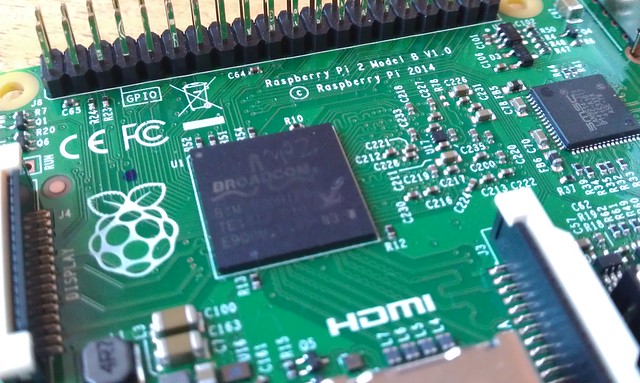
Raspberry Pi 2: Which OS is best?

16248420710_34e2a2339b_z_d.jpg

When we think of the Raspberry Pi operating system we instantly think of the giant raspberry wallpaper that is prominently placed on the Raspbian desktop. But is Raspbian still the best distro for the Pi? Well we put Raspbian up against two new distros for the Raspberry Pi, but these are well known distros in the world of Linux and their pedigree is hard to beat. Ubuntu has been a runaway success on the desktop and has converted thousands of users since it’s release in the mid 2000s, it has even recently spawned a version for mobile devices. Fedora is another big distro, coming from Red Hat and considered the leading name in open source solutions. Fedora is Red Hat’s bleeding edge product that often tests new innovations and technologies for Enterprise class products. Both of these distros have enjoyed a long and prominent history in the Linux community and their entrance to the Raspberry Pi community is something to get excited about.


There are many more distros for the Raspberry Pi but for this feature we wanted to show two strong new contenders against the de facto standard that is Raspbian.


So can Ubuntu or Fedora beat Raspbian’s dominance in the Raspberry Pi community? Or is Raspbian the perfect example of what a Raspberry Pi distro should aim to be? Let’s find out.


For all of these reviews we created a baseline to ensure a fair test.

  • A Raspberry Pi 2 Model B
  • No overclocking or tinkering of hardware
  • 8GB SD card that came with our Pi


Raspbian

The de facto standard for Raspberry Pi projects but does it still meet the needs of the user?

Download link


16749044389_2317edc558_b_d.jpg

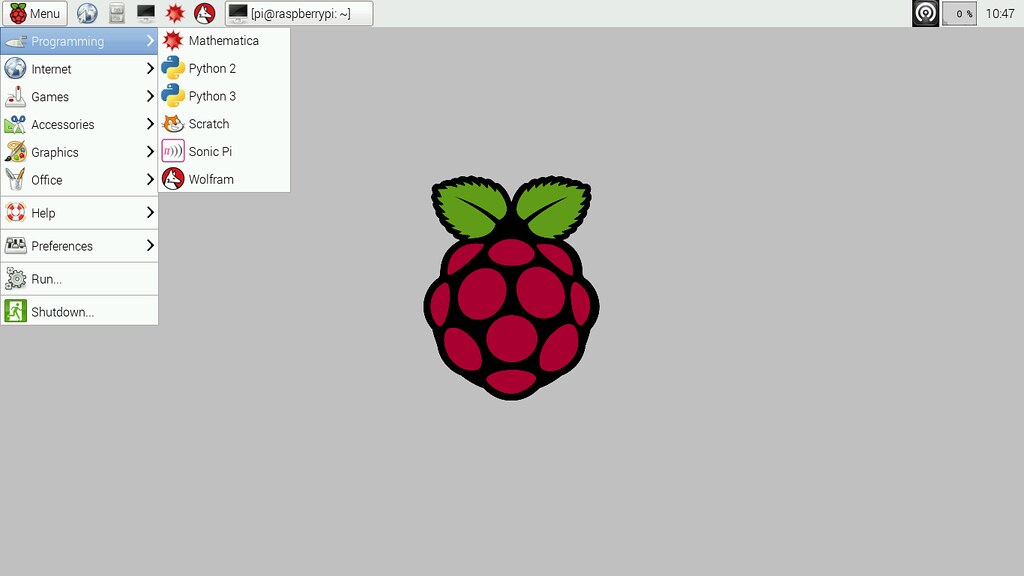
Raspbian has been the standard Raspberry Pi operating system, more commonly referred to as a “distro”,  since the Pi arrived in 2012 and we have seen it grow over time into the capable distro that we use today. Raspbian is a fork of the massively popular Debian distribution and it is jointly maintained by the Raspberry Pi Foundation and the community.


Being based on Debian, Raspbian comes with the APT (Advanced Packaging Tool) as it’s package manager, which is used to install software from the vast Raspbian repositories, but Raspbian also comes with raspi-config, a menu based tool that simplifies the act of managing Raspberry Pi configurations such as setting up an SSH, overclocking and enabling the official Raspberry Pi camera.


Since December 2014 the Raspbian desktop has received a notable improvement to it’s user interface thanks to the hard work of Simon Long. Moving away from the cluttered LXDE menu system we now have a simplified and refined interface that groups applications and configuration tools into clearer categories. As Raspbian is the default distro for Raspberry Pi it is also the distro that sees the most improvement and innovations examples of this are the RPi.GPIO library that enables Python to talk to the GPIO (General Purpose Input Output) pins, Minecraft the popular survival / sandbox game that has seen a massive investment of time from the community to enable a Python API for programming the game world. Lastly we have Sonic Pi the Ruby powered music creation application that has risen in popularity thanks to the efforts of Sam Aaron.


With the release of the Raspberry Pi 2 we have seen Raspbian receive the speed boost that it always needed, by no means was it a slouch on the original Raspberry Pi, but the addition of more RAM and better CPU has enabled it to become a usable desktop distro that can easily be used as a main machine.


Raspbian has improved since it was first released in 2012 and with each new release we see more refinements added to it, no wonder the majority of projects around the world are based upon this distro. It is a rock solid development base that runs well on the original Raspberry Pi but screams ahead on the new Raspberry Pi 2 specification.


If you are taking your first steps with the Raspberry Pi or need a solid and dependable basis for a project, Raspbian has to be your first choice. No other Raspberry Pi distro can compete with it’s stability, range of projects nor it’s supportive community. Hence why Raspbian is the official distro for the Raspberry Pi and is supported by a series of projects available via the Raspberry Pi Foundation’s learning resources.


Ubuntu MATE

Ubuntu finally makes it’s onto the Raspberry Pi but will it claim the top spot?

Download Link


17539054866_8f0108f47a_h_d.jpg


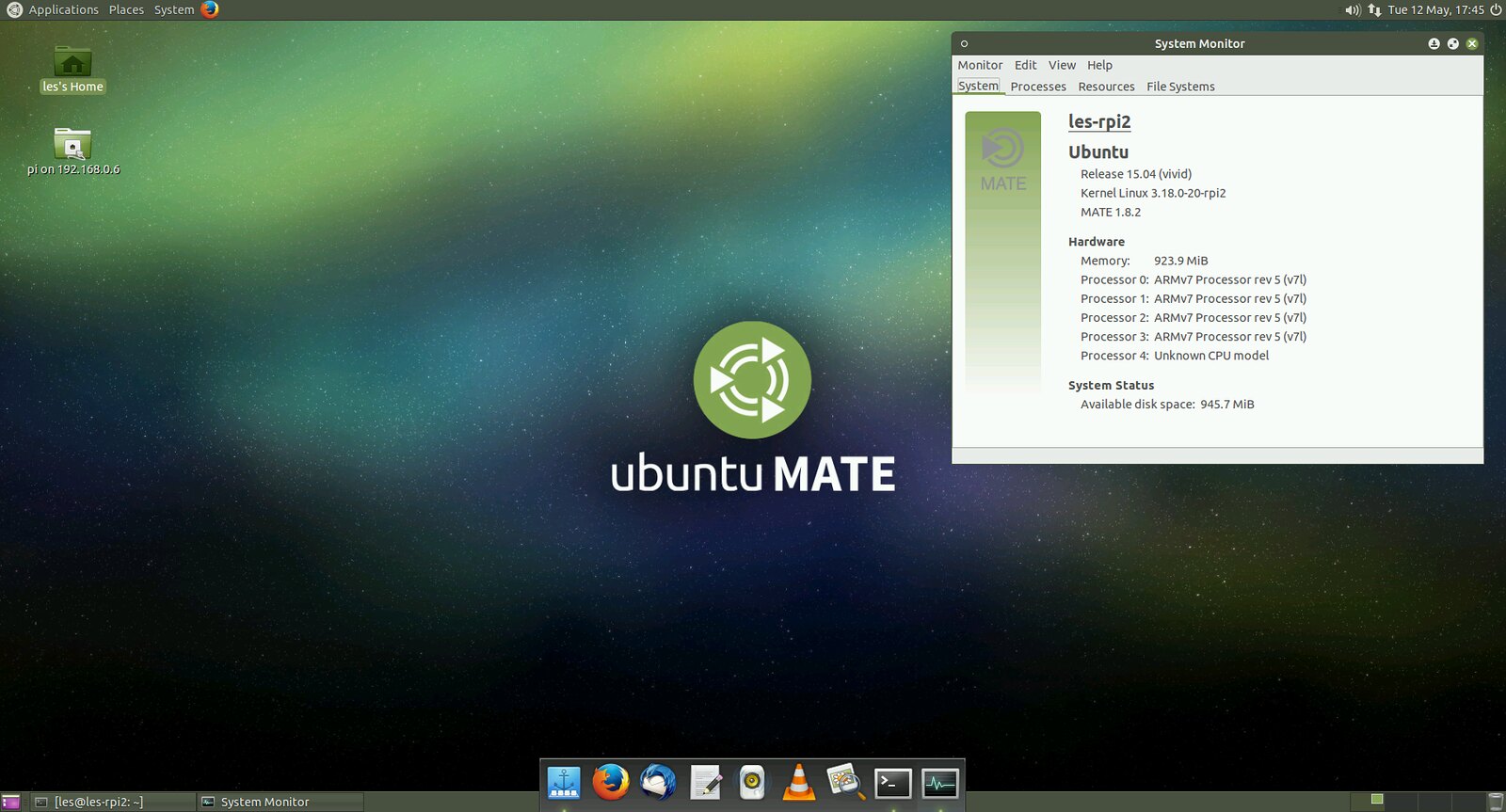
In the early days of the Raspberry Pi many questioned the choice of Raspbian over Ubuntu. At that time Canonical had stopped supporting the ARM11 CPU that powered the Raspberry Pi and this spelt the end of any possible Ubuntu releases. We now fast forward to the Raspberry Pi 2 release and it’s ARM7 CPU which is now compatible with Ubuntu to try out Ubuntu MATE. Ubuntu MATE can be downloaded via the Raspberry Pi Foundation downloads page and copied to your SD card using dd or another image writing tool. On first boot you will be asked to configure the system and create a user account. Once complete and quick reboot will present a graphical login screen and once logged in you will see the desktop, but not the Unity desktop, rather you will see the MATE desktop, which is a lightweight desktop based upon the GNOME 2 desktop environment . Unity is the default desktop for Ubuntu but it is too heavy even for the new Raspberry Pi 2 specification. MATE is a rather light and full featured desktop.


Ubuntu comes with a few applications installed, such as LibreOffice, but you will need to install a few more applications to make the most of it, you can do this using the Software Center or by dropping into a terminal and running apt-get. Ubuntu MATE feels very slick and using a class 6 or 10 SD card will help speed up the operating system.


At the time of writing this version of Ubuntu does not have access to the Raspbian repositories, meaning that RPi.GPIO, the library needed to use the GPIO pins, is not available for use. But as Ubuntu for Raspberry Pi 2 is still in heavy development by the community it is just a matter of time before it is successfully ported across along with other favourites such as raspi-config.


The version of Ubuntu used in this review was based upon Ubuntu 15.04 which has just been released. At the time of writing there is another version of Ubuntu for Pi 2 based on the 14.04 image. This version does not come with a desktop so will require installation of LXDE, KDE or another lightweight window manager.


Using Ubuntu is a joy, it is swift and smooth enough to be used as a desktop computer. The current lack of “Raspbian” features is not a major issue due to the community interest of integrating them into Ubuntu. A good distro for general use but not one for the makers amongst us, yet.


Fedora

Fedora is one of the big names in the Linux world, but is it ready for the Raspberry Pi?

Download Link

16305641194_688d81c2f0_b_d.jpg


Back before the Raspberry Pi was released to an eager public, there were a number of videos and blog posts that showcased the Pi running Fedora. It turned out that at the time Fedora was too much for the original specification, but with the recent release of the Raspberry Pi 2 the rules have changed.


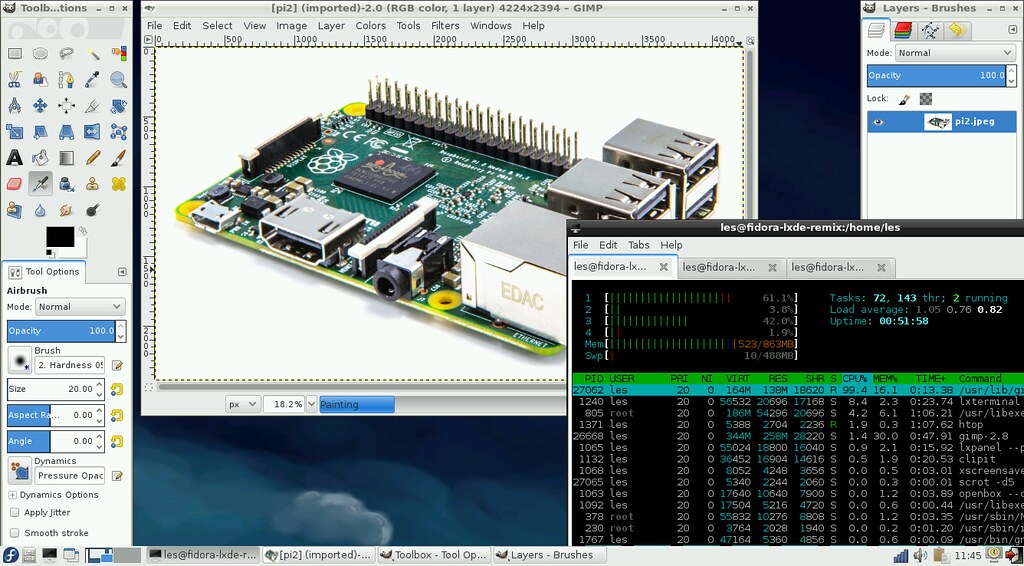
We’re looking at the Fedora 21 remix and chose to run the LXDE window manager. Installation was relatively painless requiring us to copy the raw image to a blank 8GB micro SD card, the image is created for 8GB and above cards only. Upon first boot we were presented with a config screen which enabled us to setup the root password and create a user account for general use. Once created we are asked to login to the desktop via a pleasant login screen. Once logged in we see a typical LXDE desktop environment,  an uncluttered and functional desktop with the main menu in the bottom left of the screen. Fedora comes with a few applications installed, such as Abiword for word processing, Gnumeric for spreadsheets and the file manager PCmanFM.


To test Fedora we installed a few essential applications via the terminal and the yum package manager. Firstly we installed Libreoffice, weighing in at 275MB it installed quickly and when we launched the Writer application it opened in less than 15 seconds and was very usable with no lag experienced. The same was true for installing Firefox which provided a better browsing experience thanks to it’s ARM7 optimisations.


The only application we tested that felt sluggish was GIMP, but it is quite a beast of an application that gobbles up RAM and CPU cycles. Multitasking was possible and we had Firefox, GIMP and Libreoffice open with the terminal program “scrot” capturing images in the background. We’re pleased to say that Fedora also has the RPi.GPIO Python library in it’s repositories which means that you can easily build GPIO powered projects using this distro, but the library is only for Python 2.7 with no Python 3 version in the repositories.


Fedora handled our hardware quite well, we used the official Raspberry Pi Wifi dongle to connect to the Internet and it required no extra configuration steps, unlike Ubuntu which required a hack of the wpa_supplicants.conf file.


Fedora is a slick and very usable distro and we enjoyed the experience of moving away from a Debian derivative distro. Fedora is competent and provides a good user experience and could quite easily be used as desktop distro for general purpose work. The Python GPIO library is a nice addition but it really needs to be updated for Python 3 inline with the Foundation’s learning resources.

  • raspberry_pi_space
  • Share
  • History
  • More
  • Cancel
  • Sign in to reply

Top Comments

  • e14 Contributor
    e14 Contributor over 10 years ago in reply to Eyedoll +5
    I have seen the birth and growth of M$. That's how long I have been playing with computers. Starting around 1979 when Bill Gates ported CP/M-86 to IBM's new PC creation which was the start of Microsoft…
  • Eyedoll
    Eyedoll over 10 years ago in reply to Robert Peter Oakes +4
    You're right about the cost difference between MS products and Linux. The cost of something is important for someone who is experimenting and also for someone who is implementing in large scale. So yes…
  • clem57
    clem57 over 10 years ago in reply to Robert Peter Oakes +3
    I just got it!
  • balearicdynamics
    balearicdynamics over 11 years ago in reply to clem57

    Clem,

    I have tested the suggestions explained in the link I mentioned above when I was doing the first orienting tests with 4 raspberry PI on Meditech project startup. I have found their assumption almost reliable.


    Enrico

    • Cancel
    • Vote Up 0 Vote Down
    • Sign in to reply
    • More
    • Cancel
  • clem57
    clem57 over 11 years ago in reply to balearicdynamics

    Seldom do they give complete answers. This one was hardware base. A Google will provide software too.

    • Cancel
    • Vote Up 0 Vote Down
    • Sign in to reply
    • More
    • Cancel
  • balearicdynamics
    balearicdynamics over 11 years ago in reply to clem57

    Clem, I checked this link, read the videos and the documentation, links and so on. This is a very interesting project but there is no mention at all of the software and OS configurations. It is a great lack of information and - if I have not missed something - makes the entire system impossible to replicate of keep as an inspiring project.


    Take a look to this link: Raspberry Pi web server - Raspberry Pi Cluster This is sure not so nice than the acrylic transparent case, blue fans and all the red LEDs... But it explain a method that can be studied, maybe optimised and replicated. image


    Enrico

    • Cancel
    • Vote Up 0 Vote Down
    • Sign in to reply
    • More
    • Cancel
  • clem57
    clem57 over 11 years ago in reply to taodude

    http://likemagicappears.com/projects/raspberry-pi-cluster/ check out this DIY

    • Cancel
    • Vote Up 0 Vote Down
    • Sign in to reply
    • More
    • Cancel
  • taodude
    taodude over 11 years ago in reply to balearicdynamics

    It might be worth looking at whether the compute engine versions can be stacked/meshed or whatever to improve the effective RAM capacity.  It would probably need some clever handshaking to get multiprocessing working properly, and sharing data effectively between cores, and then it would need a new motherboard to be developed to connect the compute engines so that they work together.  I know GCHQ or somewhere published a paper about Pis networked at the Ethernet level, and they were only Pi 1Bs.

    • Cancel
    • Vote Up 0 Vote Down
    • Sign in to reply
    • More
    • Cancel
  • clem57
    clem57 over 11 years ago in reply to balearicdynamics

    Use MAN DD to see the parameters.

    • Cancel
    • Vote Up +1 Vote Down
    • Sign in to reply
    • More
    • Cancel
  • balearicdynamics
    balearicdynamics over 11 years ago in reply to e14 Contributor

    Hello Lokeswara,


    there is a detail that I think makes the choice almost clear. I had to work a lot on this kind of copies recently and AFAIK the better solution demonstrated to be the raspian Linux.

    First because it is relatively simple to find tools when needed, especially if you need to start experimenting the cases using the desktop environment. Then is it simple to manage the system creating bash commands and if you need to work on many copies it is the way to automate the system.

    Then there is the question of the data format. While in many cases the other OS (e.g. windows, OSX etc.) needs tricks to support different formatting than their native ones. In fact linux raspian (and Debian and the linux OS in general) with few add-on libraries supporting non-native formatting it is possible to copy almost every support to another without great difficulties.


    In the case of the pen-drive I suggest to use the dd command with the proper parameters. But more helpful information can be provided knowing the content of the data to be copied and the format of the support.


    Enrico

    • Cancel
    • Vote Up +1 Vote Down
    • Sign in to reply
    • More
    • Cancel
  • e14 Contributor
    e14 Contributor over 11 years ago

    which OS is suitable for raspberry pi to copy data from one pen drive to another pen drive. Is there any code separate for this

    • Cancel
    • Vote Up 0 Vote Down
    • Sign in to reply
    • More
    • Cancel
  • taodude
    taodude over 11 years ago

    I'm in the middle of a Design Challenge project that needs to work with with Python 3 and GPIO pins, so it has to be Raspbian for now.  I have Ubuntu on my old Dell desktop and get on with that quite well.  I will also have a play with Windows 10 Embedded after the Design Challenge is over: I have a Windows Insider version running on my old Tosh laptop for the development environment.

    • Cancel
    • Vote Up 0 Vote Down
    • Sign in to reply
    • More
    • Cancel
  • e14 Contributor
    e14 Contributor over 11 years ago in reply to e14 Contributor

    I would definitely try it out if M$ would make an RPi image (img) available for download and processing on ANY desktop platform resulting in a bootable Micro SD card.  I am not asking any more than what Raspbian already provides (The img file can be processed on Windows, Apple MacOSX, Linux, Unix, ...).

    • Cancel
    • Vote Up +1 Vote Down
    • Sign in to reply
    • More
    • Cancel
<>
element14 Community

element14 is the first online community specifically for engineers. Connect with your peers and get expert answers to your questions.

  • Members
  • Learn
  • Technologies
  • Challenges & Projects
  • Products
  • Store
  • About Us
  • Feedback & Support
  • FAQs
  • Terms of Use
  • Privacy Policy
  • Legal and Copyright Notices
  • Sitemap
  • Cookies

An Avnet Company © 2026 Premier Farnell Limited. All Rights Reserved.

Premier Farnell Ltd, registered in England and Wales (no 00876412), registered office: Farnell House, Forge Lane, Leeds LS12 2NE.

Follow element14

  • X
  • Facebook
  • linkedin
  • YouTube