element14 Community
element14 Community
    Register Log In
  • Site
  • Search
  • Log In Register
  • Community Hub
    Community Hub
    • What's New on element14
    • Feedback and Support
    • Benefits of Membership
    • Personal Blogs
    • Members Area
    • Achievement Levels
  • Learn
    Learn
    • Ask an Expert
    • eBooks
    • element14 presents
    • Learning Center
    • Tech Spotlight
    • STEM Academy
    • Webinars, Training and Events
    • Learning Groups
  • Technologies
    Technologies
    • 3D Printing
    • FPGA
    • Industrial Automation
    • Internet of Things
    • Power & Energy
    • Sensors
    • Technology Groups
  • Challenges & Projects
    Challenges & Projects
    • Design Challenges
    • element14 presents Projects
    • Project14
    • Arduino Projects
    • Raspberry Pi Projects
    • Project Groups
  • Products
    Products
    • Arduino
    • Avnet & Tria Boards Community
    • Dev Tools
    • Manufacturers
    • Multicomp Pro
    • Product Groups
    • Raspberry Pi
    • RoadTests & Reviews
  • About Us
  • Store
    Store
    • Visit Your Store
    • Choose another store...
      • Europe
      •  Austria (German)
      •  Belgium (Dutch, French)
      •  Bulgaria (Bulgarian)
      •  Czech Republic (Czech)
      •  Denmark (Danish)
      •  Estonia (Estonian)
      •  Finland (Finnish)
      •  France (French)
      •  Germany (German)
      •  Hungary (Hungarian)
      •  Ireland
      •  Israel
      •  Italy (Italian)
      •  Latvia (Latvian)
      •  
      •  Lithuania (Lithuanian)
      •  Netherlands (Dutch)
      •  Norway (Norwegian)
      •  Poland (Polish)
      •  Portugal (Portuguese)
      •  Romania (Romanian)
      •  Russia (Russian)
      •  Slovakia (Slovak)
      •  Slovenia (Slovenian)
      •  Spain (Spanish)
      •  Sweden (Swedish)
      •  Switzerland(German, French)
      •  Turkey (Turkish)
      •  United Kingdom
      • Asia Pacific
      •  Australia
      •  China
      •  Hong Kong
      •  India
      • Japan
      •  Korea (Korean)
      •  Malaysia
      •  New Zealand
      •  Philippines
      •  Singapore
      •  Taiwan
      •  Thailand (Thai)
      • Vietnam
      • Americas
      •  Brazil (Portuguese)
      •  Canada
      •  Mexico (Spanish)
      •  United States
      Can't find the country/region you're looking for? Visit our export site or find a local distributor.
  • Translate
  • Profile
  • Settings
Business of Engineering
  • Technologies
  • More
Business of Engineering
Blog A project failure due to technical reasons - a supercapacitor problem
  • Blog
  • Forum
  • Documents
  • Quiz
  • Events
  • Polls
  • Files
  • Members
  • Mentions
  • Sub-Groups
  • Tags
  • More
  • Cancel
  • New
Join Business of Engineering to participate - click to join for free!
  • Share
  • More
  • Cancel
Group Actions
  • Group RSS
  • More
  • Cancel
Engagement
  • Author Author: Catwell
  • Date Created: 22 Aug 2014 7:44 PM Date Created
  • Views 2198 views
  • Likes 3 likes
  • Comments 7 comments
  • supercapacitor
  • Design
  • cabeatwell
  • power_supply
  • power
  • ultracapacitor
  • dev_fails
Related
Recommended

A project failure due to technical reasons - a supercapacitor problem

Catwell
Catwell
22 Aug 2014

image

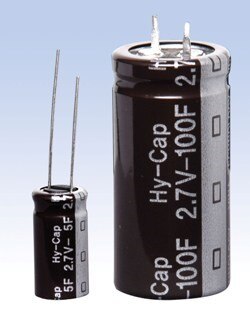
Supercaps... 100F is always startling to me.


I cannot go into too much detail as there are IP concerns at stake. This design failure concerns a device for the purpose of....hmm...controlling a sight where customers might come to fill there "something", with uhhhh, a few gallons of "something." Anyway, the predecessors and contemporaries of this device use a rechargeable battery pack to ride out power failures and brown outs. The current, just released, not fully tested version uses supercaps!! in place of rechargeable batteries.  The microcontroller on board needs about 60 seconds of power so that it could perform an orderly shutdown, store transactional data, etc.. Everything squared away and it it's place you see.


Failure: The supercapacitors were laid out on the board so that they are permanently in parallel with the microcontroller power bus. Because the supercap never lets the micro fully power down, the micro could never actually power-cycle and restart it's clock. The result is an unresponsive "brick" and from the customer's perspective, a defective/malfunctioning/broken "call it whatever you want, it's not working!" unit. Well, it could power-cycle if you physically unplugged the device from it's 85 to 265 VAC source and wait for the modest current draw from the system to completely drain the charge from those supercapacitors. Unplugging an actual installed unit is not a practical option because units in the field get there power from a conduit.


Also, the unit was supposed to be able to perform it's own resets. Besides, periodically having customers unplug their units for 20 minutes at a time is not a solution. The fix for this? I don't know and it's not my job. I just get to hear about the failure from other engineers.


Have any of your engineering projects ever failed due to factors beyond your control? Share your story here!


C

See more news at:

http://twitter.com/Cabe_Atwell

  • Sign in to reply

Top Comments

  • johnbeetem
    johnbeetem over 11 years ago +2
    This is an excellent example of why a microcontroller needs a reset pin that actually resets the device. Hard reset. Same as power cycling. Alas, reset is too often left as an afterthought or something…
  • DAB
    DAB over 11 years ago +1
    Looks like a good job for a watchdog timer and programmable dummy load circuit. That or put a couple of pins out to let people test their voltage tolerance while it discharges through your fingers. DA…
  • Catwell
    Catwell over 11 years ago in reply to johnbeetem +1
    Well, the main problem was the supercap. It kept the system powered no matter what happened. That brute force solution turned out not to be the best. So, exploring the whole power system would have been…
Parents
  • Former Member
    Former Member over 11 years ago

    I am working on a similar project: A supercapacitor UPS for Raspberry Pi. The supercapacitors are also in parallel with the 5V power rail but can be (and also must be) isolated when charging or discharging. Here is a video showing how it works:


    The supercapacitor UPS for Raspberry Pi - YouTube


    You can find the project, the circuit diagram and the datasheet here:


    www.juice4halt.com

    • Cancel
    • Vote Up +1 Vote Down
    • Sign in to reply
    • More
    • Cancel
Comment
  • Former Member
    Former Member over 11 years ago

    I am working on a similar project: A supercapacitor UPS for Raspberry Pi. The supercapacitors are also in parallel with the 5V power rail but can be (and also must be) isolated when charging or discharging. Here is a video showing how it works:


    The supercapacitor UPS for Raspberry Pi - YouTube


    You can find the project, the circuit diagram and the datasheet here:


    www.juice4halt.com

    • Cancel
    • Vote Up +1 Vote Down
    • Sign in to reply
    • More
    • Cancel
Children
No Data
element14 Community

element14 is the first online community specifically for engineers. Connect with your peers and get expert answers to your questions.

  • Members
  • Learn
  • Technologies
  • Challenges & Projects
  • Products
  • Store
  • About Us
  • Feedback & Support
  • FAQs
  • Terms of Use
  • Privacy Policy
  • Legal and Copyright Notices
  • Sitemap
  • Cookies

An Avnet Company © 2025 Premier Farnell Limited. All Rights Reserved.

Premier Farnell Ltd, registered in England and Wales (no 00876412), registered office: Farnell House, Forge Lane, Leeds LS12 2NE.

ICP 备案号 10220084.

Follow element14

  • X
  • Facebook
  • linkedin
  • YouTube