element14 Community
element14 Community
    Register Log In
  • Site
  • Search
  • Log In Register
  • Community Hub
    Community Hub
    • What's New on element14
    • Feedback and Support
    • Benefits of Membership
    • Personal Blogs
    • Members Area
    • Achievement Levels
  • Learn
    Learn
    • Ask an Expert
    • eBooks
    • element14 presents
    • Learning Center
    • Tech Spotlight
    • STEM Academy
    • Webinars, Training and Events
    • Learning Groups
  • Technologies
    Technologies
    • 3D Printing
    • FPGA
    • Industrial Automation
    • Internet of Things
    • Power & Energy
    • Sensors
    • Technology Groups
  • Challenges & Projects
    Challenges & Projects
    • Design Challenges
    • element14 presents Projects
    • Project14
    • Arduino Projects
    • Raspberry Pi Projects
    • Project Groups
  • Products
    Products
    • Arduino
    • Avnet & Tria Boards Community
    • Dev Tools
    • Manufacturers
    • Multicomp Pro
    • Product Groups
    • Raspberry Pi
    • RoadTests & Reviews
  • About Us
    About the element14 Community
  • Store
    Store
    • Visit Your Store
    • Choose another store...
      • Europe
      •  Austria (German)
      •  Belgium (Dutch, French)
      •  Bulgaria (Bulgarian)
      •  Czech Republic (Czech)
      •  Denmark (Danish)
      •  Estonia (Estonian)
      •  Finland (Finnish)
      •  France (French)
      •  Germany (German)
      •  Hungary (Hungarian)
      •  Ireland
      •  Israel
      •  Italy (Italian)
      •  Latvia (Latvian)
      •  
      •  Lithuania (Lithuanian)
      •  Netherlands (Dutch)
      •  Norway (Norwegian)
      •  Poland (Polish)
      •  Portugal (Portuguese)
      •  Romania (Romanian)
      •  Russia (Russian)
      •  Slovakia (Slovak)
      •  Slovenia (Slovenian)
      •  Spain (Spanish)
      •  Sweden (Swedish)
      •  Switzerland(German, French)
      •  Turkey (Turkish)
      •  United Kingdom
      • Asia Pacific
      •  Australia
      •  China
      •  Hong Kong
      •  India
      •  Japan
      •  Korea (Korean)
      •  Malaysia
      •  New Zealand
      •  Philippines
      •  Singapore
      •  Taiwan
      •  Thailand (Thai)
      •  Vietnam
      • Americas
      •  Brazil (Portuguese)
      •  Canada
      •  Mexico (Spanish)
      •  United States
      Can't find the country/region you're looking for? Visit our export site or find a local distributor.
  • Translate
  • Profile
  • Settings
Experts, Learning and Guidance
  • Technologies
  • More
Experts, Learning and Guidance
Ask an Expert Forum How to measure an impedance of an nfc antenna
  • Blog
  • Forum
  • Documents
  • Leaderboard
  • Files
  • Members
  • Mentions
  • Sub-Groups
  • Tags
  • More
  • Cancel
  • New
Join Experts, Learning and Guidance to participate - click to join for free!
Actions
  • Share
  • More
  • Cancel
Forum Thread Details
  • State Not Answered
  • Replies 14 replies
  • Subscribers 330 subscribers
  • Views 513 views
  • Users 0 members are here
Related
See a helpful answer?

Be sure to click 'more' and select 'suggest as answer'!

If you're the thread creator, be sure to click 'more' then 'Verify as Answer'!

How to measure an impedance of an nfc antenna

Luka851
Luka851 24 days ago

Hi, 

I want to make a custom dimension - 20mm x 320 mm - external antenna coil for PN5180 NFC Module/Chip. 

To do this I need to design an antenna that has inductance of 0.8-3 microhenry, and then a matching circuit to match with the chip/s 20 ohm load impedance at 13.56 MHz. 

I only have an oscilloscope and a signal generator.

My questions are, 

1. How do I measure inductance of the following antennas 

imageimage

2. How do I measure impedance on the pn5180 module, and when I do, the result should be 20 ohm, right?

3. Can I measure inductance of the antenna on the pcb? I should disconnect the matching circucit to do it, right?

4. How do I disconnect the pcb antenna from the module and connect to it either of two coils from photos above.

  • Sign in to reply
  • Cancel

Top Replies

  • shabaz
    shabaz 24 days ago +6
    Fairly sure Fred27 did some interesting work in this area a few years back, so you could google for that and find his blogs. Also, there are quite a few ways to measure inductance with minimal test equipment…
  • BigG
    BigG 24 days ago +3
    Get hold of one of these VNA's for impedance measurements: Low-cost Vector Network Analyzer: NanoVNA-H4 Unboxing If you searched online you'd find. And no I haven't watched: https://www.youtube.com/watch…
  • Fred27
    Fred27 23 days ago +3
    As Shabaz and BigG have said, a VNA is ideal for not just measuring your antenna, but calculating and checking the component values for the matching circuit. NXP provide good documentation on this, but…
  • BigG
    0 BigG 24 days ago

    Get hold of one of these VNA's for impedance measurements:  Low-cost Vector Network Analyzer: NanoVNA-H4 Unboxing 

    If you searched online you'd find. And no I haven't watched: https://www.youtube.com/watch?v=iQQe8uSZ8xc

    • Cancel
    • Vote Up +3 Vote Down
    • Sign in to reply
    • Verify Answer
    • Cancel
  • shabaz
    0 shabaz 24 days ago

    Fairly sure Fred27 did some interesting work in this area a few years back, so you could google for that and find his blogs.

    Also, there are quite a few ways to measure inductance with minimal test equipment, again googleable, and you can pick and choose the technique which you feel best matches your equipment and experience so far.

    Also, as BigG mentions, nowadays a VNA can be so cheap, it's worth it (but there is a learning curve). It's possibly the best tool for this purpose, if you have or want the experience and are willing to invest time in this. I've written a few VNA blog posts, one describes how to measure inductance (again googleable). By the way that's also the tool for measuring the impedance of your module, but I'm curious why you don't just accept the module datasheet specification (whatever that is); unless you're trying to squeeze top performance out of it, because again, there's a learning curve to this so you can't just dive in.

    • Cancel
    • Vote Up +6 Vote Down
    • Sign in to reply
    • Verify Answer
    • Cancel
  • Fred27
    0 Fred27 23 days ago

    As Shabaz and BigG have said, a VNA is ideal for not just measuring your antenna, but calculating and checking the component values for the matching circuit. NXP provide good documentation on this, but you won't be able to get far without at least knowing the antenna inductance.

    • Cancel
    • Vote Up +3 Vote Down
    • Sign in to reply
    • Verify Answer
    • Cancel
  • dougw
    0 dougw 23 days ago

    Here are some techniques for measuring antenna impedance:

    https://youtu.be/giMtCzvvE3o

    • Cancel
    • Vote Up +2 Vote Down
    • Sign in to reply
    • Verify Answer
    • Cancel
  • kmikemoo
    0 kmikemoo 21 days ago in reply to dougw

    Interesting video.  Since NFC is at 13.56MHz, the OP might be able to make measurements with the equipment they have.  I'd try the bridge first.

    • Cancel
    • Vote Up +2 Vote Down
    • Sign in to reply
    • Verify Answer
    • Cancel
  • Luka851
    0 Luka851 18 days ago in reply to dougw

    Thank you, I will look into it

    • Cancel
    • Vote Up 0 Vote Down
    • Sign in to reply
    • Verify Answer
    • Cancel
  • Luka851
    0 Luka851 18 days ago in reply to Fred27

    Thank you, May I ask which NanoVNA do you have, and from which brand/supplier, perhaps at what price as well. I think to buy one on Taobao but the prices are so much different - I don't know what to pick and how to pick a good enough one.

    • Cancel
    • Vote Up 0 Vote Down
    • Sign in to reply
    • Verify Answer
    • Cancel
  • Luka851
    0 Luka851 18 days ago in reply to BigG

    Thank you, I read his article after you commented it, I also read through his other articles, and I have more questions to him. May I ask which NanoVNA do you have, and from which brand/supplier, perhaps at what price as well. I think to buy one on Taobao but the prices are so much different - I don't know what to pick and how to pick a good enough one.

    • Cancel
    • Vote Up 0 Vote Down
    • Sign in to reply
    • Verify Answer
    • Cancel
  • Luka851
    0 Luka851 18 days ago in reply to shabaz

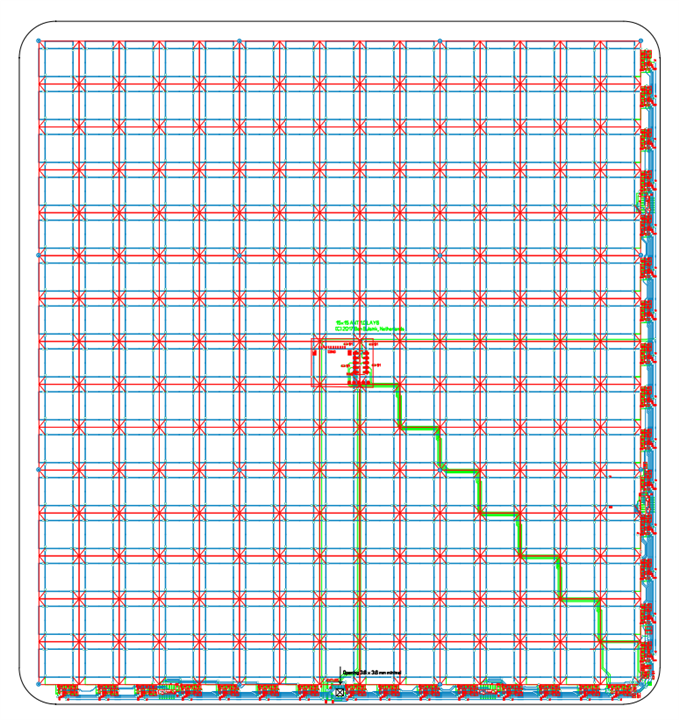
    Hi Shabaz, I read your articles about Low-cost VNA unboxing, and guide to getting started with VNA. Thanks for writing them! May ask, how is that Low-cost NanoVNA working now in practice? Would you still recommend buying it? and if I may ask, from which platform, which supplier/bradn did you got yours and at what price, becauase when I search on Taobao, Temu, aliExpress there are so many of NanoVNAs of the same brand and still have different prices (different enough to matter - like $50 differences). I want to create 15x15 grid nfc antenna, 15x300mm to make a scrabble game board. instead of making 225 antennas, I will make 15 column and 15 row antenna, and multiplex them to get a exact location of the tile/piece. I am afraid to get a NanoVNA that will not be able to help me there, or do you think it will? 

    image

    • Cancel
    • Vote Up 0 Vote Down
    • Sign in to reply
    • Verify Answer
    • Cancel
  • shabaz
    0 shabaz 17 days ago in reply to Luka851

    Hi,

    A VNA is like a flagship instrument for measuring inductances (and more) at RF frequencies, so it's definitely a suitable tool for inductance measurement, but with that caveat that I don't know how far you are prepared to go on that learning curve. Traditionally, only niche industries and RF engineers were prepared to invest that time.

    The NanoVNA H4 is a very general-purpose, all-round useful VNA, so if you do want a VNA, you could do a lot worse than buy that. I got mine from "Zeenko Store" on AliExpress (I believe that is the official seller).

    The next question is, will inductance measurement be sufficient to achieve your actual objective, which is to have (I believe) a very long NFC antenna coil that works well along the entire length? The VNA won't measure any electromagnetic fields (well, it might be able to do so but in a more spectrum analyzer-like mode if it can do that, and with different probes). And even if that was successful, the results wouldn't specifically show you what change needs to be made to improve performance, so you could be there tweaking things for days or weeks on end (I'm guessing, no idea, since I've never tried this).

    In reality, if you really wish to make such an unusual shape antenna work without a lot of trial-and-error, then you'd want to design and simulate it. There is free AN-SOF software, it's got a learning curve too (but hopefully not too much) - I've only used it for a very simple antenna, I've never tried it for NFC. Another option is HFSS, and there is a student license or a trial license, but I don't know the terms/conditions. You could also consider Matlab (see here: https://uk.mathworks.com/matlabcentral/answers/2180231-matlab-nfc-antenna-simulation  ) since the "home user" license is affordable (ballpark $100 but I've not checked recently; you'll also need to purchase add-ons called toolboxes, specifically at least the Antenna Toolbox, but more may be needed at a later point as you proceed).As mentioned, all these software options have learning curves.

    • Cancel
    • Vote Up +1 Vote Down
    • Sign in to reply
    • Verify Answer
    • Cancel
>
element14 Community

element14 is the first online community specifically for engineers. Connect with your peers and get expert answers to your questions.

  • Members
  • Learn
  • Technologies
  • Challenges & Projects
  • Products
  • Store
  • About Us
  • Feedback & Support
  • FAQs
  • Terms of Use
  • Privacy Policy
  • Legal and Copyright Notices
  • Sitemap
  • Cookies

An Avnet Company © 2026 Premier Farnell Limited. All Rights Reserved.

Premier Farnell Ltd, registered in England and Wales (no 00876412), registered office: Farnell House, Forge Lane, Leeds LS12 2NE.

ICP 备案号 10220084.

Follow element14

  • X
  • Facebook
  • linkedin
  • YouTube