element14 Community
element14 Community
    Register Log In
  • Site
  • Search
  • Log In Register
  • Community Hub
    Community Hub
    • What's New on element14
    • Feedback and Support
    • Benefits of Membership
    • Personal Blogs
    • Members Area
    • Achievement Levels
  • Learn
    Learn
    • Ask an Expert
    • eBooks
    • element14 presents
    • Learning Center
    • Tech Spotlight
    • STEM Academy
    • Webinars, Training and Events
    • Learning Groups
  • Technologies
    Technologies
    • 3D Printing
    • FPGA
    • Industrial Automation
    • Internet of Things
    • Power & Energy
    • Sensors
    • Technology Groups
  • Challenges & Projects
    Challenges & Projects
    • Design Challenges
    • element14 presents Projects
    • Project14
    • Arduino Projects
    • Raspberry Pi Projects
    • Project Groups
  • Products
    Products
    • Arduino
    • Avnet & Tria Boards Community
    • Dev Tools
    • Manufacturers
    • Multicomp Pro
    • Product Groups
    • Raspberry Pi
    • RoadTests & Reviews
  • About Us
  • Store
    Store
    • Visit Your Store
    • Choose another store...
      • Europe
      •  Austria (German)
      •  Belgium (Dutch, French)
      •  Bulgaria (Bulgarian)
      •  Czech Republic (Czech)
      •  Denmark (Danish)
      •  Estonia (Estonian)
      •  Finland (Finnish)
      •  France (French)
      •  Germany (German)
      •  Hungary (Hungarian)
      •  Ireland
      •  Israel
      •  Italy (Italian)
      •  Latvia (Latvian)
      •  
      •  Lithuania (Lithuanian)
      •  Netherlands (Dutch)
      •  Norway (Norwegian)
      •  Poland (Polish)
      •  Portugal (Portuguese)
      •  Romania (Romanian)
      •  Russia (Russian)
      •  Slovakia (Slovak)
      •  Slovenia (Slovenian)
      •  Spain (Spanish)
      •  Sweden (Swedish)
      •  Switzerland(German, French)
      •  Turkey (Turkish)
      •  United Kingdom
      • Asia Pacific
      •  Australia
      •  China
      •  Hong Kong
      •  India
      • Japan
      •  Korea (Korean)
      •  Malaysia
      •  New Zealand
      •  Philippines
      •  Singapore
      •  Taiwan
      •  Thailand (Thai)
      • Vietnam
      • Americas
      •  Brazil (Portuguese)
      •  Canada
      •  Mexico (Spanish)
      •  United States
      Can't find the country/region you're looking for? Visit our export site or find a local distributor.
  • Translate
  • Profile
  • Settings
Internet of Things
  • Technologies
  • More
Internet of Things
Blog Itead Studio Sonoff and Slampher: Low Cost Smart Home Solution - Review
  • Blog
  • Forum
  • Documents
  • Quiz
  • Events
  • Polls
  • Members
  • Mentions
  • Sub-Groups
  • Tags
  • More
  • Cancel
  • New
Join Internet of Things to participate - click to join for free!
  • Share
  • More
  • Cancel
Group Actions
  • Group RSS
  • More
  • Cancel
Engagement
  • Author Author: kas.lewis
  • Date Created: 25 Dec 2015 7:29 AM Date Created
  • Views 12929 views
  • Likes 5 likes
  • Comments 53 comments
  • internet_of_everything
  • internet_of_things
  • sonoff
  • itead_wifi_switch
  • slampher
  • iot
Related
Recommended

Itead Studio Sonoff and Slampher: Low Cost Smart Home Solution - Review

kas.lewis
kas.lewis
25 Dec 2015

sonoffslampher.jpg


INTRODUCTION

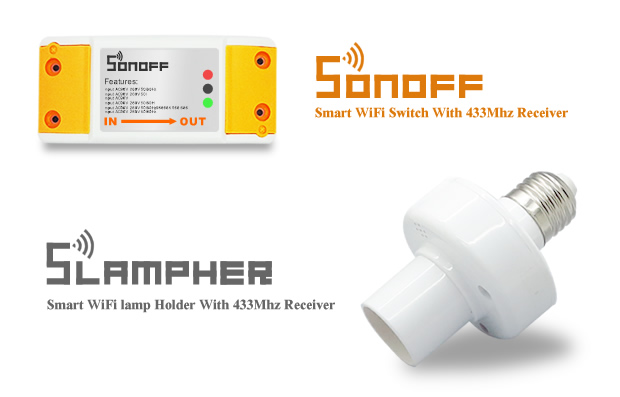
Itead Studio has launched a indiegogo campaign to help bring one of their new products to market. Itead Studio has been working on a WiFi enabled switch for easy home automation. They have specifically been working on two products, one that fits into a light fixture (Slampher) and one that is spliced into any cable (Sonoff). The catch behind these two products is their incredible low price (~$7 per unit) and their easy of use.


HOW I ARRIVED AT THIS POINT

I was contacted through one of my reviews on Element14 by Itead Studio concerning a new product they are looking to launch. I was asked if I was interested in reviewing a WiFi switch of theirs and to give them some feedback. As I have played around with passing data over WiFi (see my Plot.ly project) I was intrested how this may work to control something in a smart home, so I promptly responded YES! After a shipping delay the package of one Sonoff, one slampher and a 433 MHz remote were on my way.


It took a short altercation with DHL and some kind help from customs to have my package firmly in my grasp.


INITIAL SETUP (NO INSTRUCTIONS)

Having arrived on a Thursday I decided to wait for the weekend to try everything out as I figured it may take some time to look into everything that interested me about this product. When I did start to play with the units I decided to start without looking at any instructions, if I can get most. if not all the way through using a product then I’m willing to keep going with it. I started by downloading the app from the Google Play store and tried from there to get something started. In all to get the slampher working took 5 minutes without instructions, for some unknown reason the Sonoff took a bit longer but eventually it worked as well. The next step was to get the 433 MHz remote working. With some fiddling around the Lamphor connected to button A on the remote but there was no way I was getting the Sonoff to connect to button B. After trying various more things and figuring the unit was a bust I decided to read the instructions… It didn’t take more than 30 seconds after doing that to connect the Sonoff to the remote's button B.


SETUP WITH INSTRUCTIONS (THE CORRECT WAY)

The correct procedure, this time following the instructions would be:


If you would like to simply turn on/off your device without using the remote or app then you can quickly press the “set” button on slampher/sonoff once to do so.


Pair with 433Mhz RF remote controller without WiFi .

Press the “set” button on Sonoff and Slampher twice quickly and the red LED on Sonoff/Slampher will flash one time.


Now press button “A”, ”B”, ”C” or ”D” on the controller to pair with the remote. If you pair it with “A”, then pressing “A” will turn on/off your device.


If you would like to remove the pairing, press the"set" button on Sonoff/Slampher quickly 3 times.


APP Operation

1. Download and install the app on your smartphone


2. Register a new account, you’ll need to enter your phone No. and password (at least 8 letters, must contain number, lowercase and uppercase letters). A code will be sent to your phone via SMS, enter the verification code to register.


3. Login with your account.


4. Add devices.

4A. Before adding a device, you must turn on the WiFi on your phone, then press and hold the “set” button until the green LED indicator blinks quickly.


4B. In the app click “+” to add devices followed by “Start searching”, it will auto-search and connect the “ITEAD10000xxx” WiFi around you.


4C. Then select your WiFi account and enter password, click remember so that next time you don’t need to fill in again.


4D. Click “next” to name your device, then “next” you will add the device successfully.


Note: If you see the new added device is offline, please wait for a moment. If it keeps offline, please power off the device, then power it up, if everything is ok, it will become online.


5. Delete devices

If you would like to remove a device, you need to go to the devices list, then slide the device name from right to left. You will see the delete icon, just press it to delete your device.


7.Manage Group

Click the top right corner button on device list interface. You’ll see”Manage Group””Exit Account””Exit e-Welink”. Click “Manage Group” to add or delete group. After adding group, you can long press to select the device and move it under your group. If you delete a group, the devices belong to this group will still exist.


8.Share devices

Enter the device you want to share, click icon “share” then enter the Phone number you want to share with, this phone No. should register and login first and remain online. That number will then receive an invitation message, by accepting the invitation, that user will have the authority to control the device you share. Only the owner of the devices has right to share devices.


e-WeLink APP

The app packs a lot of functionality even if it may be in its initial stages of release. The first feature that is very much appreciated and may be taken for granted is the status update. Whenever the status of the device is changed, the app will reflect this change. That is, if a shared user changes the status or someone uses the remote or if someone presses the button on the device directly, any of these changes will be reflected in the app. This quickly and easily allows a user to know the status and change it and verify that change if needed.


Another nice feature is the timer feature, considering a basic timer will run you ~$20 this is one big deal. There are a number of timers that can be set (the exact number is untested at this point). But not only can a timer be set once or repeatedly but, there is a countdown timer as well. This is a nice feature for someone leaving their house or getting ready for bed. The timer could be set to turn off the light after a specified amount of time without the need to remember to do so once you have left the house or gone to bed.


As this is an app on a smartphone it would not be complete if it was not possible to share control with another user. This too has been included and is easily done. Once shared the other user can easily turn on and off the device and use it the same as the main user. For this feature it would be nice if in a future release of the app if the level of control could be chosen so that a secondary user could not remove timers or maybe could only turn on/off a device but not the other way around. 


Itead has definitely thought of this as a large scale project in that they are hoping that you will deploy this across many locations, to make this easier they have introduced groups A group allows a user to put all devices, say in their home, in one group so that finding the standing lamp in your dining room will be relatively easy without needing to go through all the devices at the cottage, office, etc.


Overall the app is intuitive and very easy to use. Itead has kept the user interface simple and clean allowing for a great user experience, and with fast update times on a device's status change the app keeps you always informed as to what your devices are doing.


Power Consumption

One of the things that concerns me about using a device that is always plugged in is the ongoing power consumption. The idea here is partly to reduce power consumption and potentially save money. I was therefore wondering what the power consumption of the Sonoff was. It should be noted that currently there is nothing to compare this value to but hopefully in the near future this will be added.


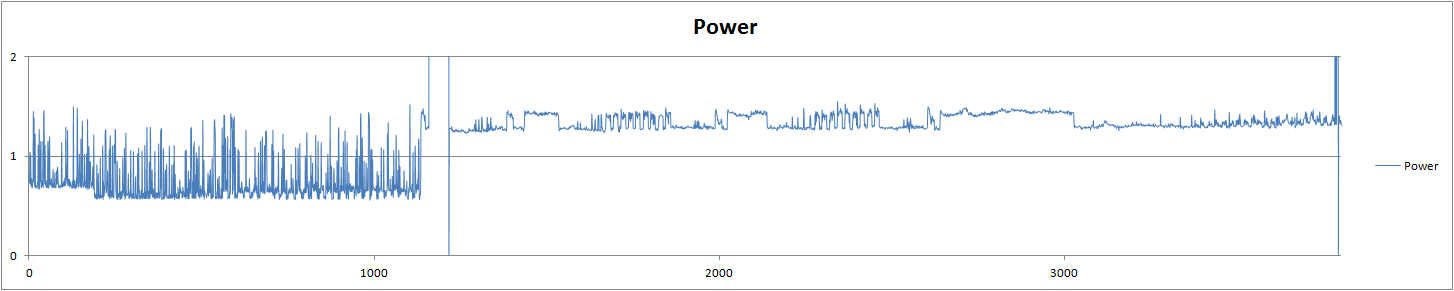
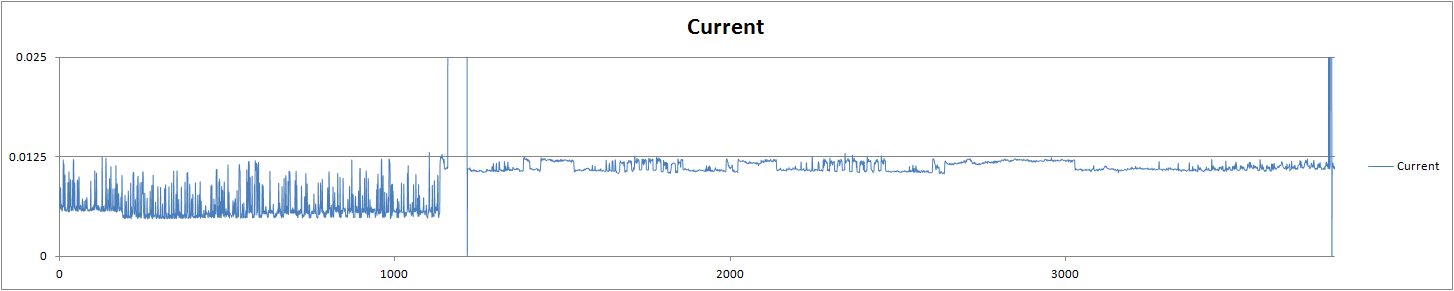
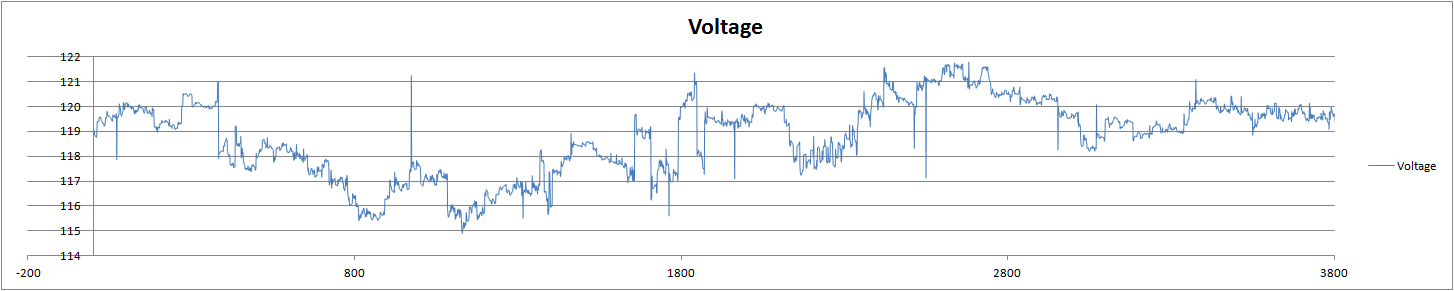
As can be seen in the graphs below the power consumption appears to be sitting below 1 Watt for half of the duration and above 1 watt for the remainder. It should be noted that the blips that exceed these values are when the unit was on and powering a fluorescent lamp.
 

image

Figure 1. Power consumption measured in watts
 

image

Figure 2. Current measured in amperes
 

image

Figure 3. Voltage measured in volts


The issue here is the overall cost of having a unit connected all the time if there was away for Itead to reduce the overall power consumption this would make for an even better product.


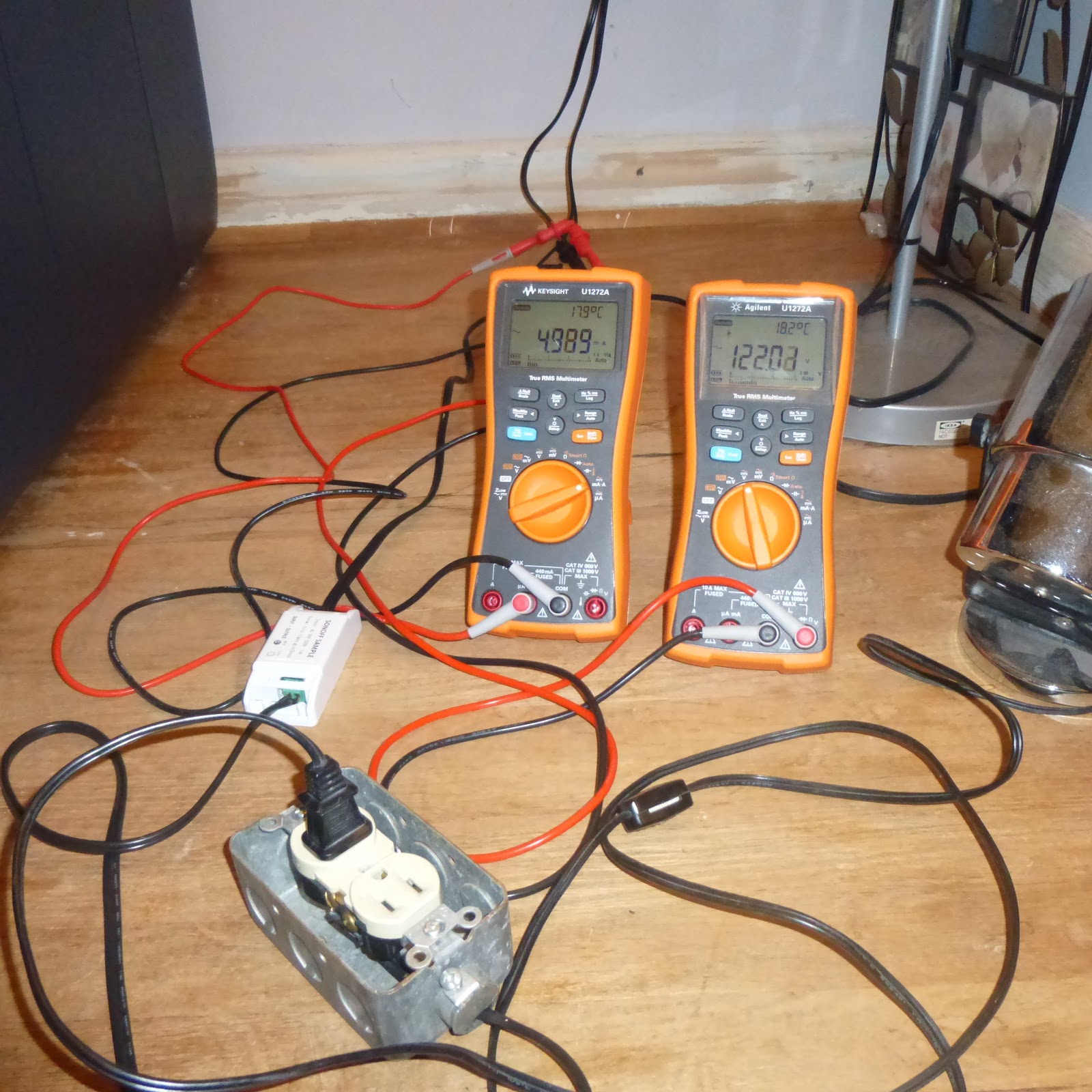
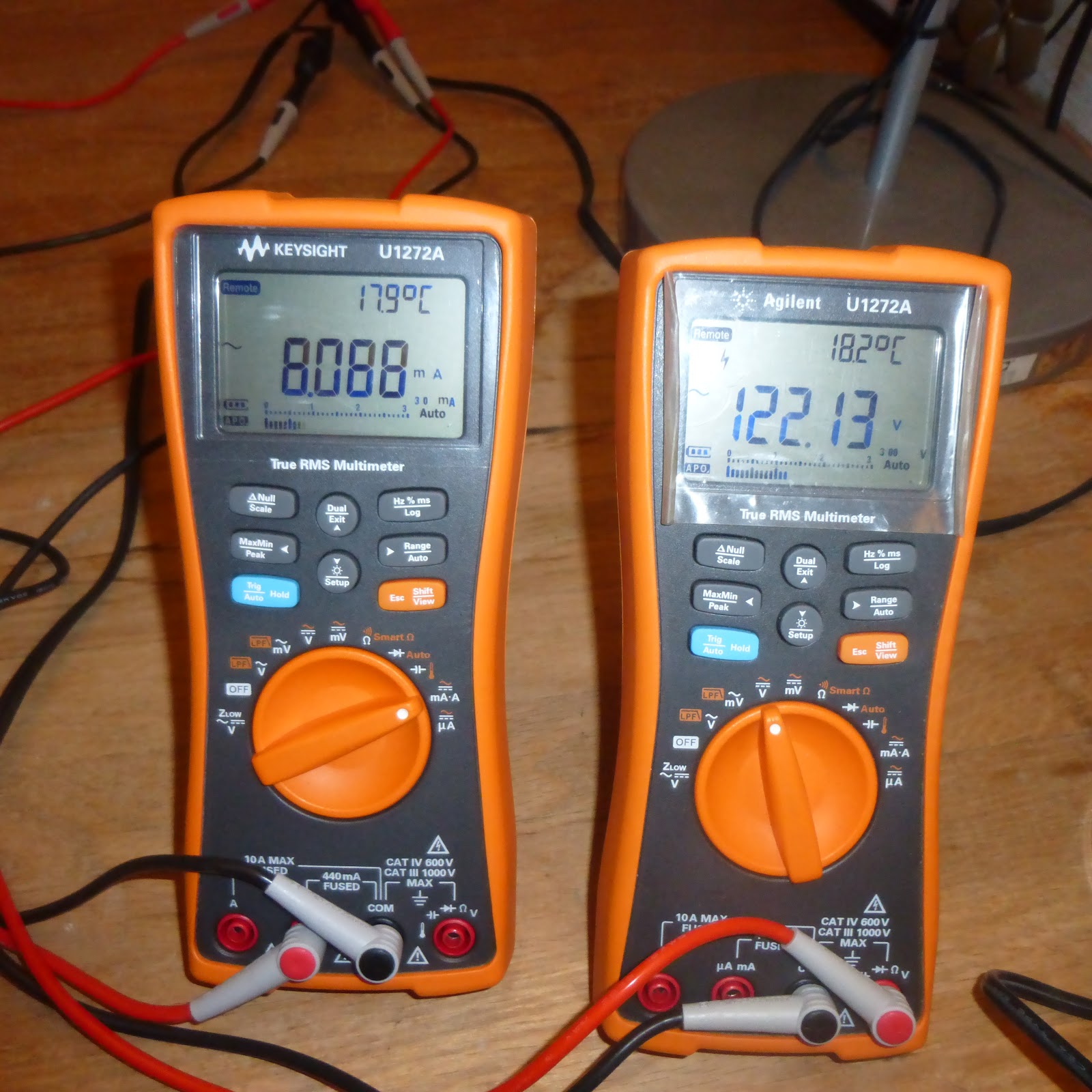
That being said there are two HUGE factors to take into account regarding my measurements. The first is I was using two multimeters logging at one second intervals to a laptop over bluetooth and this may not provide the best results. If the unit only wakes up every 200 ms and is on for 20 ms to listen for WiFi or 433 MHz signals the power savings would be tremendous but the multimeters would not see that and report a higher than real power consumption. The second issue is the lack of comparable data, without anything to compare my measurements too only a small fraction of the data is being shown. For this to be useful I would need to take measurements on other time switches as well as other comparable devices, such as those from Belkin. In a later post I will try look at a time switch to be able to at least give another data point.
 

P1040254.JPGP1040255.JPG

Figure 4. Setup used to measure voltage and current to arrive at power consumption


I am hoping to look more into the power consumption as well as some of the irregularities that can be seen in the first half of the graphs in a later blog entry. I would also like to look into what the power consumption is of both the sonoff and the slampher in relation to other timing/standby products to get a better understanding of how the efficiency of these products compares to other such products.


CONCERNS

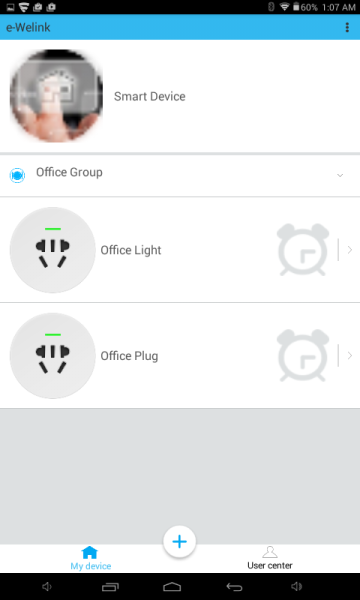
After working with this product for a few days I have tried a few different things and feel I have enough basic experience to give my feedback both positive and some less so. Starting with the less so, I would say the app needs some work. Currently the network password for your home network is stored in plain text and is always available I have been assured that this will be fixed in a later release of the app and is a “known issue”. It would also be nice if I did not have to go into each individual light to see its state but rather if the entry page could display that information directly.
Screenshot_2015-12-03-01-07-14.png

Figure 5. Itead app home page


The next concern I have is the longevity of the unit. Since all the units only work through Itead’s servers, should this fail for some reason all the units would no longer be useable unless someone else decided to take that on or if Itead would make all their code publicly available. Currently I do not see this as an immediate issue as Itead appears to be taking this product very seriously


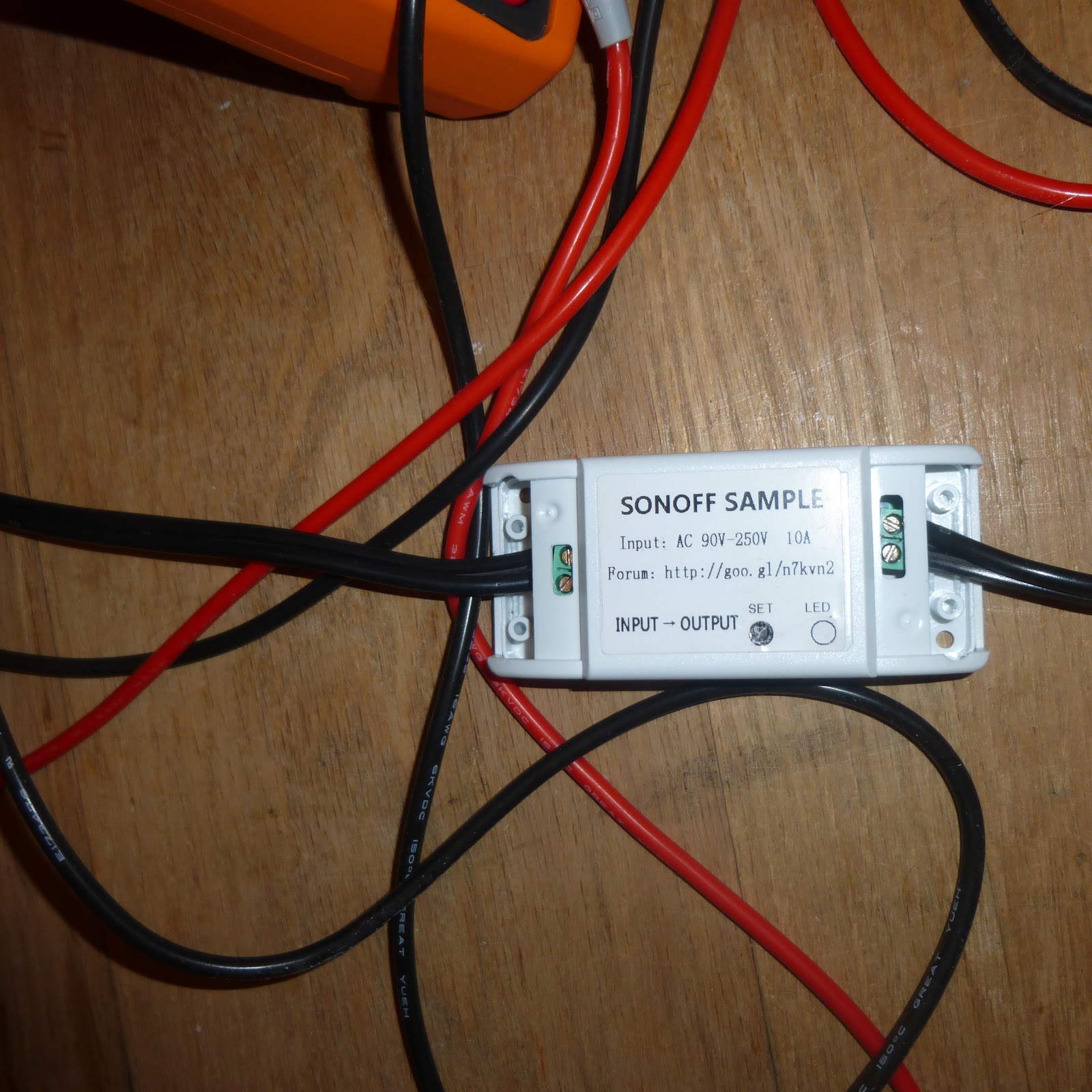
Lastly is the issue of form factor, both the slampher and sonoff could be more discreet. The slampher adds a decent amount of length to the average light bulb preventing this from being used in a closed light fixture or any fixture that may have a length limit. As for the sonoff the form factor is pretty good, but one person noted if it could be smaller it could be inserted in light or socket fixtures. Maybe the real solution to that is for Itead to increase their product range by offering a light switch or conventional plug. Overall I did not have any issue with the sonoff other than a possible missing connection point for a ground wire connection when using a three prong plug.
P1040260.JPG

Figure 6. Sonoff with two connection points


POSITIVES

For Itead’s offerings the positives outweigh the cons. Firstly it should be noted that the price point per unit for Itead’s system is significantly less than that offered by the competitors, at ~$7 per unit or ~$22 for 4 units the cost is very low.

The next positive is ease of use, the simplicity in the units setup and control make it easily usable by anyone on any level of technical knowledge. The clean interface in the app allows for easy and quick control of any device be it in your home network or in another location network. The overall system also adds a decent amount of convenience as well as security with the ability to remotely turn on lights and well as check their status remotely. This would be great for someone coming home late and would like to have their home illuminated before entering either for comfort or security. This system would also allow for light to be turned on should motion be detected somewhere or a noise heard without the need to go to that location.


I also found the design of both units, while maybe cumbersome in form, easy to you. The slampher simply fits into an existing light fixture and then a bulb is inserted into it. While the sonoff has two connection points and is agnostic as to how the wires are connected. This allows for anyone to connect a device by splicing the wires with only the need to ensure they keep each wire going in connected to itself at the exit. While I have not checked that both wire are disconnected when the sonoff is turned off, I would imagine that this would be so to ensure the end device (lamp, fan , etc.) is not live with only the ground wire disconnected.


These devices potentially also have the ability to reduce power costs as the devices can be turned off remotely. This means if a light/device was left on or may have been left on the app can be checked and if indeed the light/device was indeed left on it can be turned off remotely thus saving power and money.


MOVING FORWARD

I have chosen to further support Itead’s campaign buy buying 4 Slamphers for use around the home. I have done so for a few reasons. Firstly the level of support I have received shows that there is active development and knowledgeable people behind this development. Secondly, I have samples in hand this shows that they have something that works that is ready for feedback and lastly Itead is a functioning and thriving online store. This would imply they have both the knowledge and ability to bring this product to fruition. While there may be some concerns, overall I believe it is relatively small payout for a potentially amazing and growing product.


Indiegogo Campaign

https://www.indiegogo.com/projects/sonoff-slampher-low-cost-smart-home-solution/#/


Blog on standby Power

http://goughlui.com/2015/12/23/standbyno-load-power-consumption-are-we-doing-it-right/


Other Blogs On Itead Slampher & Sonoff Reviews (in no specific order)

http://matthewcmcmillan.blogspot.ca/2015/12/product-review-itead-studio-wifi.html?showCom

ment=1450703164942


http://blog.brianmoses.net/2015/12/sonoff-and-slampher-home-automation-review.html


http://misc.ws/2015/12/11/itead-studios-smart-home-switches/


http://electronicopensource.blogspot.ca/2015/11/itead-sonoff-wifi-wireless-switch.html


http://www.cnx-software.com/2015/12/03/sonoff-slampher-are-5-rf-and-wifi-smart-switches-and-lightbulb-adapters-crowdfunding/


http://nfriedly.com/techblog/2015-12-16-itead-sonoff-slampher-review/


https://giovanniorgantini.wordpress.com/2015/12/22/home-automation/


Tweet

Follow @Kazzzzzzzzzzz

Follow Kas' blog
  • Sign in to reply

Top Comments

  • kas.lewis
    kas.lewis over 10 years ago in reply to mcb1 +3
    Hello mcb1, From looking at the Indiegogo campaign (Itead has done 6 of which 3 were very successful and 3...) itcraze is a member of Itead Studio and more specifically their indiegogo campaign team (now…
  • kas.lewis
    kas.lewis over 10 years ago in reply to Former Member +2
    Hello itcraze I understand that may be your preference but some of use here would maybe like to do other interesting things with this product and not be stuck with one option or may be concerned about…
  • kas.lewis
    kas.lewis over 10 years ago in reply to mcb1 +2
    mcb1 , Here is m latest exchange with the person from Itead Studio I have been dealing with: I wrote: Hello Emmy, I was wondering, what happens to all the pledges if the Indiegogo campaign is not…
Parents
  • Gough Lui
    Gough Lui over 10 years ago

    Hi there kas.lewis


    Just thought I'd pop in and thank you for the link, as well as offer my 2c on your measurement method. While I know the pain of not having the right gear, and definitely appreciate your efforts in doing the best with what you have, you might actually run into more trouble than just missing/over-estimating transient peaky consumption events alone. In fact, you might find that the meter does a good job of actually handling transient events on a "gross" scale (i.e. a radio goes on, MCU wakes from sleep), as most front ends are sample-and-hold converter type designs which kind of "integrate" the signal over a period and then convert it out, so the transient would not be as well defined (i.e. you don't see a large peak) but the average value will represent the transient's effect (integrated over the time).


    The bigger issues are multiple fold - namely that your meters probably give you Vrms and Arms but not the phase relationship of the current versus the voltage (i.e. power factor). As a result, you would be measuring the apparent power (VA), and we all know that these kinds of equipment can have wildly varying power factors with 0.4 to 0.6 being common, and occasional surprises (i.e. 0.1 or 0.9 even). Even if you did manage to measure another device for comparison, without knowing the power factor, you would quite likely come to an incorrect conclusion about which was better if the power factor varied somewhat. Further to that, you would be estimating the power as VA but the actual watts consumed will likely be less (for PF <1).


    The other thing is the micro-side of things, as many devices use switchmode converters with high crest factor waveforms for current (Acf), these may exceed your meter's ability for crest factor resulting in under-reported current at every AC cycle. This likely comes about due to bandwidth limitations on the multimeter's front end. Some of the switching converters have Acf >3 which makes it very difficult for meters to properly register, and generally higher crest factor means higher reading error as well, which would not bode well for small standby-magnitude currents. It might be nice to deal with a scope to get more accurate current waveforms, but most scopes don't handle AC line voltage very well or safely ... and even a proper power meter such as the Tektronix PA1000 generally won't handle Acf > 10 in a well defined way, and generally with increasing error for greater Acf values.


    I'm not an expert in the area, admittedly, but these were the things that popped out at me the most. There are plug-in power meters, but as I recently investigated the one I had, it seems they're possibly just as misleading if not more.


    Keep up the good work.


    - Gough


    EDIT: Another thing I noticed with Agilent/Keysight meters using the Handheld Meter Logger is that yes, you will get issues with missing signals because the meter operates at something like 3-7Hz, and the serial poll only requests a sample once every second, meaning that your "log" is kind of "blind" for 2/3rds or so of the time. It is a niggle that I have noticed, so you might be right there.

    • Cancel
    • Vote Up 0 Vote Down
    • Sign in to reply
    • More
    • Cancel
  • kas.lewis
    kas.lewis over 10 years ago in reply to Gough Lui

    Hello Gough Lui,


    I have read your comment a few times, to be sure I understand everything, power was not my most enjoyable subject in Uni even if it was always obviously important. I will look into other possibilities in getting more accurate measurements and if those other possibilities can be brought to fruition. I thank you for the timing of your response because I had done some measurements on a few other devices (digital timer, mechanical timer, cellphone charger) and was looking to compile that in a bit but I will reconsider for now.


    As for your comment on Arms, you can see the current spiking periodically with teh multimeter (I took a video of that as that was something I wanted to talk about), presumably when the WiFi is woken up. but I do hear the power factor issue and as I have mentioned I will look into a way that I may be able to get better measurements.


    Also for missing data, I used a spreadsheet (Excel) to look for duplicate time stamps between the two measurements and then  removed all those that were not duplicated. Then measurements from the same second (understandably not from the same moment) where used to arrive at the power. Having two data logging meters for this was usefull, but as you have pointed out it does have its limitations.


    Thankfully

    Kas

    • Cancel
    • Vote Up +1 Vote Down
    • Sign in to reply
    • More
    • Cancel
  • Gough Lui
    Gough Lui over 10 years ago in reply to kas.lewis

    Good Morning kas.lewis - it's 6am local as I start and I'm happily browsing through the photos.


    My thoughts are as follows:

    • It's a very unusual and haphazard design, and it seems the PCB has been "made" to accommodate the terminals in an in-line way in a very hacky way. Part of this can be seen by how closely the mains skirts around the RF module, although they have provided a clear routed channel through the PCB, the one closest to the RF module doesn't have a continuous channel to avoid (possible) mechanical warpage of the PCB, and that means that the middle two pins on the RF module might be awfully close to that switched-live line.
    • The minimum creepage distance for use at 230v mains (e.g. AU) is about 2mm for pollution class 2 environments (including ITE). I'm not too sure, but the pin on the RF module and the switched live line could be close to this.
    • Another issue is the creepage distance between the actual mains side of the transformer and the secondary, as D7 and U42 looks to be awfully close to the secondary pin as well.
    • The label put over the cut-through area of the PCB kind of defeats the protection somewhat.
    • On the whole, these things would be a problem if the secondary of the unit was accessible, but I suppose because they will claim it to be double-insulated/enclosed with no user accessible parts, the lack of proper isolation would only endanger the circuit itself, and not the user. The only accessible terminals are live anyway, but I would be careful playing with the debug port.
    • I didn't see any components really bridge over primary to secondary, so it seems to be a feedback-less switching regulator design, although as I can't read the chips, it doesn't look very sophisticated - I can't see any high-brow controller IC or anything special that would lead me to believe that the AC-DC converter would be very efficient in standby or have particularly good power factor.
    • They don't have a fuse, but it seems they may have used a fusible resistor and NTC in its place, which is sufficient and probably serves both soft-start and fuse functions (as is common on CFL lamps etc)
    • The relay used from Hongfa (http://www.hongfa.com/pro/pdf/HF32F-G_en.pdf) has an appropriate rating, but is only single pole. If users aren't careful as to polarity, e.g. US users with non-polarized pins, they could end up switching neutral and potentially causing a hazardous situation (especially for non-double insulated appliances/earthed appliances, as the current could try to travel through Earth as well and if Earth is broken, by someone touching the case).
    • The relay derating can be quite severe depending on load, ranges up to 1-40x derating due to inrush current, but Hongfa isn't too clear on this (http://www.hongfa.com/pdf/EXPLANATION%20TO%20TERMINOLOGY%20AND%20GUIDELINES/Explanation%20to%20terminology%20and%20guide…, Page 9)
    • The coil wire antenna end could end up contacting something live and compromising the insulation as well now that I think of it, though the end would have to fall through one of the routed channels.
    • Interesting - the 433Mhz module has an SYN470 chip on it, so that's OOK/ASK modulation, so maybe adjacent chip does manchester encoding, and some MCU handles the security (rolling code) or there is none ...
    • It seems they're using ChongX branded capacitors, which are "questionable" in quality but pervasive, so I'll give them a "pass" on that one, but the secondary cap might need to be replaced eventually into the future.
    • The terminal mounting is surprisingly slanted for the mounting holes, but construction quality generally looks okay to good.


    - Gough

    • Cancel
    • Vote Up +1 Vote Down
    • Sign in to reply
    • More
    • Cancel
  • Gough Lui
    Gough Lui over 10 years ago in reply to kas.lewis

    Another thing I had missed was there being no EMI filtering inductors on the switching converter either. I wonder how well it would pass FCC certification with that in mind.


    - Gough

    • Cancel
    • Vote Up 0 Vote Down
    • Sign in to reply
    • More
    • Cancel
  • mcb1
    mcb1 over 10 years ago in reply to Gough Lui

    I'm not too sure, but the pin on the RF module and the switched live line could be close to this.

    To me it seems to be at least as much as the 0.1 spacing, which makes it 2.5mm


    The coil wire antenna end could end up contacting something live

    Given that it's insulated it would also require the bare end to make contact.


    The terminal mounting is surprisingly slanted for the mounting holes

    I noted that they connectors seem to have have suffered the twisting due to the screws being tightened.

    This is likely to cause issues with users.


    The low hour rating of capacitors is also prevalent in some well known brand monitors.

    These aren't your general everyday model, but the more commercial model, so it's not surprising on this device.

    The issue will be that it has power on 24/7, and hence the hours ramp up quickly.


    I've seen worse examples on higher production commercial units, so given it's low cost and the isolation it offers, I'm pleasantly surprised by the internals.


    Mark

    • Cancel
    • Vote Up +1 Vote Down
    • Sign in to reply
    • More
    • Cancel
  • Gough Lui
    Gough Lui over 10 years ago in reply to mcb1

    Noted, and I'm probably just nitpicking, but that's probably also because I've been exposed to slightly more quality/expensive examples as well. When it comes to insulation, generally it doesn't hurt to have a little bit more.


    On the whole, they would have avoided half the mess if they put both input and output terminals on the same side ... and the other half if they made it a hair longer and shoved the components that are soldered in-between primary and secondary on the transformer on the primary side (as I don't see them connected to the secondary). In which case, they could then fully complete the isolation by cutting a routed channel through underneath the transformer itself. Then it'd be a bit safer to hack and debug with.


    As it stands, it's not dangerous like some unbranded Chinese Li-Ion chargers I have played with that use paper type PCBs with no isolation between primary and secondary ... but I'd rather they went for slightly more sensible design rather than a "crush it all into the box" mentality which seems to have been part of how this was designed.


    - Gough

    • Cancel
    • Vote Up 0 Vote Down
    • Sign in to reply
    • More
    • Cancel
  • Former Member
    Former Member over 9 years ago in reply to Gough Lui

    Gough, can you please advise whether the relay output terminals on the Sonoff are electrically isolated from the input mains. I need dry contact outputs to drive a low voltage circuit.

    • Cancel
    • Vote Up 0 Vote Down
    • Sign in to reply
    • More
    • Cancel
Comment
  • Former Member
    Former Member over 9 years ago in reply to Gough Lui

    Gough, can you please advise whether the relay output terminals on the Sonoff are electrically isolated from the input mains. I need dry contact outputs to drive a low voltage circuit.

    • Cancel
    • Vote Up 0 Vote Down
    • Sign in to reply
    • More
    • Cancel
Children
No Data
element14 Community

element14 is the first online community specifically for engineers. Connect with your peers and get expert answers to your questions.

  • Members
  • Learn
  • Technologies
  • Challenges & Projects
  • Products
  • Store
  • About Us
  • Feedback & Support
  • FAQs
  • Terms of Use
  • Privacy Policy
  • Legal and Copyright Notices
  • Sitemap
  • Cookies

An Avnet Company © 2026 Premier Farnell Limited. All Rights Reserved.

Premier Farnell Ltd, registered in England and Wales (no 00876412), registered office: Farnell House, Forge Lane, Leeds LS12 2NE.

ICP 备案号 10220084.

Follow element14

  • X
  • Facebook
  • linkedin
  • YouTube