element14 Community
element14 Community
    Register Log In
  • Site
  • Search
  • Log In Register
  • Community Hub
    Community Hub
    • What's New on element14
    • Feedback and Support
    • Benefits of Membership
    • Personal Blogs
    • Members Area
    • Achievement Levels
  • Learn
    Learn
    • Ask an Expert
    • eBooks
    • element14 presents
    • Learning Center
    • Tech Spotlight
    • STEM Academy
    • Webinars, Training and Events
    • Learning Groups
  • Technologies
    Technologies
    • 3D Printing
    • FPGA
    • Industrial Automation
    • Internet of Things
    • Power & Energy
    • Sensors
    • Technology Groups
  • Challenges & Projects
    Challenges & Projects
    • Design Challenges
    • element14 presents Projects
    • Project14
    • Arduino Projects
    • Raspberry Pi Projects
    • Project Groups
  • Products
    Products
    • Arduino
    • Avnet & Tria Boards Community
    • Dev Tools
    • Manufacturers
    • Multicomp Pro
    • Product Groups
    • Raspberry Pi
    • RoadTests & Reviews
  • About Us
    About the element14 Community
  • Store
    Store
    • Visit Your Store
    • Choose another store...
      • Europe
      •  Austria (German)
      •  Belgium (Dutch, French)
      •  Bulgaria (Bulgarian)
      •  Czech Republic (Czech)
      •  Denmark (Danish)
      •  Estonia (Estonian)
      •  Finland (Finnish)
      •  France (French)
      •  Germany (German)
      •  Hungary (Hungarian)
      •  Ireland
      •  Israel
      •  Italy (Italian)
      •  Latvia (Latvian)
      •  
      •  Lithuania (Lithuanian)
      •  Netherlands (Dutch)
      •  Norway (Norwegian)
      •  Poland (Polish)
      •  Portugal (Portuguese)
      •  Romania (Romanian)
      •  Russia (Russian)
      •  Slovakia (Slovak)
      •  Slovenia (Slovenian)
      •  Spain (Spanish)
      •  Sweden (Swedish)
      •  Switzerland(German, French)
      •  Turkey (Turkish)
      •  United Kingdom
      • Asia Pacific
      •  Australia
      •  China
      •  Hong Kong
      •  India
      •  Japan
      •  Korea (Korean)
      •  Malaysia
      •  New Zealand
      •  Philippines
      •  Singapore
      •  Taiwan
      •  Thailand (Thai)
      •  Vietnam
      • Americas
      •  Brazil (Portuguese)
      •  Canada
      •  Mexico (Spanish)
      •  United States
      Can't find the country/region you're looking for? Visit our export site or find a local distributor.
  • Translate
  • Profile
  • Settings
Internet of Things
  • Technologies
  • More
Internet of Things
Documents Sailing Auto Pilot - Competition - Ready For Tomorrow 2022
  • Blog
  • Forum
  • Documents
  • Quiz
  • Events
  • Polls
  • Members
  • Mentions
  • Sub-Groups
  • Tags
  • More
  • Cancel
  • New
Join Internet of Things to participate - click to join for free!
Actions
  • Share
  • More
  • Cancel
Engagement
  • Author Author: e14phil
  • Date Created: 28 Feb 2022 8:57 AM Date Created
  • Last Updated Last Updated: 29 Nov 2022 2:03 PM
  • Views 17442 views
  • Likes 16 likes
  • Comments 61 comments
Related
Recommended

Sailing Auto Pilot - Competition - Ready For Tomorrow 2022

Farnell partners with sailor Alberto Riva to redevelop a Nautical Autopilot image

Alberto Riva is a multi-competition winning skipper who always had a passion for sailing since he was a child.

With the support of many different sponsors, he has sailed on a variety of boats from smaller centreboard boats to 70ft long flying trimarans, on board of which he competed many different regattas.i

He now has an eye on a new dream: the Mini Transat - a 4050 nautical miles solo race on the smallest offshore racing boats at only 6.50m long. A challenge that requires not only competence and resilience, but also a sound mind.

You don't have permission to edit metadata of this video.
Edit media
x
image
Upload Preview
image

Far from being only a sailing passionate and competitor, indeed, Alberto is also a trained engineer who worked as data analyst and on-board electronics expert for the preparation of other racing boats. With a master in nanotechnologies, he also developed an auto-pilot board during his studies

.image
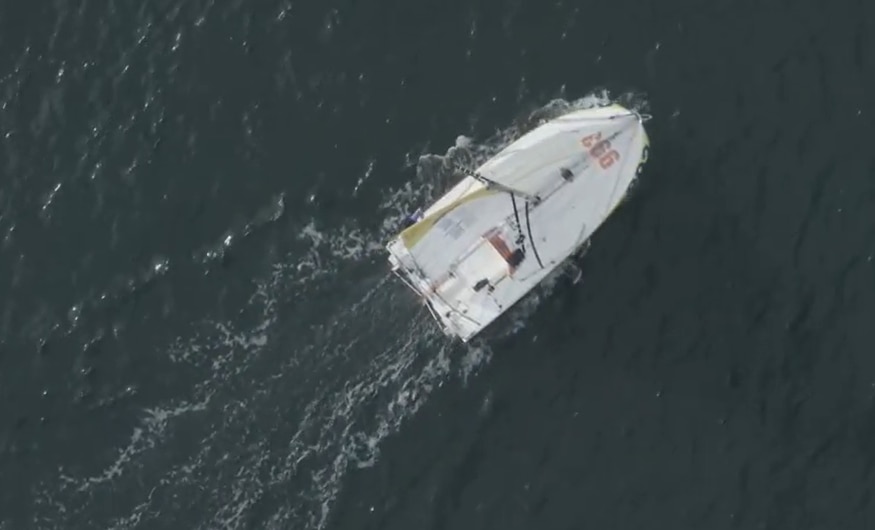
The auto-pilot is an element that he defines “his best friend” during sailing, as it allows him to leave the wheel and rest or focus on weather conditions especially on demanding regattas like the Transat, where one-person sailing and no phone/computer or technical support aside from tracking are the main requirements.
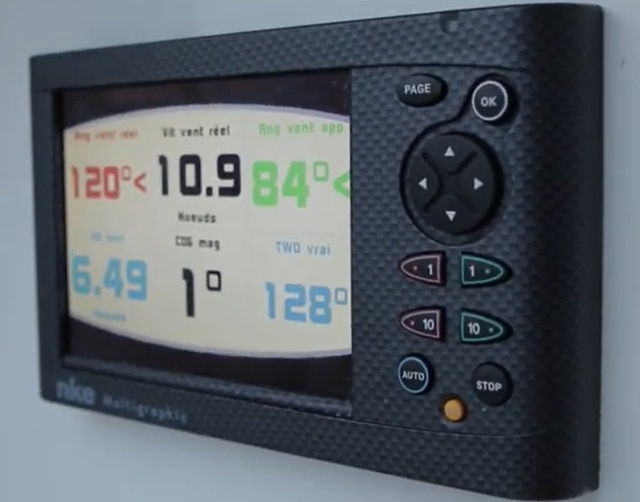
image

Interface for AutoPilot 

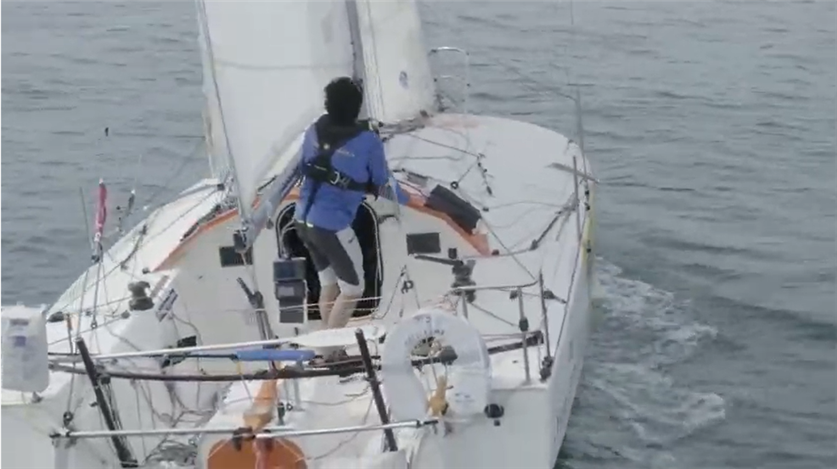
In light of all the characteristics that distinguish this challenge, such as passion, determination, performance, resilience and technology, Farnell decided to partner with Alberto and help him by opening the project up to our open-source design community to redesign his autopilot. As technologies develop further and faster, we are confident that our electronics enthusiasts could highly improve it to achieve higher performances with better cost efficiency.
image

Among the improvements Alberto would add, he would certainly focus on changing the current screen (which was an additional cost on the overall system) in favour of taking advantage of new smart phone technologies. Connecting a smart phone to the automatic navigation system could allow to cut a big part of development and budget effort, as it would allow to use the embedded characteristics of modern displays such as waterproofness and mechanical resistance, and make it further flexible and efficient.

Join Alberto in his challenge!

Auto Pilot Components

What do you need for a boat to sail its self? 

The autopilot is made by two parts: The data acquisition and the control part.
Several sensor are connected to the system to perform the vectorial calculation of the wind and gain information about the heading of the boat: IMU compass, wind sensor, boat speed sensor and a rudder sensor.

The calculated variables are used to keep the boat on a particular true wind angle or on a particular course. Two nested PID controllers allow the boat to keep the desired route moving the rudder through a linear actuator.

The first PID calculates the desired rudder angle. The second PID, thanks to the rudder angle sensor feedback, drives the motor of the actuator to the desired rudder angle.

The first controller can be set to follow a particular reference: TWA (True Wind Angle), AWA (Apparent Wind Angle), Internal Gyro Compass (preferred choice), Fixed Rudder Angle (debugging purpose).


Ancient mariners would tie the rudder with a rope but this could run them into rocks in their sleep. 
Alberto has used electronics to monitor the wind, position and control it all with an Arduino 

image

Components 

Learn more about the components used in this build

image image image image image
Arduino Max232 Driver Interface 12v-5v DC to DC Converter H-Bridge Motor Drivers Resistors 

Arduino

Driver Interfaces DC to DC Converters Motor Drivers Resistors

Are you ready for Tomorrow? 

Competition

Global Competition
Winner
riky_electronicmarine 
Australia and New Zealand
Winner
Gough Lui 

India
Winner
rsjawale24 

Greater China
(China, Taiwan, Hong Kong)
Closed

ASEAN
(Singapore, Malaysia, Phillipines, Vietnam, Thailand) + Korea

Winner
abyraj 
image image image image image


Enter our "Ready for Tomorrow" competition for a chance to win a prize from our prize pool

Multicomp Pro Handheld Oscilloscope - Hand Held Oscilloscope
Multicomp Pro PC USB Oscilloscope - USB Oscilloscope
Multicomp Pro Soldering Station - Soldering Station

Mulitcomp Pro Handheld Multimeter - Multimeter


Details of your answers and contact details can be shared with element14 Avnet Group


  • ReadyForTomorrow
  • Share
  • History
  • More
  • Cancel
  • Sign in to reply

Top Comments

  • e14phil
    e14phil over 3 years ago +2
    Congratulation to the Winners of the following Challenges: Global Competition Winner - Will win the full Global Competition Prize pool riky_electronicmarine Australia and New Zealand Winner - Will win…
  • riky_electronicmarine
    riky_electronicmarine over 3 years ago +1
    ok who won the prises?
  • rsjawale24
    rsjawale24 over 3 years ago in reply to dougw +1
    Thanks! Really excited to see what prize do I get from the pool! A handheld oscilloscope would be nice as I don't have a scope with a screen yet..I just received my USB scope as project14 prize
Parents
  • fmilburn
    fmilburn over 3 years ago

    Four years ago I published a series of blogs on element14 about the development of a low-powered AIS alarm that warns sailors of other ships or boats that are in close proximity when they are away from the helm or in bad conditions.  The alarm can run on batteries when other power is unavailable or being conserved and is very low cost compared to commercial options.  There is a "snooze" option that turns the alarm off for a preset period of time before alarming if the other vessel is still in range.

    image

    The initial post describes the start of the project along with a list of subsequent development posts and can be found here.  The alarm is an add-on that connects via serial to the tiny dAISy AIS radio and fits inside the radio's case.  Additional information on the inexpensive dAISy radios can be found here. They can be fitted with NMEA 0183 / RS-422 adapters and dual-channel versions are available as stand-alone models or as Raspberry Pi hats.  They have an easy-to-use serial connection and can be fitted with BLE and WiFi adapters.

    The alarm I created was designed for low-powered battery standalone use without the need for a connection to a computer.  It uses a Texas Instruments MSP430 microcontroller (dAISy uses a TI MSP430 with SiLabs radio) and development was done in C with Code Composer Studio.  Alarms are indicated with a buzzer and LED.  For your use, an alarm might also be sent to a phone.  The image below shows a prototype run I made along with a dAISy single-channel radio with an alarm installed.

    image

    The project was well advanced and working when I mothballed it.  If you are interested in the AIS alarm I will send you the design files and code as well as a populated board and faceplate at no cost.

    The proven dAISy radios are inexpensive and start at $59 at the link above and are also available worldwide from distributors.  I've known Adrian, the creator of dAISy, for several years and he is a friend but I'll receive no financial compensation for this endorsement :-)  He has worked with a number of others on various marine projects and is definitely worth contacting if you have an interest in integrating AIS into your project.

    Note to e14:  No need to consider me for prizes as I am well equipped with the nice items being offered.

    • Cancel
    • Vote Up 0 Vote Down
    • Sign in to reply
    • More
    • Cancel
Comment
  • fmilburn
    fmilburn over 3 years ago

    Four years ago I published a series of blogs on element14 about the development of a low-powered AIS alarm that warns sailors of other ships or boats that are in close proximity when they are away from the helm or in bad conditions.  The alarm can run on batteries when other power is unavailable or being conserved and is very low cost compared to commercial options.  There is a "snooze" option that turns the alarm off for a preset period of time before alarming if the other vessel is still in range.

    image

    The initial post describes the start of the project along with a list of subsequent development posts and can be found here.  The alarm is an add-on that connects via serial to the tiny dAISy AIS radio and fits inside the radio's case.  Additional information on the inexpensive dAISy radios can be found here. They can be fitted with NMEA 0183 / RS-422 adapters and dual-channel versions are available as stand-alone models or as Raspberry Pi hats.  They have an easy-to-use serial connection and can be fitted with BLE and WiFi adapters.

    The alarm I created was designed for low-powered battery standalone use without the need for a connection to a computer.  It uses a Texas Instruments MSP430 microcontroller (dAISy uses a TI MSP430 with SiLabs radio) and development was done in C with Code Composer Studio.  Alarms are indicated with a buzzer and LED.  For your use, an alarm might also be sent to a phone.  The image below shows a prototype run I made along with a dAISy single-channel radio with an alarm installed.

    image

    The project was well advanced and working when I mothballed it.  If you are interested in the AIS alarm I will send you the design files and code as well as a populated board and faceplate at no cost.

    The proven dAISy radios are inexpensive and start at $59 at the link above and are also available worldwide from distributors.  I've known Adrian, the creator of dAISy, for several years and he is a friend but I'll receive no financial compensation for this endorsement :-)  He has worked with a number of others on various marine projects and is definitely worth contacting if you have an interest in integrating AIS into your project.

    Note to e14:  No need to consider me for prizes as I am well equipped with the nice items being offered.

    • Cancel
    • Vote Up 0 Vote Down
    • Sign in to reply
    • More
    • Cancel
Children
No Data
element14 Community

element14 is the first online community specifically for engineers. Connect with your peers and get expert answers to your questions.

  • Members
  • Learn
  • Technologies
  • Challenges & Projects
  • Products
  • Store
  • About Us
  • Feedback & Support
  • FAQs
  • Terms of Use
  • Privacy Policy
  • Legal and Copyright Notices
  • Sitemap
  • Cookies

An Avnet Company © 2026 Premier Farnell Limited. All Rights Reserved.

Premier Farnell Ltd, registered in England and Wales (no 00876412), registered office: Farnell House, Forge Lane, Leeds LS12 2NE.

ICP 备案号 10220084.

Follow element14

  • X
  • Facebook
  • linkedin
  • YouTube