element14 Community
element14 Community
    Register Log In
  • Site
  • Search
  • Log In Register
  • Community Hub
    Community Hub
    • What's New on element14
    • Feedback and Support
    • Benefits of Membership
    • Personal Blogs
    • Members Area
    • Achievement Levels
  • Learn
    Learn
    • Ask an Expert
    • eBooks
    • element14 presents
    • Learning Center
    • Tech Spotlight
    • STEM Academy
    • Webinars, Training and Events
    • Learning Groups
  • Technologies
    Technologies
    • 3D Printing
    • FPGA
    • Industrial Automation
    • Internet of Things
    • Power & Energy
    • Sensors
    • Technology Groups
  • Challenges & Projects
    Challenges & Projects
    • Design Challenges
    • element14 presents Projects
    • Project14
    • Arduino Projects
    • Raspberry Pi Projects
    • Project Groups
  • Products
    Products
    • Arduino
    • Avnet & Tria Boards Community
    • Dev Tools
    • Manufacturers
    • Multicomp Pro
    • Product Groups
    • Raspberry Pi
    • RoadTests & Reviews
  • About Us
    About the element14 Community
  • Store
    Store
    • Visit Your Store
    • Choose another store...
      • Europe
      •  Austria (German)
      •  Belgium (Dutch, French)
      •  Bulgaria (Bulgarian)
      •  Czech Republic (Czech)
      •  Denmark (Danish)
      •  Estonia (Estonian)
      •  Finland (Finnish)
      •  France (French)
      •  Germany (German)
      •  Hungary (Hungarian)
      •  Ireland
      •  Israel
      •  Italy (Italian)
      •  Latvia (Latvian)
      •  
      •  Lithuania (Lithuanian)
      •  Netherlands (Dutch)
      •  Norway (Norwegian)
      •  Poland (Polish)
      •  Portugal (Portuguese)
      •  Romania (Romanian)
      •  Russia (Russian)
      •  Slovakia (Slovak)
      •  Slovenia (Slovenian)
      •  Spain (Spanish)
      •  Sweden (Swedish)
      •  Switzerland(German, French)
      •  Turkey (Turkish)
      •  United Kingdom
      • Asia Pacific
      •  Australia
      •  China
      •  Hong Kong
      •  India
      •  Japan
      •  Korea (Korean)
      •  Malaysia
      •  New Zealand
      •  Philippines
      •  Singapore
      •  Taiwan
      •  Thailand (Thai)
      •  Vietnam
      • Americas
      •  Brazil (Portuguese)
      •  Canada
      •  Mexico (Spanish)
      •  United States
      Can't find the country/region you're looking for? Visit our export site or find a local distributor.
  • Translate
  • Profile
  • Settings
Power & Energy
  • Technologies
  • More
Power & Energy
Blog Membrane technology to fuel cars with hydrogen beyond expectations
  • Blog
  • Forum
  • Quiz
  • Documents
  • Polls
  • Events
  • Mentions
  • Sub-Groups
  • Tags
  • More
  • Cancel
  • New
  • Share
  • More
  • Cancel
Group Actions
  • Group RSS
  • More
  • Cancel
Engagement
  • Author Author: Catwell
  • Date Created: 22 Aug 2018 7:28 PM Date Created
  • Views 1731 views
  • Likes 4 likes
  • Comments 5 comments
  • hydrogen
  • csiro
  • on_campus
  • cabeatwell
  • school
  • university
  • alternative fuel
  • innovation
Related
Recommended

Membrane technology to fuel cars with hydrogen beyond expectations

Catwell
Catwell
22 Aug 2018

image

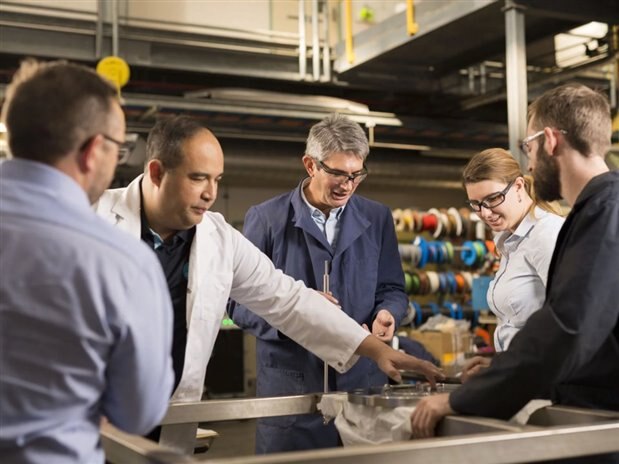
A new membrane technology uses a process to extract hydrogen from ammonia to fuel cars. The CSIRO team hard at work on the membrane technology. (Photo via CSIRO)


In the never-ending quest to create fuel-efficient and eco-friendly cars, hydrogen fuel seems like a great option. Unfortunately, it presents a whole mess of problems, like being highly flammable, figuring how to store it, and being difficult to ship due to its low density. These issues prevent hydrogen from being progressed as a fuel source until now. A new membrane technology developed by Australia’s Commonwealth Scientific and Industrial Research (CSIRO) may have solved these problems.


The research team recently developed a membrane technology to refuel cars using ammonia.  How it works is the metallic membrane separates hydrogen from ammonia, while making sure the hydrogen is of an ultra-high purity by blocking other gases. It’s similar to the process used to transform hydrogen into ammonia but reversed. The resulting ammonia can be shipped to refueling depots where the hydrogen is extracted using the membrane in a low-energy process.


So does this actually work? Yes, it does. Recently CSIRO road tested the technology in two purpose-built hydrogen cells cars. The vehicles, a Toyota Mirai and Hyundai Nexo, were successfully refueled in minutes with a range up to twice that of electric cars that run on batteries. This marks the first time hydrogen cell cars have been fueled using hydrogen derived from ammonia.


"This is a watershed moment for energy, and we look forward to applying CSIRO innovation to enable this exciting renewably-sourced fuel and energy storage medium a smoother path to market," says CSIRO CEO Dr. Larry Marshall. "I'm delighted to see strong collaboration and the application of CSIRO know-how to what is a key part of the overall energy mix."


Using hydrogen to fuel cars is ideal since they don’t produce pollution and only shed water. And unlike electric cars, they can refuel quickly and travel further. The hydrogen fuel Mirai had a range of 550 kilometers (340 meters). The team is working on making the range even longer.


With successful test runs in the bag, CSIRO is looking ahead to the future. They want to create several larger-scaled demonstrations both in Australia and abroad to create a larger export industry. They’re also working on other parts of the hydrogen technology chain, such as water electrolysis and hydrogen production.


The technology is still being developed in Australia, but hydrogen-powered cars are a bug focus in South Korea. Hyundai, which is based in South Korea, has a five-year plan to roll out 16,000 vehicles on the road. Meanwhile. Toyota wants to import the Mirai in Australia as soon as 2019 after a three-year trial of five hydrogen-powered cars locally since 2016. But the rollout won’t be easy seeing as existing hydrogen cars cost about the same as electric cars, with more expensive fuel. With hydrogen prices higher than gas, the price will need to come down before hydrogen cars are introduced to the masses.

  • Sign in to reply

Top Comments

  • three-phase
    three-phase over 7 years ago +1
    An ammonia powered car was built many years ago, but was never really progressed. In high levels of concentrations, presumably required for this application, ammonia isn't that good a product to have around…
  • jkirk3279
    jkirk3279 over 7 years ago in reply to DAB +1
    Oil isn't really fuel. It's just storage for hydrogen. Methane molecules catalyzed with Cobalt form Methanol. It's a stable liquid that stores hydrogen well. Butanol is a step farther, produced by bacteria…
Parents
  • three-phase
    three-phase over 7 years ago

    An ammonia powered car was built many years ago, but was never really progressed. In high levels of concentrations, presumably required for this application, ammonia isn't that good a product to have around.


    Youtube - ammonia powered car


    Kind regards

    • Cancel
    • Vote Up +1 Vote Down
    • Sign in to reply
    • More
    • Cancel
Comment
  • three-phase
    three-phase over 7 years ago

    An ammonia powered car was built many years ago, but was never really progressed. In high levels of concentrations, presumably required for this application, ammonia isn't that good a product to have around.


    Youtube - ammonia powered car


    Kind regards

    • Cancel
    • Vote Up +1 Vote Down
    • Sign in to reply
    • More
    • Cancel
Children
No Data
element14 Community

element14 is the first online community specifically for engineers. Connect with your peers and get expert answers to your questions.

  • Members
  • Learn
  • Technologies
  • Challenges & Projects
  • Products
  • Store
  • About Us
  • Feedback & Support
  • FAQs
  • Terms of Use
  • Privacy Policy
  • Legal and Copyright Notices
  • Sitemap
  • Cookies

An Avnet Company © 2026 Premier Farnell Limited. All Rights Reserved.

Premier Farnell Ltd, registered in England and Wales (no 00876412), registered office: Farnell House, Forge Lane, Leeds LS12 2NE.

ICP 备案号 10220084.

Follow element14

  • X
  • Facebook
  • linkedin
  • YouTube