element14 Community
element14 Community
    Register Log In
  • Site
  • Search
  • Log In Register
  • Community Hub
    Community Hub
    • What's New on element14
    • Feedback and Support
    • Benefits of Membership
    • Personal Blogs
    • Members Area
    • Achievement Levels
  • Learn
    Learn
    • Ask an Expert
    • eBooks
    • element14 presents
    • Learning Center
    • Tech Spotlight
    • STEM Academy
    • Webinars, Training and Events
    • Learning Groups
  • Technologies
    Technologies
    • 3D Printing
    • FPGA
    • Industrial Automation
    • Internet of Things
    • Power & Energy
    • Sensors
    • Technology Groups
  • Challenges & Projects
    Challenges & Projects
    • Design Challenges
    • element14 presents Projects
    • Project14
    • Arduino Projects
    • Raspberry Pi Projects
    • Project Groups
  • Products
    Products
    • Arduino
    • Avnet & Tria Boards Community
    • Dev Tools
    • Manufacturers
    • Multicomp Pro
    • Product Groups
    • Raspberry Pi
    • RoadTests & Reviews
  • About Us
    About the element14 Community
  • Store
    Store
    • Visit Your Store
    • Choose another store...
      • Europe
      •  Austria (German)
      •  Belgium (Dutch, French)
      •  Bulgaria (Bulgarian)
      •  Czech Republic (Czech)
      •  Denmark (Danish)
      •  Estonia (Estonian)
      •  Finland (Finnish)
      •  France (French)
      •  Germany (German)
      •  Hungary (Hungarian)
      •  Ireland
      •  Israel
      •  Italy (Italian)
      •  Latvia (Latvian)
      •  
      •  Lithuania (Lithuanian)
      •  Netherlands (Dutch)
      •  Norway (Norwegian)
      •  Poland (Polish)
      •  Portugal (Portuguese)
      •  Romania (Romanian)
      •  Russia (Russian)
      •  Slovakia (Slovak)
      •  Slovenia (Slovenian)
      •  Spain (Spanish)
      •  Sweden (Swedish)
      •  Switzerland(German, French)
      •  Turkey (Turkish)
      •  United Kingdom
      • Asia Pacific
      •  Australia
      •  China
      •  Hong Kong
      •  India
      •  Japan
      •  Korea (Korean)
      •  Malaysia
      •  New Zealand
      •  Philippines
      •  Singapore
      •  Taiwan
      •  Thailand (Thai)
      •  Vietnam
      • Americas
      •  Brazil (Portuguese)
      •  Canada
      •  Mexico (Spanish)
      •  United States
      Can't find the country/region you're looking for? Visit our export site or find a local distributor.
  • Translate
  • Profile
  • Settings
Power & Energy
  • Technologies
  • More
Power & Energy
Blog USB Type-C and Power Delivery: Any Interest?
  • Blog
  • Forum
  • Quiz
  • Documents
  • Polls
  • Events
  • Mentions
  • Sub-Groups
  • Tags
  • More
  • Cancel
  • New
  • Share
  • More
  • Cancel
Group Actions
  • Group RSS
  • More
  • Cancel
Engagement
  • Author Author: shabaz
  • Date Created: 11 Dec 2022 6:27 AM Date Created
  • Views 21088 views
  • Likes 17 likes
  • Comments 28 comments
  • power delivery
  • usb type-c
  • usb-c
  • usb-c connector
  • usb pd
Related
Recommended

USB Type-C and Power Delivery: Any Interest?

shabaz
shabaz
11 Dec 2022

Table of Contents

  • Introduction
  • USB-C Click Board
  • USB-C Power Meter
  • Mobile Phone Charger
  • YZXStudio USB-C Power Meter
  • USB-C Laptop Power Supply
  • Monolithic Power Systems (MPS) Integrated Circuits
  • USB-C PD Protocol Analyzer
  • Soldering Tools
  • Next Steps


Introduction


This is a quick blog post to see what interest there is for USB Type-C (also known as USB-C), and what applications people are interested in, and what they are working on, or plan to be working on.

I figured perhaps a good way for anyone to learn a little about USB-C could be to dip toes into the subject with small projects. For instance, I learned a tiny bit about USB-C connectors with a USB-C UART adapter project:  Building a USB-C USB-UART Board  

In that blog post, I learned that the USB4085-GF-A connector  is fairly usable and easy to solder. It would be great to hear of other connectors too, for instance, surface-mount pins may be easier.

I also learned in that blog post what pins to connect, to use the USB-C connector for basic USB 2.0 functionality, and for getting 5V power from the connected PC.

image(Image source: GCT website)

One annoyance (sometimes minor) is that there will almost always be a need to route some traces sideways because the pins are too closely spaced together to route between them. The PCB below (from the USB-C UART project) required one trace to be routed out of the side on the underside of the board, as can be seen on the left side.

image

After a discussion  Power banks for Home IT equipment - anyone used them?   USB-C Power Delivery seemed to be an interesting topic. USB-C Power Delivery is a technology that allows the USB connection to carry higher voltages and current than the 5V that is ordinarily expected with USB.  Jan Cumps and I identified some useful-looking products.

Here are some avenues for exploration of USB-C Power Delivery:

USB-C Click Board

The MikroE USB-C Sink Click Board can be used to connect to a USB-C power supply (or to a mobile phone charger with a USB-C connection on it) in order to obtain power. The USB-C Sink Click board can be configured to request different voltages from the supply/charger, depending on needs. The board uses a STUSB4500 chip (not the easiest in the world to configure, but fortunately there is existing code that could be used).

image(Image source:MikroE website)


USB-C Power Meter


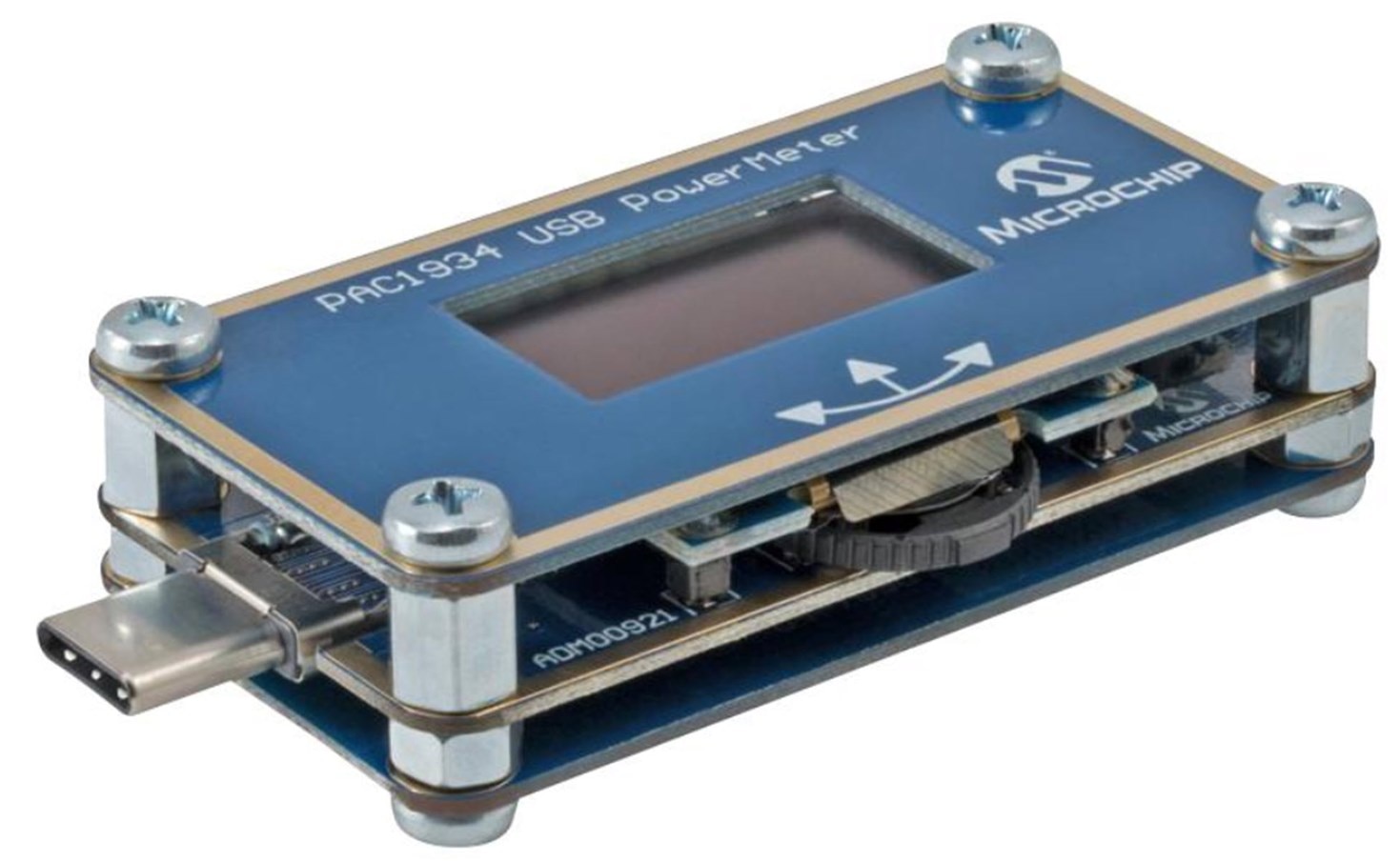
The ADM00921 Power Meter board looks really neat. It can be used to monitor voltage/current/power when working with USB-C devices.
image(Image source: Farnell website)

Mobile Phone Charger

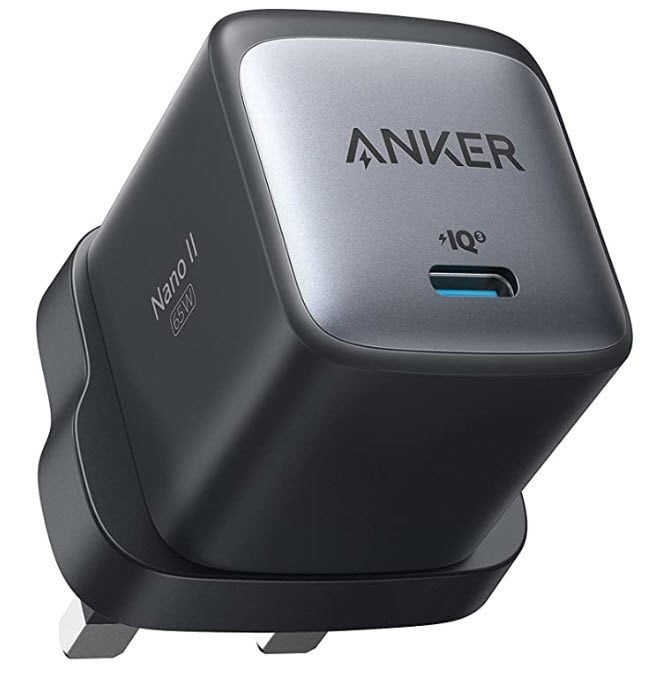
There are many chargers that support USB-C Power Delivery, at various voltages and maximum currents. Often the maximum capability of these consumer items is only specified in Watts.

Some of the Anker chargers are quite nice, because they use a GAN semiconductor device internally, for high efficiency while supporting high power USB-C Power Delivery loads.
image(Image source: Amazon)

YZXStudio USB-C Power Meter

This looks neat for obtaining measurements when working with USB-C devices too. There are a lot of variants of this power meter, some may be better than others.

image(Image source: AliExpress)

USB-C Laptop Power Supply

This device has two USB-C connector outputs, advertised (perhaps overly bold of them) for up to 100W each. The input connector can be connected to a vehicle battery. I have no idea if it is any good, I have not tried it (I bought one to experiment with, however).

image(Image source: AliExpress)

Monolithic Power Systems (MPS) Integrated Circuits

Due to the world semiconductor shortage, a lot of USB-C chips are hard to obtain. However, there are some nice-looking Monolithic Power semiconductors that are still available, such as the
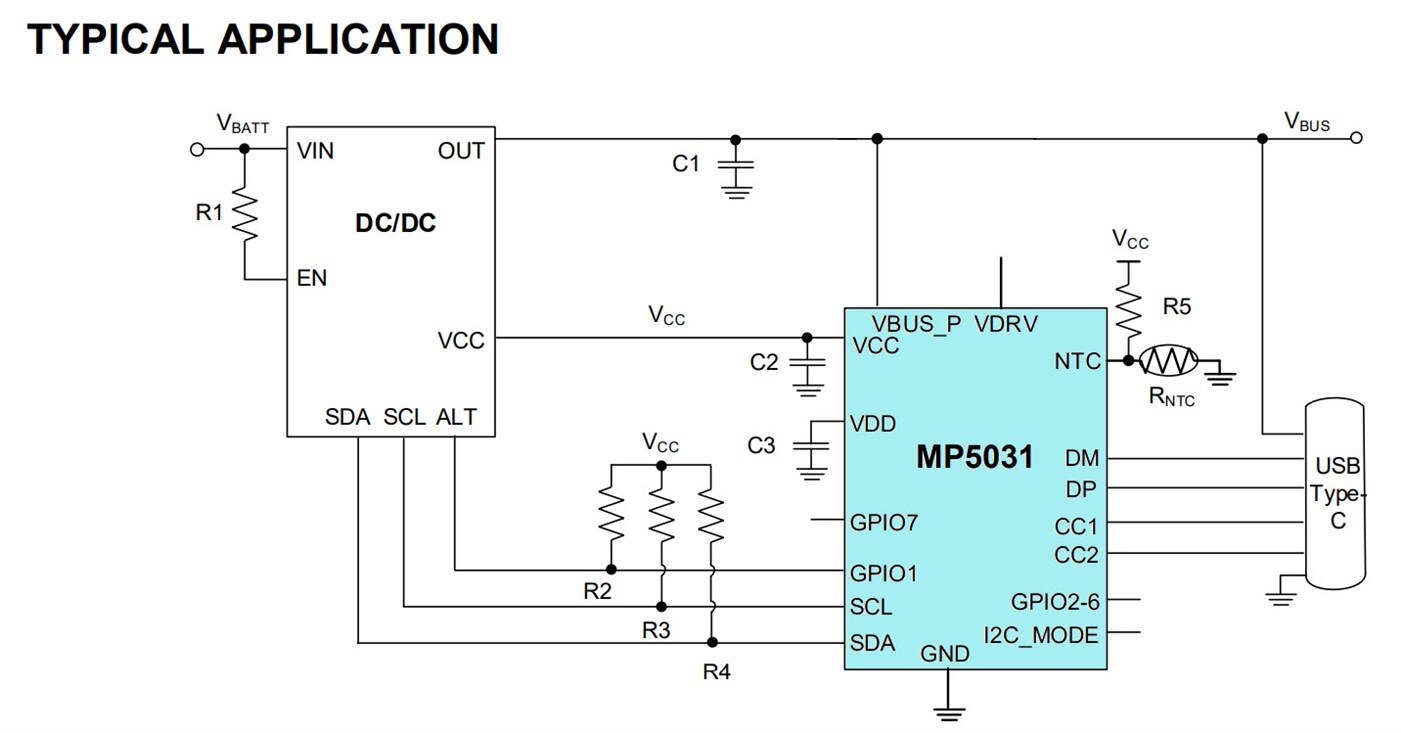
MP5031 USB-C Power Delivery Controller .

This chip can be used at the power source end of the USB-C connection. It is used as the source end of the power negotiation and based on that, the MP5031 will send control signals to a separate DC-DC converter chip to adjust the voltage to suit.
image(Image source: MPS)

USB-C PD Protocol Analyzer

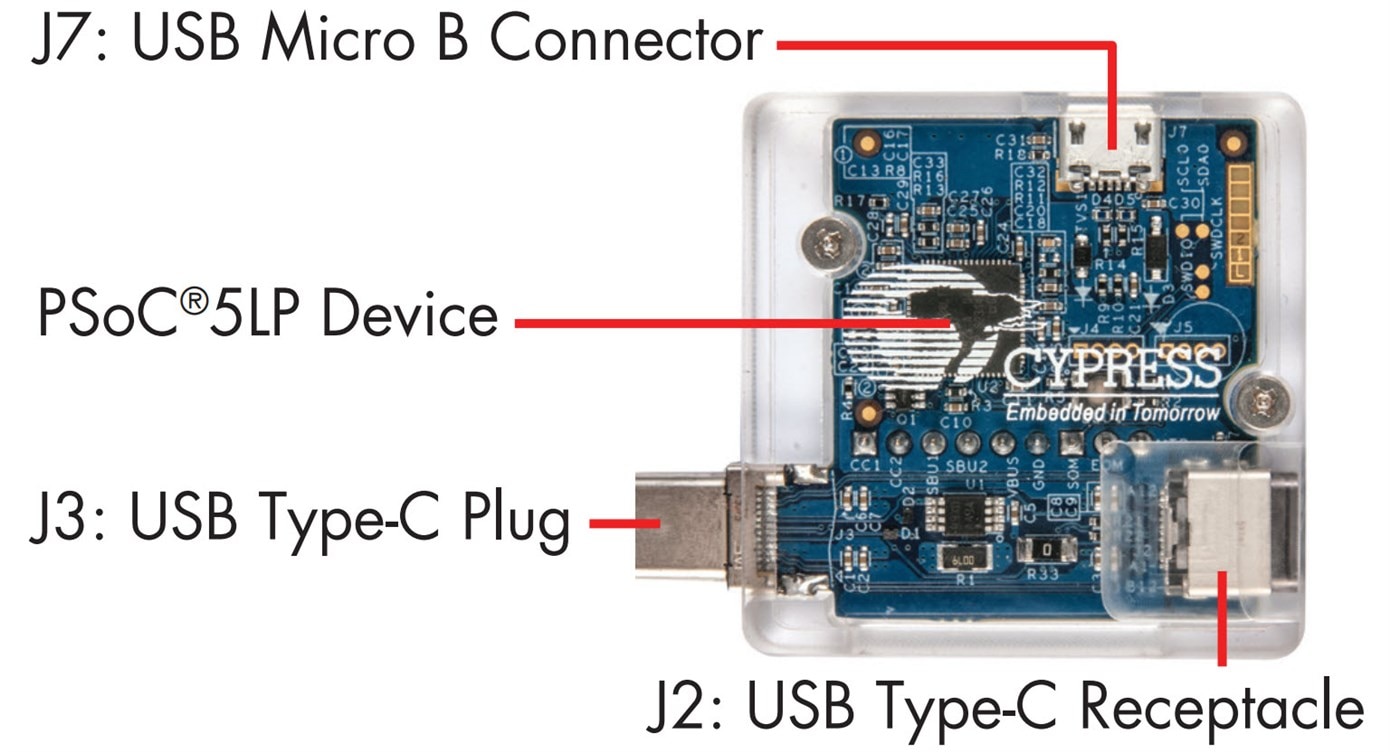
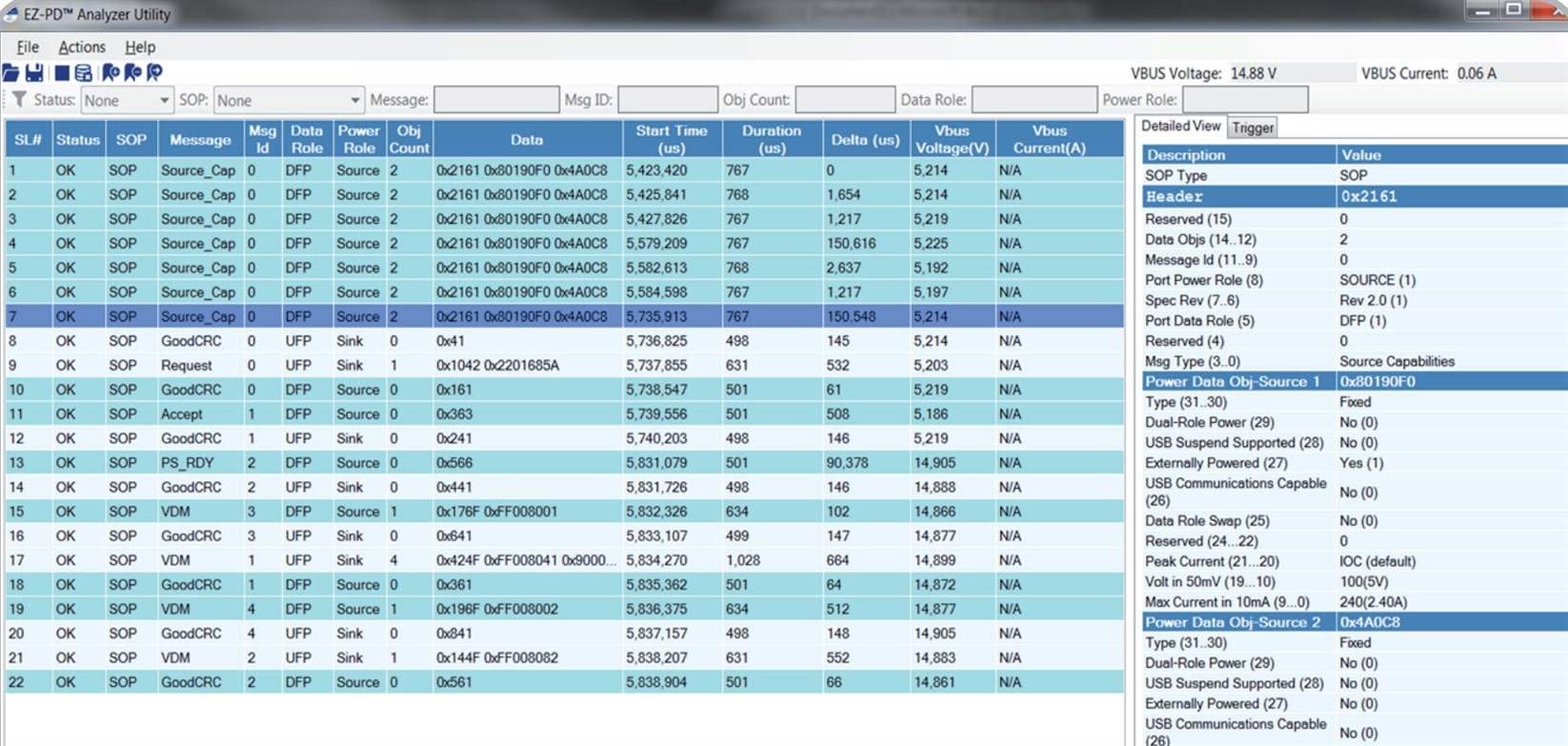
Following a link by misaz  the following protocol analyzer tool was discovered, CY4500 .

The tool sniffs traffic passing through two USB-C connectors, and sends it via a third USB connector (Micro USB) to the PC running the graphical app.
image(Image source: Infineon/Cypress)

Screenshot from the PDF Quick Start Guide:
image

Soldering Tools

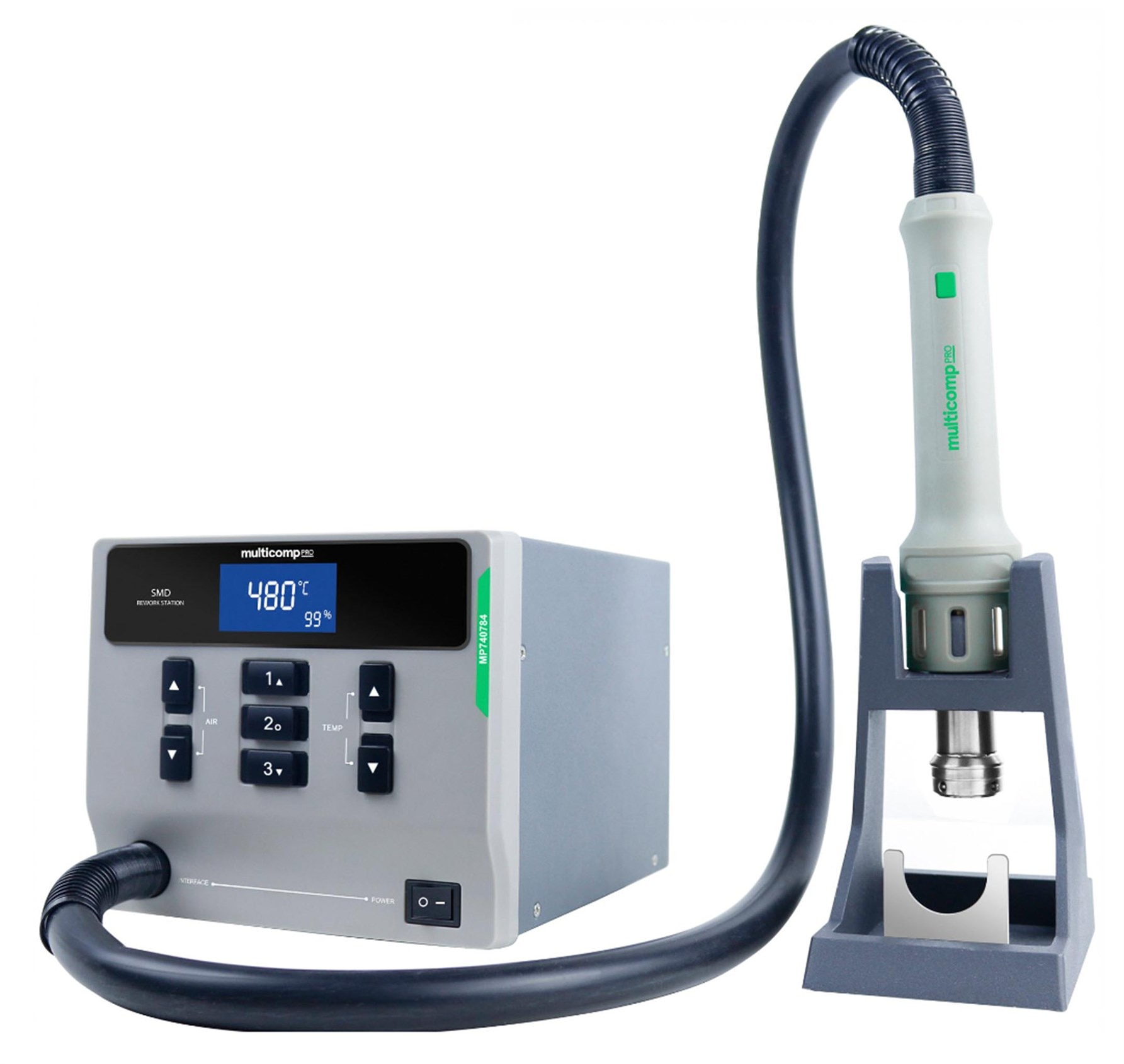
If you’re working directly with integrated circuits, then most of them have QFN or other tiny packages and custom circuit boards will be required. A hot air tool and a pre-heater would be very useful. There’s a low-cost hot air tool here: Multicomp Pro MP740784

It looks very similar to the Atten ST-862D which has favorable reviews. Therefore I think the Multicomp Pro product should be excellent.
image(Image source: Farnell)

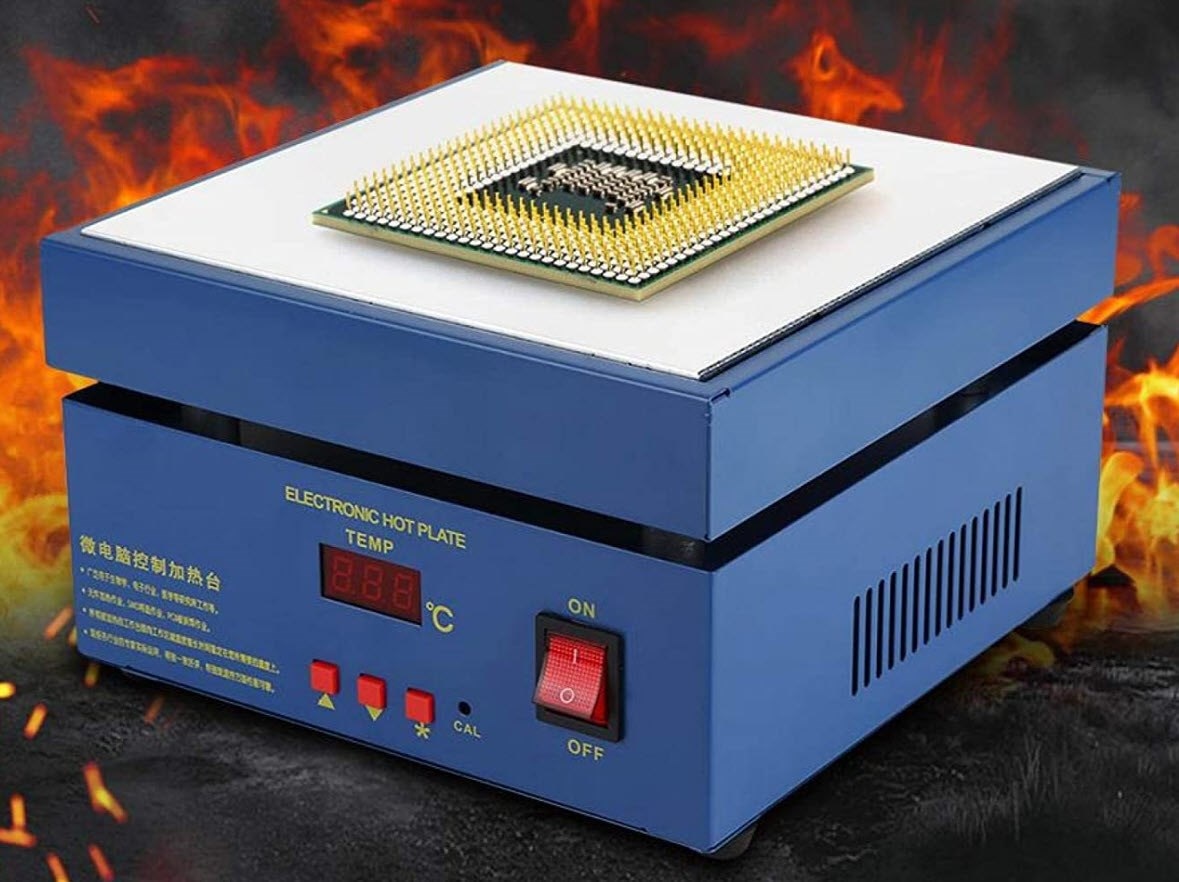
For a pre-heater, perhaps a hot-plate could be used, they are low-cost too, available from Amazon/eBay and so on.
image

If you’re not interested in soldering tiny parts, but still want to explore USB-C PD, then the modules mentioned earlier could be the way to go.

Next Steps

If you’re interested in USB-C, drop a comment below : ) It would be great to hear about other people’s experiences, or we can learn together.

If there are other USB-C related components or products or soldering or test tools that seem relevant/interesting, please mention it in the comments, since it could be helpful to many people.

From my perspective, I think it would be interesting to experiment with the technology end-to-end. My main interest however lies in using USB-C for providing battery-sourced (could also be solar-sourced) power to laptops and mobile phones in the event of mains power outages.

Thanks for reading!

  • Sign in to reply
  • misaz
    misaz over 3 years ago in reply to shabaz

    Protocol analyser is usefull tool here because this bus is analog by nature. It is not driven by logic signals, rather it is driven by weak ones/zeroes. It is hard to analyze it with standard logic analyzer, you need oscilloscope. At univerzity we have scopes with support for this protocol, but of course in my home I am out of luck.

    • Cancel
    • Vote Up 0 Vote Down
    • Sign in to reply
    • More
    • Cancel
  • baldengineer
    baldengineer over 3 years ago

    I get confused about sources and sinks. The project I've wanted to do for a while is a variable voltage supply with USB-C as the input. Back when I was thinking about this idea, I thought the STUSB4500 was the right approach. (And maybe it is.)

    Granted, I want to take this idea one step further than some of the other "supply" boards I have seen. I'd like something that is continuously variable, with the controller re-negotiating for different voltage (and perhaps current?) levels from the USB-C brick based on the output setting. I'd also like current limiting/protection on the front end. Essentially, a minimally viable bench supply powered by a USB-C brick.

    That said, is the USB-PD PHY I need a source or sink in this case? Slight smile

    • Cancel
    • Vote Up 0 Vote Down
    • Sign in to reply
    • More
    • Cancel
  • scottiebabe
    scottiebabe over 3 years ago

    I Heart USB lol


    I just recently bought an eval board presenting the LM399 in its bold and beautiful new identity as the ADR1399. It is a usb-c powered “pocket calibrator” minus the calibration certificate lol

    image

    • Cancel
    • Vote Up 0 Vote Down
    • Sign in to reply
    • More
    • Cancel
  • shabaz
    shabaz over 3 years ago in reply to genebren

    Hi Gene,
    That makes sense, no need to tear up existing boards since Micro-USB is still perfect for a load of applications.

    Sometimes customers have odd reasons for asking about some features.. I recall a multi-$$$$$ product, where the Micro-USB connector was used for troubleshooting purposes, it had a USB-UART basically. The question a lot of customers had, was not USB-UART related, but instead, how much power they could use : )

    It was completely unrelated to troubleshooting, and instead they just wanted a way to charge their mobiles while they were busy in the lab, i.e. they were using the multi-$K product as a super-expensive phone charger : ) Many equipment racks tended to have that product, so it was really handy when using the phone for reading user manuals etc, or for instant messages during their other work, etc. On the next release, that feature was specifically advertised to the field : ) 

    • Cancel
    • Vote Up 0 Vote Down
    • Sign in to reply
    • More
    • Cancel
  • genebren
    genebren over 3 years ago in reply to Jan Cumps

    Anker in general has some nice products.  I use them exclusively for all my USB cabling (power-line series).

    • Cancel
    • Vote Up 0 Vote Down
    • Sign in to reply
    • More
    • Cancel
<>
element14 Community

element14 is the first online community specifically for engineers. Connect with your peers and get expert answers to your questions.

  • Members
  • Learn
  • Technologies
  • Challenges & Projects
  • Products
  • Store
  • About Us
  • Feedback & Support
  • FAQs
  • Terms of Use
  • Privacy Policy
  • Legal and Copyright Notices
  • Sitemap
  • Cookies

An Avnet Company © 2026 Premier Farnell Limited. All Rights Reserved.

Premier Farnell Ltd, registered in England and Wales (no 00876412), registered office: Farnell House, Forge Lane, Leeds LS12 2NE.

ICP 备案号 10220084.

Follow element14

  • X
  • Facebook
  • linkedin
  • YouTube