element14 Community
element14 Community
    Register Log In
  • Site
  • Search
  • Log In Register
  • Community Hub
    Community Hub
    • What's New on element14
    • Feedback and Support
    • Benefits of Membership
    • Personal Blogs
    • Members Area
    • Achievement Levels
  • Learn
    Learn
    • Ask an Expert
    • eBooks
    • element14 presents
    • Learning Center
    • Tech Spotlight
    • STEM Academy
    • Webinars, Training and Events
    • Learning Groups
  • Technologies
    Technologies
    • 3D Printing
    • FPGA
    • Industrial Automation
    • Internet of Things
    • Power & Energy
    • Sensors
    • Technology Groups
  • Challenges & Projects
    Challenges & Projects
    • Design Challenges
    • element14 presents Projects
    • Project14
    • Arduino Projects
    • Raspberry Pi Projects
    • Project Groups
  • Products
    Products
    • Arduino
    • Avnet & Tria Boards Community
    • Dev Tools
    • Manufacturers
    • Multicomp Pro
    • Product Groups
    • Raspberry Pi
    • RoadTests & Reviews
  • About Us
  • Store
    Store
    • Visit Your Store
    • Choose another store...
      • Europe
      •  Austria (German)
      •  Belgium (Dutch, French)
      •  Bulgaria (Bulgarian)
      •  Czech Republic (Czech)
      •  Denmark (Danish)
      •  Estonia (Estonian)
      •  Finland (Finnish)
      •  France (French)
      •  Germany (German)
      •  Hungary (Hungarian)
      •  Ireland
      •  Israel
      •  Italy (Italian)
      •  Latvia (Latvian)
      •  
      •  Lithuania (Lithuanian)
      •  Netherlands (Dutch)
      •  Norway (Norwegian)
      •  Poland (Polish)
      •  Portugal (Portuguese)
      •  Romania (Romanian)
      •  Russia (Russian)
      •  Slovakia (Slovak)
      •  Slovenia (Slovenian)
      •  Spain (Spanish)
      •  Sweden (Swedish)
      •  Switzerland(German, French)
      •  Turkey (Turkish)
      •  United Kingdom
      • Asia Pacific
      •  Australia
      •  China
      •  Hong Kong
      •  India
      •  Korea (Korean)
      •  Malaysia
      •  New Zealand
      •  Philippines
      •  Singapore
      •  Taiwan
      •  Thailand (Thai)
      • Americas
      •  Brazil (Portuguese)
      •  Canada
      •  Mexico (Spanish)
      •  United States
      Can't find the country/region you're looking for? Visit our export site or find a local distributor.
  • Translate
  • Profile
  • Settings
Test & Tools
  • Technologies
  • More
Test & Tools
Forum Are there any adverse effects from isolating the AC power supply on my electronics bench?
  • Blog
  • Forum
  • Documents
  • Files
  • Members
  • Mentions
  • Sub-Groups
  • Tags
  • More
  • Cancel
  • New
Join Test & Tools to participate - click to join for free!
Actions
  • Share
  • More
  • Cancel
Forum Thread Details
  • State Suggested Answer
  • Replies 37 replies
  • Answers 2 answers
  • Subscribers 364 subscribers
  • Views 5070 views
  • Users 0 members are here
  • modification
  • bench
  • 120vac
  • line
  • ac
  • isolation
  • conditioner
  • supply
  • power
  • secondary
Related

Are there any adverse effects from isolating the AC power supply on my electronics bench?

4ringfan
4ringfan over 10 years ago

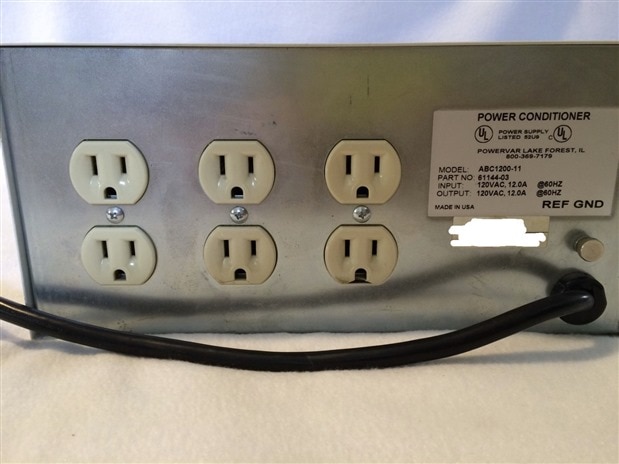
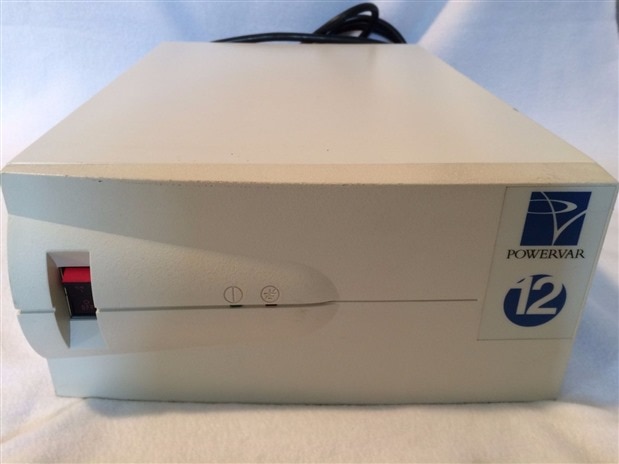
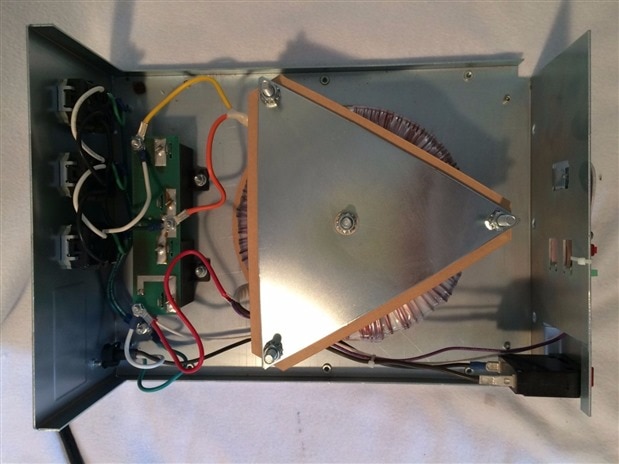
jw0752 happened to show me an Ebay listing the other day and it was like feeding candy to a baby.  My dad, he can be such an enabler!  Hehe!  So, the long and short of it is that I have acquired this BEAST (a Powervar 12 Power conditioner) and I am planning to modify it so that I can isolate and supply power to my entire bench.  The Powervac 12 is capable of supplying 12Amps at 120VAC, so the only thing I was thinking that I needed to be concerned with was possibly exceeding the supply capabilities of the transformer -- however I find the possibility of drawing that much power quite remote. So...


Here are my primary questions:


  1. Is there any reason or side effect that would contradict hooking the entire bench on the isolated secondary side of a transformer?
  2. Are there other things that I should be concerned with safety wise or otherwise plan for?
  3. Modification suggestions?
  4. In general, is this a good or bad idea?


I haven't found too many articles that talk about this, but here are links to a few that I have looked at:


isolation transformer - Electronics Forums


RadiolaGuy.com : Sonny's Tech Tips


http://www.signaltransformer.com/sites/all/pdf/IsolationTransformers%20Increase%20Safety%20of%20Electronic%20Systems.pdf


isolation - Why are we not always isolating the mains supply? - Electrical Engineering Stack Exchange


I have read the following and I take it that I should not connect any of my test equipment to the isolation, only projects that I am working on. What about power supplies?  What is the take on this?:


"DO NOT plug your test equipment into the isolation transformer, just the radio. I've seen folks wire their isolation transformer to a plug strip with all their equipment plugged into it and wonder why their "scope's" ground lead went up in smoke when they connected it to the radio chassis. If all your equipment is plugged into the isolation transformer, then nothing is "isolated"! Only the radio (or television) under test should be plugged into the isolation transformer!"
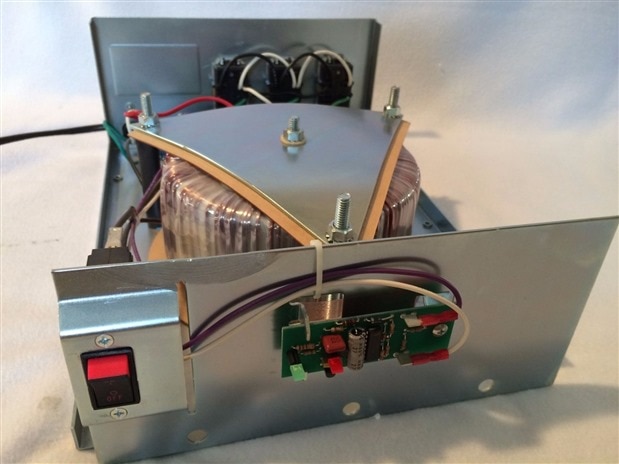
image

image

image


image


  • Sign in to reply
  • Cancel

Top Replies

  • mcb1
    mcb1 over 10 years ago in reply to 4ringfan +3 suggested
    4ringfan I'm guessing you don't want to listen to your father's advise ... I'm sure he has been able to offer some good advise. Isolating transformers are really only designed to work with double insulated…
  • mcb1
    mcb1 over 10 years ago in reply to 4ringfan +2
    4ringfan Mike Let him buy a motorcycle .. he will anyway. While we don't have the same weather problems, I brought one just after I got my licence. In those days you weren't restricted to 250cc so I brought…
  • mcb1
    mcb1 over 10 years ago in reply to peterjcs23 +2
    @peterjcs23 I'm not sure I would agree with all your conclusions. While I'm sure the corporate world may place some other restrictions, this discussion is about what those 'unseen' risks might be, and…
  • mcb1
    0 mcb1 over 10 years ago in reply to peterjcs23

    @peterjcs23

    I'm not sure I would agree with all your conclusions.

    While I'm sure the corporate world may place some other restrictions, this discussion is about what those 'unseen' risks might be, and is a very good way to emphasis safety.

    unless there was some other protection in place

    The suggestion to use an RCD provides exactly the protection against coming into contact with live equipment.

    However since it is floating, then there is no potential, and the EMC filter will have no potential difference to earth, regardless of capacitors or not.


    I have on occasion wanted to connect scope probes to voltages above ground, and had to use a capacitor to isolate the ground.

    I'm not sure I would recommend using isolating transformers to allow this, since you have now made the chassis of the scope at one potential, while other parts of the circuit are at another.

    This to me is a risky proposition, and the warning "... It sounds more dangerous to me as you may be lulling yourself into a false sense of security ..."  is exactly what I was thinking.


    The link to the scopes is fine for voltages upto 600v, and I'm not sure what voltages you guys want to put a scope onto, but anything approaching that suggests you are way past hobby and into some serious high voltage work that requires full safety equipment. (High Voltage gloves, boots etc)

    A isolation transformer is not a substitute ...image


    In addition to the isolated bench outlets I also have standard outlets that can be used if there is a need

    Like Peter said these should not be available in the same area ... it's either isolated or not.

    I've seen similar protential poblems when two different phases were on outlets near each other.

    Two seperate peices of equipment were 480v apart and if one lost the neutral then it was a receipe for diaster.


    Mark

    • Cancel
    • Vote Up +2 Vote Down
    • Sign in to reply
    • Verify Answer
    • Cancel
  • mcb1
    0 mcb1 over 10 years ago in reply to peterjcs23

    Portable equipment Safety Transformers generally have a centre taped "isolated" secondary (i.e. not an auto-transformer) but the centre tap is earthed...Peter

    Not sure I agree with that.

    The whole idea is to isolate it, so sticking an earth and making both phase and neutral at 57v wrt earth, doesn't seem right to me.


    http://electronics.stackexchange.com/questions/17496/how-is-using-a-transformer-for-isolation-safer-than-directly-connecting-to-the-p

    It is interesting in this discussion about a SINGLE PIECE of equipment on a transformer....


    Mark

    • Cancel
    • Vote Up +1 Vote Down
    • Sign in to reply
    • Verify Answer
    • Cancel
  • peterjcs23
    0 peterjcs23 over 10 years ago in reply to mcb1

    There is a range of products based on the principle...


    http://uk.rs-online.com/web/p/safety-site-transformers/2604288/


    Peter

    • Cancel
    • Vote Up +2 Vote Down
    • Sign in to reply
    • Verify Answer
    • Cancel
  • michaelkellett
    0 michaelkellett over 10 years ago in reply to mcb1

    I've never used isolating transformers and in general I think I would rather rely on an RCD for basic protection.


    I also try to avoid servicing old stuff but when I have to I check the basic mains connections (especially earth) first. My Dad taught me to keep one hand in my pocket while working with high voltage stuff - I still do if I'm connecting a meter probe to alive terminal.


    I think the question of things interacting with the isolation transformer is interesting and I can imagine situations where it would be a problem.


    I'm totally in agreement re. floating instrument earths - don't do it ever. I often isolate the DUT by running it from a battery or an isolated DC supply so I can't see that using an isolating transformer is much different in principle but I would do it on a case by case basis.


    If I did a lot of high voltage work I would buy a set of high voltage diff probes for the scope or consider an isolated scope (but they tend to be rather pricey and  a bit low spec).


    MK

    • Cancel
    • Vote Up +2 Vote Down
    • Sign in to reply
    • Verify Answer
    • Cancel
  • mcb1
    0 mcb1 over 10 years ago in reply to peterjcs23

    Peter

    Like I said I fail to see the point in simply reducing the voltage to +- 55v ac.

    55v ac will still kill you since its at full current.


    This has some interesting comments about not connecting the centre tap ...although I can't quite understand what they mean

    gadget.iom

    Paul can you throw any light on it ...


    Mark

    • Cancel
    • Vote Up +1 Vote Down
    • Sign in to reply
    • Verify Answer
    • Cancel
  • peterjcs23
    0 peterjcs23 over 10 years ago in reply to michaelkellett

    Yes, people often buy Rigol scopes for use at home, they sell a massive range of accessories including high voltage probes...


    You can read more about the RP1000D series on the accessories page here:

    http://www.rigol.eu/products/accessories/


    Keep one hand in your pocket, wear rubber boots! Good advice.

    • Cancel
    • Vote Up 0 Vote Down
    • Sign in to reply
    • Verify Answer
    • Cancel
  • peterjcs23
    0 peterjcs23 over 10 years ago in reply to mcb1

    there is plenty to read on the world wide web about electrical safety, this document was interesting


    http://www.google.co.uk/url?sa=t&rct=j&q=&esrc=s&source=web&cd=6&cad=rja&uact=8&ved=0CDAQFjAF&url=http%3A%2F%2Felectrica…


    Peter

    • Cancel
    • Vote Up +1 Vote Down
    • Sign in to reply
    • Verify Answer
    • Cancel
  • jw0752
    0 jw0752 over 10 years ago in reply to peterjcs23

    Hi Peter, Mark, and Michael,

    Thank you all very much for taking the time to address this question for us. I have learned some new perspectives and as a result we will be able to put Mike in a better position safety wise than I would have been able to do on my own. Just a clarification is that the Earth ground is carried forward in all of the isolated outlets but neither of the secondary leads are attached to it. Basically the (Line - Neutral) arrangement of conventional USA mains is exchanged for the floating mains voltage secondary. One of the things that I learned and will act on is that putting multiple pieces of equipment on the isolation circuit increases the chance that a fault to ground in one of them will go undetected and cause the system to revert to a (Line - Neutral) system unexpectedly. Mark,s article about one item on an isolation circuit at a time makes good sense.


    One of the types of equipment that we service is an ultrasonic cleaner. The dentist places his instruments in a bath of disinfectant which is subjected to 25kHz to 30kHz of ultrasonic vibration for 15 minutes prior to sterilization. The circuitry of these devices typically come directly off the mains with no isolation and operate in the 120 to 170 VDC range. I have found the isolated supply is helpful in servicing these units.


    As a summary of what I have learned we will rely primarily on what we call GFI circuits and use the Isolation Transformer only for individual situations involving the service of specific types equipment.


    Thanks Again

    John

    • Cancel
    • Vote Up +1 Vote Down
    • Sign in to reply
    • Verify Answer
    • Cancel
  • peterjcs23
    0 peterjcs23 over 10 years ago in reply to jw0752

    I'm glad the discussion was useful. I was thinking that you could simply use the earth if you need to. In fact it is useful to connect earth to the isolated neutral as then you can guarantee they are the same voltage something that in a normal building scheme you cannot guarantee and for some test situations that is a good thing. But as you say, you need to think carefully about each situation; in a corporate environment we would carry out a risk analysis for each case, perhaps you should do the same...Peter

    • Cancel
    • Vote Up 0 Vote Down
    • Sign in to reply
    • Verify Answer
    • Cancel
  • 4ringfan
    0 4ringfan over 10 years ago in reply to michaelkellett

    My Dad taught me to keep one hand in my pocket while working with high voltage stuff - I still do if I'm connecting a meter probe to alive terminal.

    michaelkellett,


    I "play with fire" with one hand as well.  Hehe, Fire! Fire! Fire!  Seriously, though, I have to work on many pieces of equipment that are live and I force myself to work with my right hand as much as humanly possible.  It is a good practice.  If the second, left hand, does come into play, I make sure it is well insulated and kept well out of the "fray".  I've received enough shock treatment in my lifetime to know that I do not like it.  In fact, I actually survived a lightning strike before!  It was the worst pain I have ever experienced in my entire life. I don't recommend it.

    image

    My quick test block consists of a line cord, a GFI, a fuse block and wire nuts -- it is a poor man's quick test block I guess.


    I want to thank all of  you guys, mcb1 , peterjcs23, and Michael for your input.  I guess I've learned a thing or two, but I've got two more questions and one additional side comment for Mark though.


    1. Would transient MOVs be of any practical use on the secondary of an isolation circuit?  Something to tamp down any voltage spikes across the two secondary legs that may or may not be caused by a collapsing magnetic field?
    2. Who deserves the helpful answers and who deserves the solution? Hehe, I'm torn.


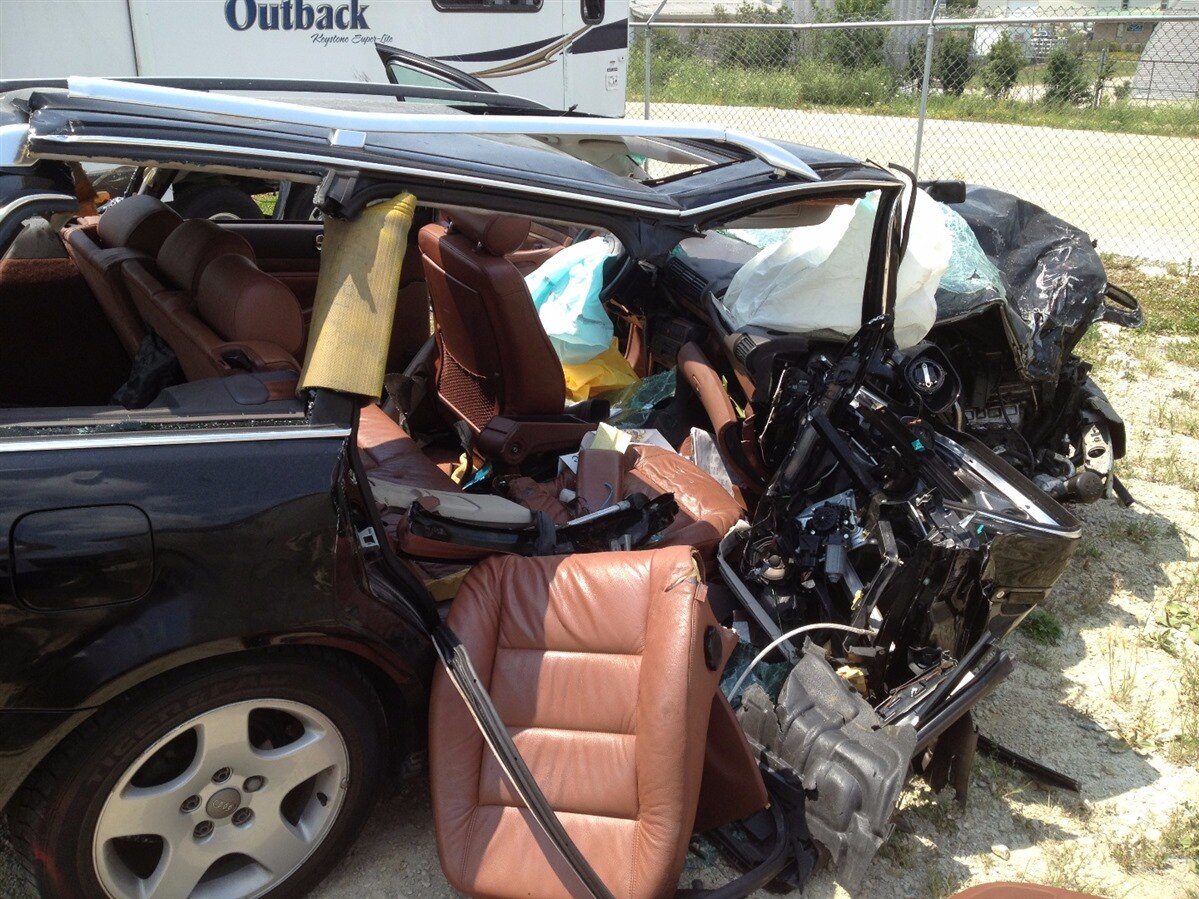
    Mark, about letting my son get a motorcycle.  I almost lost my son to a horrible car accident in his sophomore year of high school.  My daughter was driving and he was the passenger.  There was a man that had a heart attack, the man collapsed on his wheel and crossed the centerline and went head on with my kids at about 130MPH closure.  My son is a senior and he will turn 18 this June.  I have told him to look into training classes that are offered at the tech school here to see if he actually even likes motorcycles.  They have a weekend course where they teach safety and supply the motorcycles and equipment.  I'm willing to go that far.  I also told him that I would not finance any of this endeavor, and that he would have to wait until he was at least 18 to get one.  It will have to be HIS decision, NOT MINE.  I've driven almost 2 million miles for my job and I have seen a lot of terrible stuff, so I just don't want my kid on a bike I guess.


    image

    • Cancel
    • Vote Up 0 Vote Down
    • Sign in to reply
    • Verify Answer
    • Cancel
<>
element14 Community

element14 is the first online community specifically for engineers. Connect with your peers and get expert answers to your questions.

  • Members
  • Learn
  • Technologies
  • Challenges & Projects
  • Products
  • Store
  • About Us
  • Feedback & Support
  • FAQs
  • Terms of Use
  • Privacy Policy
  • Legal and Copyright Notices
  • Sitemap
  • Cookies

An Avnet Company © 2025 Premier Farnell Limited. All Rights Reserved.

Premier Farnell Ltd, registered in England and Wales (no 00876412), registered office: Farnell House, Forge Lane, Leeds LS12 2NE.

ICP 备案号 10220084.

Follow element14

  • X
  • Facebook
  • linkedin
  • YouTube