element14 Community
element14 Community
    Register Log In
  • Site
  • Search
  • Log In Register
  • Community Hub
    Community Hub
    • What's New on element14
    • Feedback and Support
    • Benefits of Membership
    • Personal Blogs
    • Members Area
    • Achievement Levels
  • Learn
    Learn
    • Ask an Expert
    • eBooks
    • element14 presents
    • Learning Center
    • Tech Spotlight
    • STEM Academy
    • Webinars, Training and Events
    • Learning Groups
  • Technologies
    Technologies
    • 3D Printing
    • FPGA
    • Industrial Automation
    • Internet of Things
    • Power & Energy
    • Sensors
    • Technology Groups
  • Challenges & Projects
    Challenges & Projects
    • Design Challenges
    • element14 presents Projects
    • Project14
    • Arduino Projects
    • Raspberry Pi Projects
    • Project Groups
  • Products
    Products
    • Arduino
    • Avnet & Tria Boards Community
    • Dev Tools
    • Manufacturers
    • Multicomp Pro
    • Product Groups
    • Raspberry Pi
    • RoadTests & Reviews
  • About Us
    About the element14 Community
  • Store
    Store
    • Visit Your Store
    • Choose another store...
      • Europe
      •  Austria (German)
      •  Belgium (Dutch, French)
      •  Bulgaria (Bulgarian)
      •  Czech Republic (Czech)
      •  Denmark (Danish)
      •  Estonia (Estonian)
      •  Finland (Finnish)
      •  France (French)
      •  Germany (German)
      •  Hungary (Hungarian)
      •  Ireland
      •  Israel
      •  Italy (Italian)
      •  Latvia (Latvian)
      •  
      •  Lithuania (Lithuanian)
      •  Netherlands (Dutch)
      •  Norway (Norwegian)
      •  Poland (Polish)
      •  Portugal (Portuguese)
      •  Romania (Romanian)
      •  Russia (Russian)
      •  Slovakia (Slovak)
      •  Slovenia (Slovenian)
      •  Spain (Spanish)
      •  Sweden (Swedish)
      •  Switzerland(German, French)
      •  Turkey (Turkish)
      •  United Kingdom
      • Asia Pacific
      •  Australia
      •  China
      •  Hong Kong
      •  India
      •  Japan
      •  Korea (Korean)
      •  Malaysia
      •  New Zealand
      •  Philippines
      •  Singapore
      •  Taiwan
      •  Thailand (Thai)
      •  Vietnam
      • Americas
      •  Brazil (Portuguese)
      •  Canada
      •  Mexico (Spanish)
      •  United States
      Can't find the country/region you're looking for? Visit our export site or find a local distributor.
  • Translate
  • Profile
  • Settings
Community Hub
Community Hub
Member's Forum What’s the most dramatic failure of a low‑quality component you’ve seen, and how did you diagnose the root cause, evaluate the impact, and prevent it from happening again? We are asking e14 in our Join, Share & Win Competition
  • Blog
  • Forum
  • Documents
  • Quiz
  • Events
  • Leaderboard
  • Polls
  • Files
  • Members
  • Mentions
  • Sub-Groups
  • Tags
  • More
  • Cancel
  • New
Join Community Hub to participate - click to join for free!
Actions
  • Share
  • More
  • Cancel
Forum Thread Details
  • Locked Locked
  • Replies 23 replies
  • Subscribers 628 subscribers
  • Views 5886 views
  • Users 0 members are here
  • element14 community
  • win
  • element14 members
  • aske14
Related
This discussion has been locked.
You can no longer post new replies to this discussion. If you have a question you can start a new discussion

What’s the most dramatic failure of a low‑quality component you’ve seen, and how did you diagnose the root cause, evaluate the impact, and prevent it from happening again? We are asking e14 in our Join, Share & Win Competition

E14Alice
E14Alice 5 months ago

Hello Everyone,

I hope you are doing well!

This month’s question was inspired by one that JWx sent over, so a big thank you to JWx for the suggestion!

If anyone else has questions or ideas they’d like to see featured in AskE14, please send them my way, and I’ll line them up for the coming months.

Now to the question: 

What’s the most dramatic failure of a low‑quality component you’ve seen, and how did you diagnose the root cause, evaluate the impact, and prevent it from happening again?


imageimage

Competition Details 

You'll have to be a member of the element14 Community to join in and take part in this “Join, Share & Win” challenge. It's simple, all you have to do is:

1. You need to make sure you are Register or Login
2. Then answer the following question by adding a reply or commenting!

What’s the most dramatic failure of a low‑quality component you’ve seen, and how did you diagnose the root cause, evaluate the impact, and prevent it from happening again?

3. The Community team will then select the best 3 answers to win a UNO R4 Minima! 

image

Closing Date: 30th April 

Winners announced: 1st May

UNO R4 Minima

Terms and Conditions 

imagePDF

This month's winners

 acdc90 

 gpolder 

 strb 

E14Alice will be reaching out to you soon to confirm contact details

  • Cancel
  • genebren
    genebren 5 months ago in reply to dougw

    At one of the many companies that I have worked with, we were building a home beauty aid (hair removal), that used a very high-power IR laser. We powered the laser with a single Li-Ion battery.  One of the final safety related tests, was to check that a fire could not result in the event of a failure of the any of the redundant overcurrent checks.  So, I modified the software to suppress safety checks and turn on both High-power FETs (high and low side) to the laser.  The battery in this device had no internal protection circuits, as we needed bursts of 90-100 Amps to get sufficient energy from the laser.  There as 'special' press and release sequence of the power switch that would arm the device and it would beep and countdown of ten seconds and then fire away.  The test was to arm the device, place it in a fireproof contained and film the results.  The device would smoke, sizzle, melt and make other awful noises, but not quite catch on fire.  A very strange kind of test, but necessary to get our FDA clearance.

    • Cancel
    • Vote Up 0 Vote Down
    • Cancel
  • dang74
    dang74 5 months ago in reply to dougw
    dougw said:
    Fortunately the wrench eventually melted enough to lose contact with the battery terminals.

    Things are next level crazy when a melting wrench is the "fortunate" part of an event.

    • Cancel
    • Vote Up 0 Vote Down
    • Cancel
  • dang74
    dang74 5 months ago in reply to kmikemoo

    Wow.  Unbelievable.

    • Cancel
    • Vote Up 0 Vote Down
    • Cancel
  • kmikemoo
    kmikemoo 5 months ago

    Ope!  Another story.  Circa 2007.  One of our controller suppliers - based out of British Columbia - had a quality issue with one of the chips on their main board.  When the temperature dropped to around freezing - the systems would reset.  You would think a company based in BC would be able to design something that worked in the cold - because it gets cold in BC.  Right?
    Unfortunately, this meant that the system also went into Emergency Stop - which required a manual reset.  This is not a good condition for an emergency backup generator.  Of course, they initially denied it.  So I took a dozen of the controllers and placed them in the refrigerator freezer at work and took them out one by one for testing.  At least 1 in 4 failed - so I threatened to ship 100% of our stock back and replace them with a different supplier.  We never did figure out which chip was the root cause of failure.

    Story 2:  Home standby generators would not make voltage when the temperature dipped to 20F or so.  That's not all that unusual a temperature for Wisconsin or any of the Northern states.  It happens from time to time in the Southern states.  The generators would fail.  We would replace the voltage regulator.  They would fail again.  We would bring them to the shop.  They would not fail.  Any of them.  It took us weeks to figure out that the component supplier had changed potting material - that shrank when it got cold - and was pulling the connections on the PCB open.  They would reconnect once the potting material expanded when it got warmer.
    Laughing  While the system manufacturer blamed a supplier, we all knew that these regulators were made in house.  Joy

    Story 3:  Sort of the same thing as above - except this time it was an internal connection on a Silicon Controlled Rectifier.  Once the temperature got to below freezing, the Gate would open.  This was even harder to track down because there are 6 SCRs in a 3-phase full-wave bridge rectifier and, depending upon the load (or lack thereof - aka testing), two functional SCRs can mask the problem for a long time.  We did learn that the manufacturer changed suppliers - and wrote a better specification for the rectifier assembly.

    • Cancel
    • Vote Up +2 Vote Down
    • Cancel
  • kmikemoo
    kmikemoo 5 months ago

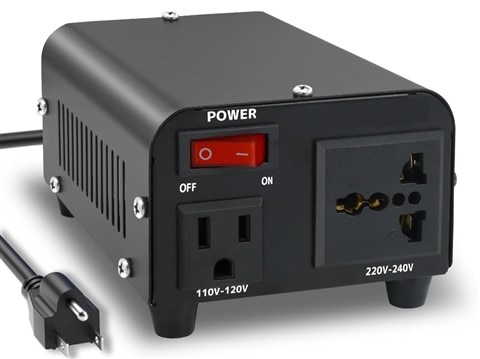
    Just before COVID, I bought a 300VA 120V to 240V transformer off Amazon.  It looked like the one below.  It was about $20 then.  I plugged it in and it starter shooting flames out the side.  I tried to turn it off, but the power switch was already in the OFF position.  So I yanked the cord.  Doing the forensics, the incoming power contacted the case just below the transformer ring.  About half of the wire inside was intentionally bare.  All of the splices were bare - ergo the short to ground.  AND the unit was switched on the neutral (return) conductor.
    image

    Given what I saw inside, I didn't ask for a replacement.  I just took my loss and ordered a larger, better brand.

    • Cancel
    • Vote Up +3 Vote Down
    • Cancel
  • acdc90
    acdc90 5 months ago

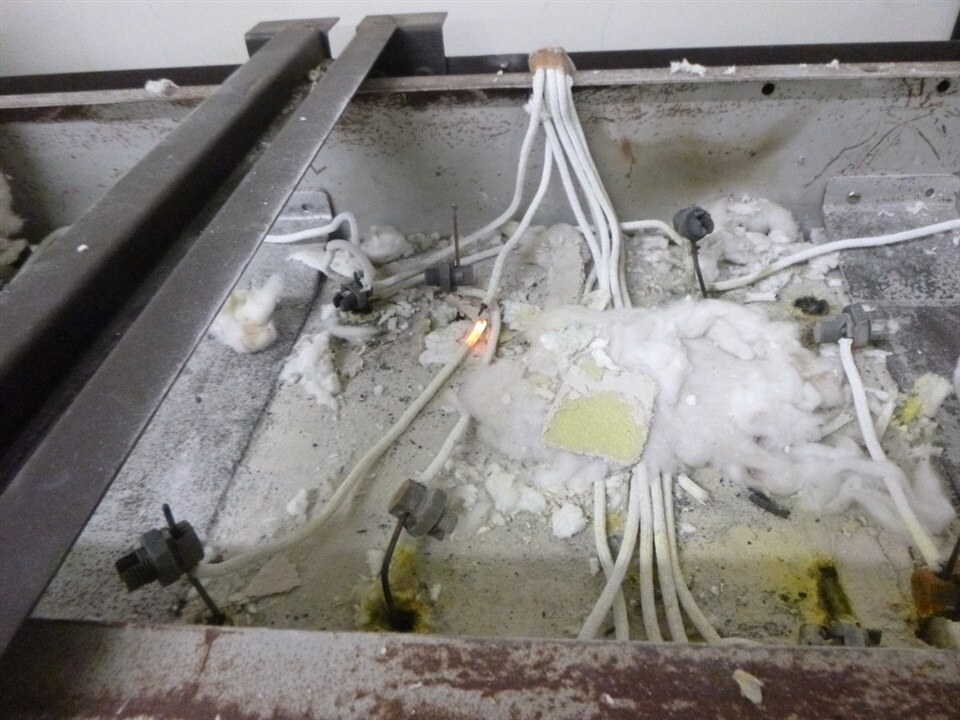
    attached is a photo of the wire just as we opened the cover of the BTU engineering oven just after it broke 

    I think the impresive part of this was getting the photo in time  

    the warning we had was temperature was varring 

    working on machines while live can be dangerious but useful

    Yes we turned it off to repair it 

    image

    • Cancel
    • Vote Up +5 Vote Down
    • Cancel
  • dougw
    dougw 5 months ago

    This isn't about a low cost component, but it was dramatic and terrifying. I was standing nearby when my associate dropped a large wrench that shorted out a large battery capable of supplying over 700 Amps.

    Well, it sounded like an explosion followed by sparks and flames. It was pretty tense while we tried to figure out how to remove the short. Fortunately the wrench eventually melted enough to lose contact with the battery terminals.

    Unfortunately, I don't have a picture of the mangled wrench, but the big robotic vehicle we were working on looked like this...

     image

    • Cancel
    • Vote Up +2 Vote Down
    • Cancel
  • misaz
    misaz 5 months ago

    It most probably is not the most dramatic, but still. Back then, I shop most parts on AliExpress but my requirements were typically pretty minimal and I was unable to identify fraudalent component. But one component which I (now) know to be faulty was HTU21D Temperature and Humidity module. It intermitently work, but sometimes it do not respond on I2C bus. For many years I thought that I just did something wrong on FW side. I had no equipment (except voltmeter, which I used to at least check power voltage) to diagnose back at that time, so I was just wasted time by doing lot of blind troubleshoting. Mostly by modifing firmware, adding delays, tring write AVR registers differently, checking datasheet if I forget set some bit, etc. I was mostly confused because sensor actualy worked sometimes and I thought it was some timing issue on my side. After many years, I got my (cheap, from AliExpress) first logic analyzer and notice that my communication with this sensor look OK. Yet there are not ACKs from sensor sometimes. But I still suspected that there is my fault, like wrong logic level, maybe voltage do not drop to 0 when pulled down and it is enough to detect by logic analyzer but not the sensor, or wahtever. It took several years, until I've got my first oscilloscope (free from Element14, of course) and at that time I finaly get convinced wnough, that issue is in the sensor and not me.

    • Cancel
    • Vote Up +1 Vote Down
    • Cancel
  • embeddedguy
    embeddedguy 5 months ago

    There are a lot actually. But one thing that strikes to me is that, thanks to digitization. Actually, with it now the sensors are having digital interface rather than purely analog and you know the noise issue with the ADCs in Analog. Also, if the sensor is non-working condition or there is some other issue with wiring or power supply or something else like the reading is the actual value? there is no way to answer these questions. With digital sensors we now can verify that the particular bus is in working condition and then can read the sensor ID and so on so forth. 

    So these kinds of problems have happened to me in the past but over the time they have reduced.!

    • Cancel
    • Vote Up 0 Vote Down
    • Cancel
  • chloro
    chloro 5 months ago in reply to gordonmx

    Yes, I completely agree on both points, especially about the connectors; they can cause quiet trouble.

    One problem I have run into is that the attenuation is not consistent across all frequencies. It might say '10 dB' on paper, but when you actually test it, the loss changes a lot depending on the frequency. It can look perfectly fine at your main frequency of interest, but go a bit higher, and suddenly you are off by a couple of dB. This really messes up calibration if you do not catch it.

    Another issue is when the return loss or VSWR turns out to be worse than you expected. Cheaper attenuators often do not keep the impedance proper, so instead of just reducing the signal, they start reflecting power back. This can show up as weird ripples or mismatch errors in your measurements.

    I have also seen thermal drift. If you run a signal for a while, the attenuation slowly shifts as the device heats up. It is not usually a dramatic change, but it is enough to throw off precise measurements.

    And one more subtle thing is the quality of the shielding. Some of these devices leak more signal than they should. In sensitive setups, this means you start picking up unwanted coupling or external noise that absolutely should not be there.

    So, sure, they work... but only until you actually rely on them to be accurate.

    • Cancel
    • Vote Up 0 Vote Down
    • Cancel
>
element14 Community

element14 is the first online community specifically for engineers. Connect with your peers and get expert answers to your questions.

  • Members
  • Learn
  • Technologies
  • Challenges & Projects
  • Products
  • Store
  • About Us
  • Feedback & Support
  • FAQs
  • Terms of Use
  • Privacy Policy
  • Legal and Copyright Notices
  • Sitemap
  • Cookies

An Avnet Company © 2026 Premier Farnell Limited. All Rights Reserved.

Premier Farnell Ltd, registered in England and Wales (no 00876412), registered office: Farnell House, Forge Lane, Leeds LS12 2NE.

Follow element14

  • X
  • Facebook
  • linkedin
  • YouTube