element14 Community
element14 Community
    Register Log In
  • Site
  • Search
  • Log In Register
  • Community Hub
    Community Hub
    • What's New on element14
    • Feedback and Support
    • Benefits of Membership
    • Personal Blogs
    • Members Area
    • Achievement Levels
  • Learn
    Learn
    • Ask an Expert
    • eBooks
    • element14 presents
    • Learning Center
    • Tech Spotlight
    • STEM Academy
    • Webinars, Training and Events
    • Learning Groups
  • Technologies
    Technologies
    • 3D Printing
    • FPGA
    • Industrial Automation
    • Internet of Things
    • Power & Energy
    • Sensors
    • Technology Groups
  • Challenges & Projects
    Challenges & Projects
    • Design Challenges
    • element14 presents Projects
    • Project14
    • Arduino Projects
    • Raspberry Pi Projects
    • Project Groups
  • Products
    Products
    • Arduino
    • Avnet & Tria Boards Community
    • Dev Tools
    • Manufacturers
    • Multicomp Pro
    • Product Groups
    • Raspberry Pi
    • RoadTests & Reviews
  • About Us
  • Store
    Store
    • Visit Your Store
    • Choose another store...
      • Europe
      •  Austria (German)
      •  Belgium (Dutch, French)
      •  Bulgaria (Bulgarian)
      •  Czech Republic (Czech)
      •  Denmark (Danish)
      •  Estonia (Estonian)
      •  Finland (Finnish)
      •  France (French)
      •  Germany (German)
      •  Hungary (Hungarian)
      •  Ireland
      •  Israel
      •  Italy (Italian)
      •  Latvia (Latvian)
      •  
      •  Lithuania (Lithuanian)
      •  Netherlands (Dutch)
      •  Norway (Norwegian)
      •  Poland (Polish)
      •  Portugal (Portuguese)
      •  Romania (Romanian)
      •  Russia (Russian)
      •  Slovakia (Slovak)
      •  Slovenia (Slovenian)
      •  Spain (Spanish)
      •  Sweden (Swedish)
      •  Switzerland(German, French)
      •  Turkey (Turkish)
      •  United Kingdom
      • Asia Pacific
      •  Australia
      •  China
      •  Hong Kong
      •  India
      •  Korea (Korean)
      •  Malaysia
      •  New Zealand
      •  Philippines
      •  Singapore
      •  Taiwan
      •  Thailand (Thai)
      • Americas
      •  Brazil (Portuguese)
      •  Canada
      •  Mexico (Spanish)
      •  United States
      Can't find the country/region you're looking for? Visit our export site or find a local distributor.
  • Translate
  • Profile
  • Settings
Raspberry Pi
  • Products
  • More
Raspberry Pi
Blog Proposal universal connector for dev kit - Modulowo duoNECT - and RPI Adapter
  • Blog
  • Forum
  • Documents
  • Quiz
  • Events
  • Polls
  • Files
  • Members
  • Mentions
  • Sub-Groups
  • Tags
  • More
  • Cancel
  • New
Join Raspberry Pi to participate - click to join for free!
Featured Articles
Announcing Pi
Technical Specifications
Raspberry Pi FAQs
Win a Pi
GPIO Pinout
Raspberry Pi Wishlist
Comparison Chart
Quiz
  • Share
  • More
  • Cancel
Group Actions
  • Group RSS
  • More
  • Cancel
Engagement
  • Author Author: Former Member
  • Date Created: 29 Aug 2015 7:13 PM Date Created
  • Views 1467 views
  • Likes 0 likes
  • Comments 8 comments
Related
Recommended
  • diy
  • add-on-board
  • raspberry_pi_accessories;
  • raspberry_pi_2_kit
  • modulowo
  • development-kits
  • sensor

Proposal universal connector for dev kit - Modulowo duoNECT - and RPI Adapter

Former Member
Former Member
29 Aug 2015

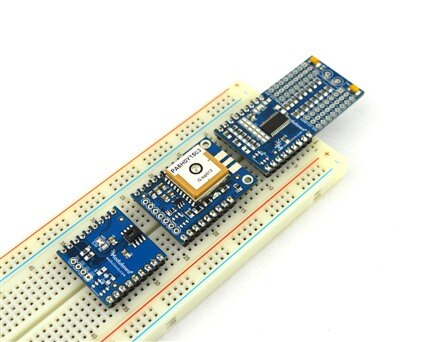
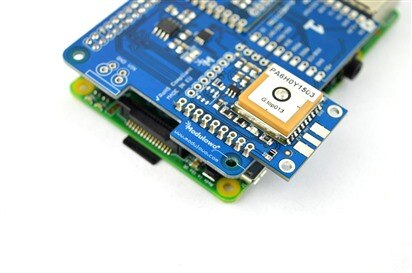
I work in a hardware startup "Modulowo" and I would like to propose a new, universal connector for development kits - ModulowoRegistered duoNECTTm. The connector provides the basic interfaces like UART, I2C, SPI, 1-Wire, a few I/O pins and ID (Identification) pin. The advantage of our connectors is possible to mount by traditional pin 2.54 mm or directly on the base plate thanks to castellated holes. Our solution is not only duoNECTTm connector, but also add-on modules - ExploreTm boards - and adapter for Raspberry Pi 2 or B +. The adapter has three duoNECTTm connectors, but it will be six modules can be connected. In addition, EEPROM memory and 12-bit Analog-to-Digital Converter (16-bit optional). A little more detail: http://blog.modulowo.com/en/modulowo-duonect-czyli-uniwersalne-zlacze-dla-modulow-elektronicznych/


Are our solution can be an interesting proposition? A few photos below:
 

image


image

image


@@@@

  • Sign in to reply

Top Comments

  • shabaz
    shabaz over 10 years ago in reply to Former Member +1
    I'd have to say that sounds like a massive oversight. Had you made it pin-compatible (and added your additional two wires on the end if need be) then your potential customers would have benefited from…
  • shabaz
    shabaz over 10 years ago in reply to Former Member +1
    Matthew Rusak wrote: We wanted mainly to the possibility of mounting add-on boards directly on the motherboard / adapter, so that was not created high "stack". I understand that, but you can still…
  • Former Member
    Former Member over 10 years ago in reply to Robert Peter Oakes

    We add UART or I2C the connector where possible, and for SPI, can be used one-side duoNECT connector .


    So, you suggest adding few I2C or SPI interface connectors to our adapter for Raspberry Pi? With 2 mm pin raster?


    Referring to the LCD, it will offer a simple and inexpensive wireless solution via Bluetooth. So, LCD with encoder for control, do not need to be installed above Raspberry Pi.

    • Cancel
    • Vote Up 0 Vote Down
    • Sign in to reply
    • More
    • Cancel
  • Robert Peter Oakes
    Robert Peter Oakes over 10 years ago

    My experiance so far with the varied connector systems out there (Booster packs, Arduinos, Raspberry PI etc) is they all limit you to one or at best two add ons at a time


    In almost al cases I have worked on reciently I have wanted to do more


    like an LCD, Touch, ADC, DAC and maybe a few digital I/O, this is rarely available and stacking up into a tower is not the answer either. A stack that allows the driver for an LCD, ADC, DAC etc is one thing but to get a working prototype you need to be able to spread out things a little and have connections to numerious boards / devices at once


    I much prefer a set of I2C and SPI connections available through a set of 4  or 6 pin connectors and then a seperate set of Digital IO which could also be connected through I2C or SPI. This is what these buses where designed for SPI - "Serial Peripheral Interface" and I2C "Inter-Integrated Circuit"


    If your prototype needs to be mounted into a demo case / enclosure the boards need to be mountable (ADD HOLES FOR THIS), for instance having an LCD stuck onto an Arduino or PI but no means to have the LCD on a panel has a limited use, having it mountable with a short lead to the controller is far more useful. same goes for the sensors, convertors etc, they need to be able to be placed in an appropriate place, not sandwiched in a multilayer stach where heat and other factors affect performance

    • Cancel
    • Vote Up 0 Vote Down
    • Sign in to reply
    • More
    • Cancel
  • shabaz
    shabaz over 10 years ago in reply to Former Member

    Matthew Rusak wrote:


    We wanted mainly to the possibility of mounting add-on boards directly on the motherboard / adapter, so that was not created high "stack".

    I understand that, but you can still achieve that objective while maintaining compatibility. You can have had castellated connections that are still compatible with the MikroE layout.

    We also have something for the TI LaunchPad, but it's still not ready.

    MikroE have such a board for LaunchPads, they call it a Click Booster Pack. I'm guessing you have some more differentiators that perhaps were not clear so far, otherwise there looks like little difference between

    the two ranges except that MikroE's is larger/more established.

    Castellation isn't really important for prototypes surely? Besides, pins can be trimmed so that boards are within a few mm of each other, or removed (i.e. desoldered) totally for flush fitting

    if there was a strong requirement to minimise height in a prototype.

    • Cancel
    • Vote Up +1 Vote Down
    • Sign in to reply
    • More
    • Cancel
  • Former Member
    Former Member over 10 years ago in reply to shabaz

    Thanks for the suggestions. It's important to me. We wanted mainly to the possibility of mounting add-on boards directly on the motherboard / adapter, so that was not created high "stack". Furthermore, matching the signals to + 3.3V / + 5V voltage and the ability to quick replacement board to another.


    We also have something for the TI LaunchPad, but it's still not ready.

    • Cancel
    • Vote Up 0 Vote Down
    • Sign in to reply
    • More
    • Cancel
  • shabaz
    shabaz over 10 years ago in reply to Former Member

    I'd have to say that sounds like a massive oversight. Had you made it pin-compatible (and added your additional two wires on the end if need be) then your potential customers would have benefited from the ability to pick and choose between the two ranges.

    Currently if I had to choose between the two, I'd go with MikroE simply because they have a much larger ecosystem currently.

    But personally I prefer the TI BoosterPacks, there are hundreds of them.

    • Cancel
    • Vote Up +1 Vote Down
    • Sign in to reply
    • More
    • Cancel
>
element14 Community

element14 is the first online community specifically for engineers. Connect with your peers and get expert answers to your questions.

  • Members
  • Learn
  • Technologies
  • Challenges & Projects
  • Products
  • Store
  • About Us
  • Feedback & Support
  • FAQs
  • Terms of Use
  • Privacy Policy
  • Legal and Copyright Notices
  • Sitemap
  • Cookies

An Avnet Company © 2025 Premier Farnell Limited. All Rights Reserved.

Premier Farnell Ltd, registered in England and Wales (no 00876412), registered office: Farnell House, Forge Lane, Leeds LS12 2NE.

ICP 备案号 10220084.

Follow element14

  • X
  • Facebook
  • linkedin
  • YouTube