element14 Community
element14 Community
    Register Log In
  • Site
  • Search
  • Log In Register
  • Community Hub
    Community Hub
    • What's New on element14
    • Feedback and Support
    • Benefits of Membership
    • Personal Blogs
    • Members Area
    • Achievement Levels
  • Learn
    Learn
    • Ask an Expert
    • eBooks
    • element14 presents
    • Learning Center
    • Tech Spotlight
    • STEM Academy
    • Webinars, Training and Events
    • Learning Groups
  • Technologies
    Technologies
    • 3D Printing
    • FPGA
    • Industrial Automation
    • Internet of Things
    • Power & Energy
    • Sensors
    • Technology Groups
  • Challenges & Projects
    Challenges & Projects
    • Design Challenges
    • element14 presents Projects
    • Project14
    • Arduino Projects
    • Raspberry Pi Projects
    • Project Groups
  • Products
    Products
    • Arduino
    • Avnet & Tria Boards Community
    • Dev Tools
    • Manufacturers
    • Multicomp Pro
    • Product Groups
    • Raspberry Pi
    • RoadTests & Reviews
  • About Us
  • Store
    Store
    • Visit Your Store
    • Choose another store...
      • Europe
      •  Austria (German)
      •  Belgium (Dutch, French)
      •  Bulgaria (Bulgarian)
      •  Czech Republic (Czech)
      •  Denmark (Danish)
      •  Estonia (Estonian)
      •  Finland (Finnish)
      •  France (French)
      •  Germany (German)
      •  Hungary (Hungarian)
      •  Ireland
      •  Israel
      •  Italy (Italian)
      •  Latvia (Latvian)
      •  
      •  Lithuania (Lithuanian)
      •  Netherlands (Dutch)
      •  Norway (Norwegian)
      •  Poland (Polish)
      •  Portugal (Portuguese)
      •  Romania (Romanian)
      •  Russia (Russian)
      •  Slovakia (Slovak)
      •  Slovenia (Slovenian)
      •  Spain (Spanish)
      •  Sweden (Swedish)
      •  Switzerland(German, French)
      •  Turkey (Turkish)
      •  United Kingdom
      • Asia Pacific
      •  Australia
      •  China
      •  Hong Kong
      •  India
      •  Korea (Korean)
      •  Malaysia
      •  New Zealand
      •  Philippines
      •  Singapore
      •  Taiwan
      •  Thailand (Thai)
      • Americas
      •  Brazil (Portuguese)
      •  Canada
      •  Mexico (Spanish)
      •  United States
      Can't find the country/region you're looking for? Visit our export site or find a local distributor.
  • Translate
  • Profile
  • Settings
Artificial Intelligence and Machine Learning
  • Technologies
  • More
Artificial Intelligence and Machine Learning
Blog New minerals discovered in meteorite and AI creates millions of new minerals
  • Blog
  • Forum
  • Documents
  • Events
  • Polls
  • Files
  • Members
  • Mentions
  • Sub-Groups
  • Tags
  • More
  • Cancel
  • New
Join Artificial Intelligence and Machine Learning to participate - click to join for free!
  • Share
  • More
  • Cancel
Group Actions
  • Group RSS
  • More
  • Cancel
Engagement
  • Author Author: Catwell
  • Date Created: 6 Dec 2022 7:21 PM Date Created
  • Views 1333 views
  • Likes 7 likes
  • Comments 1 comment
  • research
  • materials
  • artificial intelligence
  • on_campus
  • cabeatwell
  • ai
  • university
Related
Recommended

New minerals discovered in meteorite and AI creates millions of new minerals

Catwell
Catwell
6 Dec 2022

image

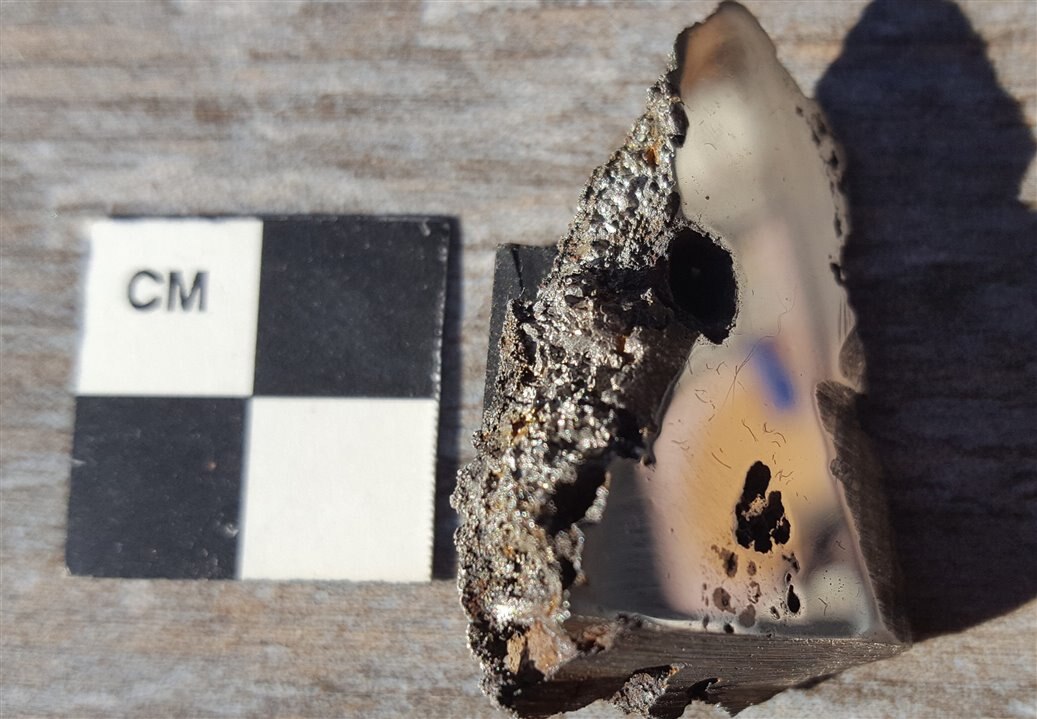
Researchers discovered two new minerals in this El Ali meteorite sample. (Image Credit: Nick Gessler)

Recently, scientists discovered a 15-tonne meteorite called El Ali that crashed in Somalia and has two minerals, with a third under consideration. The team found these in a 70-gram sample, which means the meteorite could house more minerals.  "Whenever you find a new mineral, it means that the actual geological conditions, the chemistry of the rock, was different than what's been found before," said University of Alberta Professor Chris Herd. 

Herd named these new minerals elaliite and elkinstantonite after both the meteorite and Professor Lindy Elkins-Tanton.  "Lindy has done a lot of work on how the cores of planets form, how these iron-nickel cores form, and the closest analogue we have are iron meteorites," Herd said. "So it made sense to name a mineral after her and recognize her contributions to science."

Herd collaborated with UCLA and the California Institute of Technology researchers to determine that the space rock is made of Iron 1AB. Only 350 of these types are known. While investigating the meteorite, Herd noticed something strange. So he called in Andrew Locock, who helped identify other minerals like Heamanite-(Ce). "The very first day he did some analyses, he said, 'You've got at least two new minerals in there,'" says Herd. "That was phenomenal. Most of the time, it takes a lot more work than that to say there's a new mineral." 

Locock quickly identified the two new minerals because they were already artificially created, allowing him to match their composition with the human-made counterparts. Researchers are studying these minerals to see what the conditions were like in the meteorite when it formed. "That’s my expertise — how you tease out the geologic processes and the geologic history of the asteroid this rock was once part of,” says Herd. “I never thought I’d be involved in describing brand new minerals just by virtue of working on a meteorite.”

Herd says these new minerals could lead to potential applications in the future. “Whenever there’s a new material that’s known, material scientists are interested too because of the potential uses in a wide range of things in society.”

However, the meteorite has been shipped off to China to find a potential buyer. It’s still uncertain if more samples will be available for science.
image

(Image Credit: geralt/pixabay)

University of California San Diego scientists created M3GNet, a new AI algorithm that predicts over 31 million nonexistent materials' structures and properties. They say this tool has the potential to discover new materials with unique properties. 

M3GNet populated an extensive database of materials. These materials are the same types the engineers use to find energy-dense electrodes for lithium-ion batteries. Shyue Ping Ong, UC San Diego nanoengineering professor, says the M3GNet algorithm is like "an AlphaFold for materials," referencing DeepMind's AI that predicts protein structures.

“Similar to proteins, we need to know the structure of a material to predict its properties,” he said. "We truly believe that the M3GNet architecture is a transformative tool that can greatly expand our ability to explore new material chemistries and structures.”

The team's next goal is to add more materials to the database while determining which materials could prove useful for future scientific discoveries. Estimates suggest that over one million of the 31 million materials on the database offer stability.

Have a story tip? Message me at: http://twitter.com/Cabe_Atwell

  • Sign in to reply
  • Foster1054
    Foster1054 over 1 year ago

    Thanks!

    • Cancel
    • Vote Up 0 Vote Down
    • Sign in to reply
    • More
    • Cancel
element14 Community

element14 is the first online community specifically for engineers. Connect with your peers and get expert answers to your questions.

  • Members
  • Learn
  • Technologies
  • Challenges & Projects
  • Products
  • Store
  • About Us
  • Feedback & Support
  • FAQs
  • Terms of Use
  • Privacy Policy
  • Legal and Copyright Notices
  • Sitemap
  • Cookies

An Avnet Company © 2025 Premier Farnell Limited. All Rights Reserved.

Premier Farnell Ltd, registered in England and Wales (no 00876412), registered office: Farnell House, Forge Lane, Leeds LS12 2NE.

ICP 备案号 10220084.

Follow element14

  • X
  • Facebook
  • linkedin
  • YouTube