element14 Community
element14 Community
    Register Log In
  • Site
  • Search
  • Log In Register
  • Community Hub
    Community Hub
    • What's New on element14
    • Feedback and Support
    • Benefits of Membership
    • Personal Blogs
    • Members Area
    • Achievement Levels
  • Learn
    Learn
    • Ask an Expert
    • eBooks
    • element14 presents
    • Learning Center
    • Tech Spotlight
    • STEM Academy
    • Webinars, Training and Events
    • Learning Groups
  • Technologies
    Technologies
    • 3D Printing
    • FPGA
    • Industrial Automation
    • Internet of Things
    • Power & Energy
    • Sensors
    • Technology Groups
  • Challenges & Projects
    Challenges & Projects
    • Design Challenges
    • element14 presents Projects
    • Project14
    • Arduino Projects
    • Raspberry Pi Projects
    • Project Groups
  • Products
    Products
    • Arduino
    • Avnet & Tria Boards Community
    • Dev Tools
    • Manufacturers
    • Multicomp Pro
    • Product Groups
    • Raspberry Pi
    • RoadTests & Reviews
  • About Us
  • Store
    Store
    • Visit Your Store
    • Choose another store...
      • Europe
      •  Austria (German)
      •  Belgium (Dutch, French)
      •  Bulgaria (Bulgarian)
      •  Czech Republic (Czech)
      •  Denmark (Danish)
      •  Estonia (Estonian)
      •  Finland (Finnish)
      •  France (French)
      •  Germany (German)
      •  Hungary (Hungarian)
      •  Ireland
      •  Israel
      •  Italy (Italian)
      •  Latvia (Latvian)
      •  
      •  Lithuania (Lithuanian)
      •  Netherlands (Dutch)
      •  Norway (Norwegian)
      •  Poland (Polish)
      •  Portugal (Portuguese)
      •  Romania (Romanian)
      •  Russia (Russian)
      •  Slovakia (Slovak)
      •  Slovenia (Slovenian)
      •  Spain (Spanish)
      •  Sweden (Swedish)
      •  Switzerland(German, French)
      •  Turkey (Turkish)
      •  United Kingdom
      • Asia Pacific
      •  Australia
      •  China
      •  Hong Kong
      •  India
      •  Korea (Korean)
      •  Malaysia
      •  New Zealand
      •  Philippines
      •  Singapore
      •  Taiwan
      •  Thailand (Thai)
      • Americas
      •  Brazil (Portuguese)
      •  Canada
      •  Mexico (Spanish)
      •  United States
      Can't find the country/region you're looking for? Visit our export site or find a local distributor.
  • Translate
  • Profile
  • Settings
Wireless
  • Technologies
  • More
Wireless
Blog The Best HD Radio Receiver
  • Blog
  • Forum
  • Documents
  • Polls
  • Quiz
  • Events
  • Mentions
  • Sub-Groups
  • Tags
  • More
  • Cancel
  • New
Join Wireless to participate - click to join for free!
  • Share
  • More
  • Cancel
Group Actions
  • Group RSS
  • More
  • Cancel
Engagement
  • Author Author: gervasi
  • Date Created: 18 Sep 2013 4:04 PM Date Created
  • Views 1596 views
  • Likes 1 like
  • Comments 5 comments
  • hd_radio
Related
Recommended

The Best HD Radio Receiver

gervasi
gervasi
18 Sep 2013

A few weeks ago when I started researching HD Radio, I found that there are few high-quality receivers.   I asked Jessica Crotty of C. Crane, a high-end radio retailer, which radio they recommended.  The answer was none of them.  They tested many of them, and they couldn't find any that had good AM performance.  The only one they liked was Sony XDR-F1HD, which is discontinued.  image
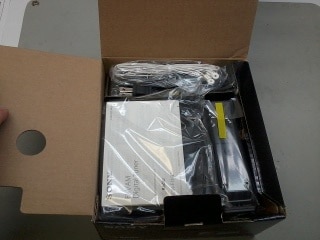
 

I had not planned to revisit HD radio again, but someone lent me a Sony XDR-F1HD, so I decided to test it to see how good HD can get.  I compared it to the Insignia NS-HDRAD and an ICF-2010.


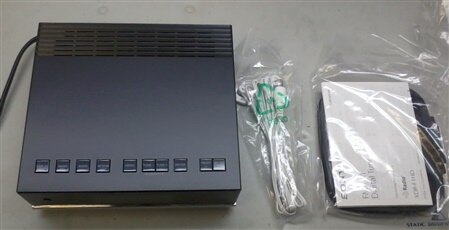
XDR-F1HD is a receiver only with line-level audio output.  I does not have an amplified output for headphones or a loudspeaker.  It comes with a dipole antenna for FM and a loop for AM. 


Analog Reception

Reception using the provided antennas was excellent.  The FM dipole pulled in signals about as well as the whip on the Insignia NS-HDRAD.  The AM loop pulled in many weak stations that I could not hear on other radios. 


Connecting the XDR-F1HD to an outdoor vertical antenna did not lead to any intermodulation.  Connecting this same antenna to the Sony ICF-2010 results in so much intermodulation that it’s unusable on the FM band.  (Sony ICF-2010 is a great radio for HF but not so good for FM broadcast reception.)


Insignia NS-HDRAD did not experience noticeable intermodulation on this antenna either, but XDR-F1HD picked up more stations.image
 

Digital Reception

The digital portion of broadcast signals is 20dB down from the analog carrier, so you only can expect to listen to the digital portion of strong signals.  XDR-F1HD did a good job recovering digital signals.  There is a lot of hysteresis in XDR-F1HD's signal strength threshold for HD reception.  A strong signal is required for it to start decoding HD.  From there I can drop the signal quite a bit before it switches back to analog.  I never had any problem of it needlessly switching back and forth. 


There is a blinking HD indicator to indicate the presence of an HD signal.  On many distant AM stations at night, this indicator blinked without the radio ever switching over the HD signal.  The indicator lets you know the signal is there even if it's too weak to listen to. 


Some stations have multiple HD digital sub-channels with different audio fidelity.  For example, my public radio station has two sub-channels with high-fidelity music and a third sub-channel for talk programing with much lower fidelity.  The Insignia NS-HDRAD has the annoying problem of the volume being proportional to fidelity.  So when you switch from a low-fidelity sub-channel to a high-fidelity one, you must turn the volume down or it will get very loud.  The XDR-RF1HD does not exhibit this problem at all.


Under the Hood
image

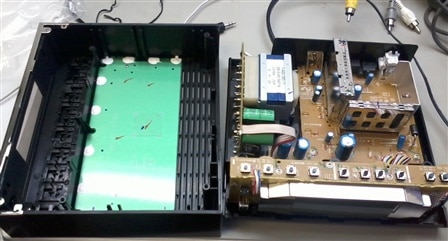
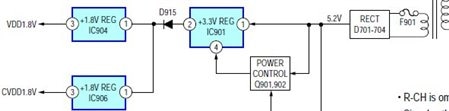
The heatsink on the right is connected to a 3.3V linear regulator.  The linear drives 1.8V linear regulators that supply power to the tuner and the baseband digital module, the two modules in cans. I would love to know if they used two linears in series to filter noise or for some other reason. 
image

The board on the top of the enclosure (on the left side of the picture above) has no parts on it.  It appears to be a stiffener.


The boards have mask and copper etch on one side only.  They use jumpers for “solder-side” connections.  This cannot have saved that much money.  You’d think the added cost of the jumpers would outweigh savings from omitting copper and mask from one side. 


Conclusion

If HD radio had been adopted before Internet streaming audio was popular, it might have caught on.  It also would have helped if the digital subcarrier were not 20dB below the analog carrier.  When I started reviewing HD Radio a few weeks ago, I thought the world needed someone to make a radio with good enough performance to be used for DXing but that also supports HD.  The lower power, though, makes HD incompatible with DXing.  People willing to adopt a new technology and wanting more audio programming can more easily listen to radio with an app on their phones. 


If AM/FM radio is used primarily by people who are not adopting new technology, the service may disappear in the next few decades.  Twenty-five years ago there were stations on shortwave packed in 5kHz intervals, and now there are only a few stations on each band.  Is this the future of AM/FM radio? 


Further Reading

  • Brian Beezley does an amazing teardown and review of Sony XDR-F1HD with high-quality pictures.
  • The Sony XDR-F1HD Service Manual
  • A nice discussion of how adjacent channel interference from HD subcarriers is a problem for DXers
  • Sign in to reply

Top Comments

  • DAB
    DAB over 12 years ago +1
    Yes, it is a really different world than the one I grew up in. We mostly used the AM/FM radio to keep up with local events, news and weather. The music in most instances was the filler they used to gain…
  • 2dogs
    2dogs over 8 years ago

    I own two of these Sonys. They're pretty good but very aggravating. Programming is not user-friendly. And when I have an electrical outage they had to be reprogrammed. I had them both going on at each end of my flat. On the NPR HD3 rock station, the one Sony was 1.5 seconds behind the other. I can't figure that one out at all.

    I've had three different JVC HD radios in my car. Two got stolen. They've all behaved really well. So well, in fact, that I've considered replacing the Sonys with JVC car HD radios and use computer power supplies for the 12 volts.
    I've been a radio geek all of my life, 1st Phone and all. I love HD radio and wish it would get greater adoption and have a wider range of receiver hardware. Thanks for the coverage.

    • Cancel
    • Vote Up 0 Vote Down
    • Sign in to reply
    • More
    • Cancel
  • dragonbill
    dragonbill over 12 years ago

    Nice article.  Yes, there are many cheap HD radios on the market.  HD radio has a long way to go.  The big push not is for the Artist Experience and iTune tagging.  Of course the only radios that you would be able to "see" the album art, etc, would be vehicles to start. 

    As for the -20dBc, that is the norm, but stations can go to -14dBc without anything much thatn a letter to the FCC stating such.  Anything higher requires "permission."  One major reason stations do not increase their digital carriers is power costs.  Though transmitter manufacturers are improving their boxes, it is not cost effective to purchase, install, and then upgrade in 2 years.  Transmitters need to be upgradable! 


    BTW, Inovovonics makes a braodcast monitor, the Ino632, which is a very good radio.  You will not see such a thing on the consumer market.  In fact when we were looking to update a couple receivers for HD monitoring we were UNABLE to find a decent on in the consumer market!  So, we stuck it to our budget and began forking out for the good ones.


    Regards,

    Bill

    (Yes, I'm a broadcast engineer.)

    • Cancel
    • Vote Up 0 Vote Down
    • Sign in to reply
    • More
    • Cancel
  • gervasi
    gervasi over 12 years ago in reply to Former Member

    @Marcus Hesse: Thanks for joining.  I remember the days when talk radio stations had local personalities, and if they were on a clear channel frequency (a frequency with only one station licensed to transmit at night, no relation to the company) at night you could hear content focused for a mostly local market.  750kHz WSB Atlanta was one I listened to-- local ads, many local callers, local accents.  You could only hear them on a clear night with a loop antenna oriented toward them. 


    Some of the numbers on podcasts are staggering.  Radio and TV are still more ubiquitous, but some podcasts have as many listeners.  That's surprising b/c you don't just come upon a podcast fiddling with the radio while stuck in traffic. 

    • Cancel
    • Vote Up 0 Vote Down
    • Sign in to reply
    • More
    • Cancel
  • Former Member
    Former Member over 12 years ago in reply to DAB

    Thanks for the interesting article.  I wondered where HD radio was today since TV already went that direction.  Although antenna HD TV is horrible ~ I can only get one or two channels all pixelated in the urban city I live in.


    Radio is dying yes because of portable music options, but mostly because the content is horrible.  Today every station is owned by Clear Channel, so talk shows are all dumbed-down butterflies and sunshine material.  Additionally, music is nothing more than the record companies' latest payment to Clear Channel to play their crappy songs X amount of times per day.  That's why every city has a station of "Rock", "Classic Rock", "Oldies", "Country", etc that all play the same songs.  Yes, this is really how radio works ~ the record companies PAY Clear Channel stations to play their "newest hit" X amount of times per day.  The top 40 is decided by record producers, not any actual listeners. However, no one except 6 year olds and brainwashed sheltered corporatised adults want to listen to Taylor Swift, Black Eyed Peas, and Molly Cyrus.


    Podcasts with real dicussions and also indie music like Arcade Fire & the National, etc are mainly killing radio.

    • Cancel
    • Vote Up 0 Vote Down
    • Sign in to reply
    • More
    • Cancel
  • DAB
    DAB over 12 years ago

    Yes, it is a really different world than the one I grew up in.


    We mostly used the AM/FM radio to keep up with local events, news and weather.  The music in most instances was the filler they used to gain a listening base for the type of listeners they wanted.  Each music genre had its own marketing audience and people selected the stations they wanted based upon the type of music they played.


    The cassette player probably put the radio into a dying market.  You carried the music you wanted and could drive for days without listening to the radio.  The CD just added to the movement already underway.


    The Sony walkman and the MP3 player fully cut most young people away from radio forever. 

    The digital radio might bring in some people, but with 24 hr news and weather available on your digital phones, plus music and video streaming make radio nearly superfluous.


    I am not surprised by the dearth of good quality digital recievers.  There is just not a very large market to make it worth the investment.


    The times they have changed!


    DAB

    • Cancel
    • Vote Up +1 Vote Down
    • Sign in to reply
    • More
    • Cancel
element14 Community

element14 is the first online community specifically for engineers. Connect with your peers and get expert answers to your questions.

  • Members
  • Learn
  • Technologies
  • Challenges & Projects
  • Products
  • Store
  • About Us
  • Feedback & Support
  • FAQs
  • Terms of Use
  • Privacy Policy
  • Legal and Copyright Notices
  • Sitemap
  • Cookies

An Avnet Company © 2025 Premier Farnell Limited. All Rights Reserved.

Premier Farnell Ltd, registered in England and Wales (no 00876412), registered office: Farnell House, Forge Lane, Leeds LS12 2NE.

ICP 备案号 10220084.

Follow element14

  • X
  • Facebook
  • linkedin
  • YouTube