


Hey fellas...
Here comes this week's update, something I wanted to do for a long time, but the Upcycle Challenge made me to do it  ...
...
I wanted to re-purpose the Omron D6T, I2C MEMS IR sensor to track movement and direction. The one I'm using here is Omron D6T-8L, with 8 pixels.
How its works:
The sensor has a resolution of 1x8, what I've done is read all the 8 pixel values and find the largest of it and the corresponding pixel and map the value to a Servo.
The Setup:
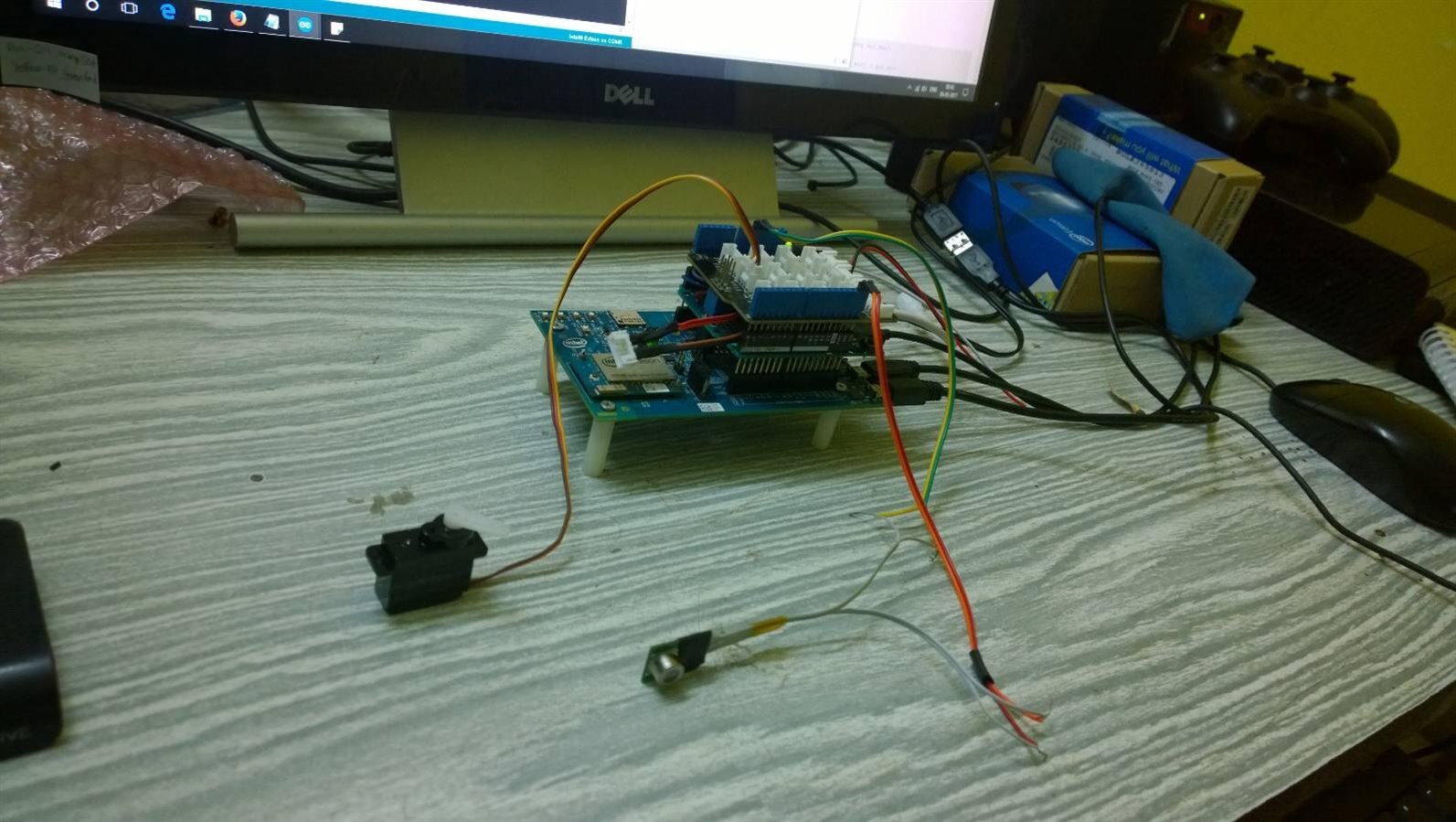
Connections
Omron D6T EDISON
SCL --> SCL
SDA --> SDA
5V --> 5V
GND --> GND
Servo Edison
Signal --> Any PWM pin
5V --> 5V
GND --> GND
The Code :
#include <Servo.h>
#include <Wire.h>

#define D6T_addr 0x0A // Address of OMRON D6T is 0x0A in hex
#define D6T_cmd 0x4C // Standard command is 4C in hex

Servo myservo;

int tmax, imax;
int numbytes = 19;
int numel = 8;
int rbuf[19];
int tdata[8];
float t_PTAT;
int deg;
int i;

void setup()
{
  Wire.begin();
  Serial.begin(9600);
  myservo.attach(5);
  myservo.write(90);
  }

void loop()
{
  tmax = 0;
  imax=0;
  Wire.beginTransmission(D6T_addr);
  Wire.write(D6T_cmd);
  Wire.endTransmission();

  delay(70);
  Wire.requestFrom(D6T_addr, numbytes); // D6T-8 returns 19 bytes

  if (0 <= Wire.available()) { // If there is data still left in buffer
    i = 0;
    for (i = 0; i < numbytes; i++) {
      rbuf[i] = Wire.read();
    }
    t_PTAT = (rbuf[0] + (rbuf[1] << 8) ) * 0.1;
    for (i = 0; i < numel; i++) {
      tdata[i] = (rbuf[(i * 2 + 2)] + (rbuf[(i * 2 + 3)] << 8 )) * 0.1;
      //Serial.print(tdata[i]);
      //Serial.print(",");
    }
    //Serial.println();

  }

      for (i = 0; i < numel; i++)
    {
      if (tmax <= tdata[i])
      { tmax = tdata[i];
        imax = i;
        Serial.println(imax);
      }
    }
  deg = map(imax, 0, 7, 60 , 120);
  myservo.write(deg);
  delay(10);


}
Lets Track...
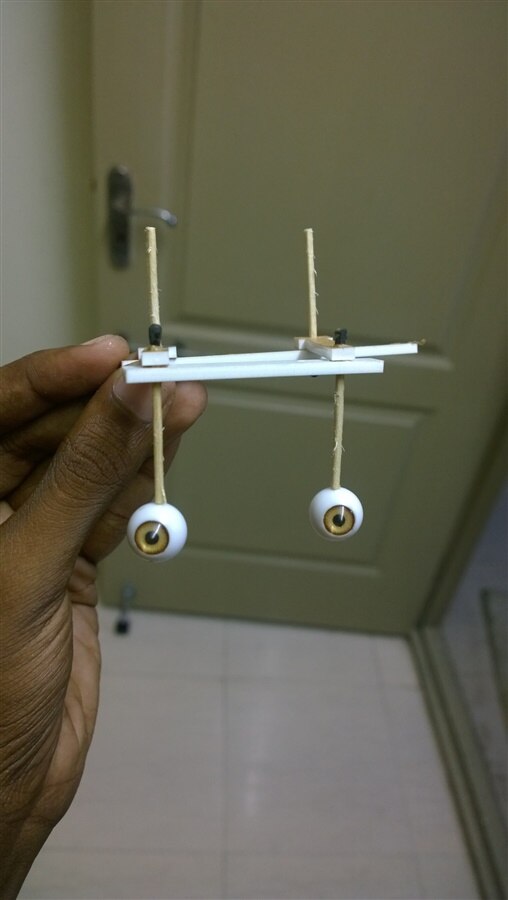
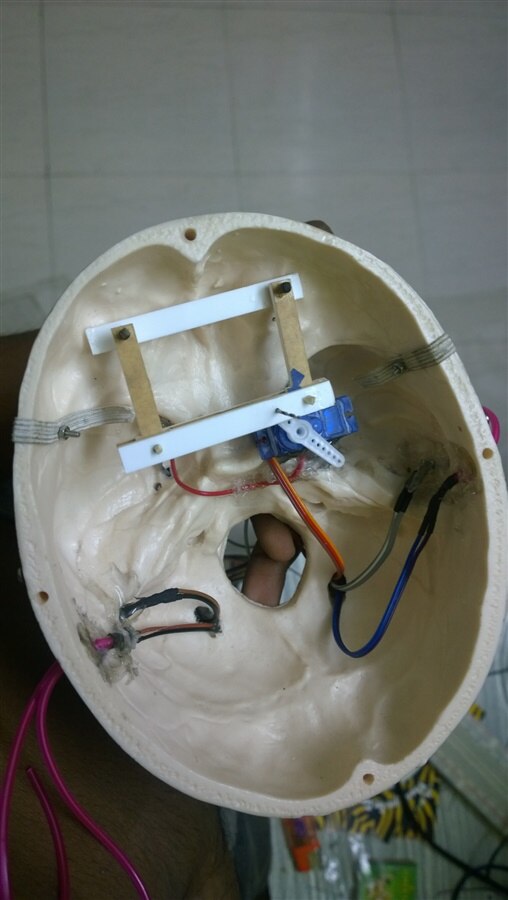
I made a simple mechanism to make the eyes move, i thought of 3d printing them but old acrylic pieces and a few match sticks came handy. also mounted with the skull.
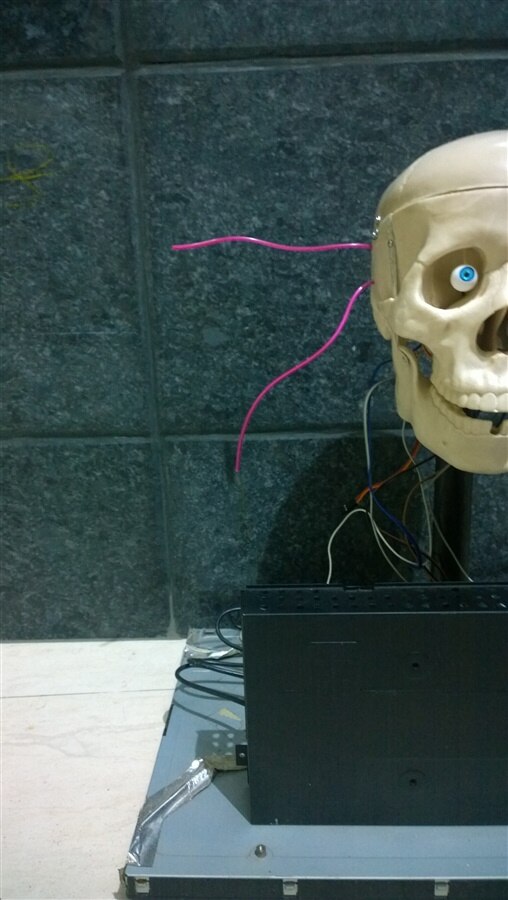
You guys will be meeting Funeka mostly my 28th  Here's some sneak peek
Top Comments