element14 Community
element14 Community
    Register Log In
  • Site
  • Search
  • Log In Register
  • Community Hub
    Community Hub
    • What's New on element14
    • Feedback and Support
    • Benefits of Membership
    • Personal Blogs
    • Members Area
    • Achievement Levels
  • Learn
    Learn
    • Ask an Expert
    • eBooks
    • element14 presents
    • Learning Center
    • Tech Spotlight
    • STEM Academy
    • Webinars, Training and Events
    • Learning Groups
  • Technologies
    Technologies
    • 3D Printing
    • FPGA
    • Industrial Automation
    • Internet of Things
    • Power & Energy
    • Sensors
    • Technology Groups
  • Challenges & Projects
    Challenges & Projects
    • Design Challenges
    • element14 presents Projects
    • Project14
    • Arduino Projects
    • Raspberry Pi Projects
    • Project Groups
  • Products
    Products
    • Arduino
    • Avnet & Tria Boards Community
    • Dev Tools
    • Manufacturers
    • Multicomp Pro
    • Product Groups
    • Raspberry Pi
    • RoadTests & Reviews
  • About Us
  • Store
    Store
    • Visit Your Store
    • Choose another store...
      • Europe
      •  Austria (German)
      •  Belgium (Dutch, French)
      •  Bulgaria (Bulgarian)
      •  Czech Republic (Czech)
      •  Denmark (Danish)
      •  Estonia (Estonian)
      •  Finland (Finnish)
      •  France (French)
      •  Germany (German)
      •  Hungary (Hungarian)
      •  Ireland
      •  Israel
      •  Italy (Italian)
      •  Latvia (Latvian)
      •  
      •  Lithuania (Lithuanian)
      •  Netherlands (Dutch)
      •  Norway (Norwegian)
      •  Poland (Polish)
      •  Portugal (Portuguese)
      •  Romania (Romanian)
      •  Russia (Russian)
      •  Slovakia (Slovak)
      •  Slovenia (Slovenian)
      •  Spain (Spanish)
      •  Sweden (Swedish)
      •  Switzerland(German, French)
      •  Turkey (Turkish)
      •  United Kingdom
      • Asia Pacific
      •  Australia
      •  China
      •  Hong Kong
      •  India
      • Japan
      •  Korea (Korean)
      •  Malaysia
      •  New Zealand
      •  Philippines
      •  Singapore
      •  Taiwan
      •  Thailand (Thai)
      • Vietnam
      • Americas
      •  Brazil (Portuguese)
      •  Canada
      •  Mexico (Spanish)
      •  United States
      Can't find the country/region you're looking for? Visit our export site or find a local distributor.
  • Translate
  • Profile
  • Settings
Autodesk EAGLE
  • Products
  • More
Autodesk EAGLE
EAGLE User Support (English) Wot, still no package land pattern vias?
  • Blog
  • Forum
  • Documents
  • Events
  • Polls
  • Files
  • Members
  • Mentions
  • Sub-Groups
  • Tags
  • More
  • Cancel
  • New
Join Autodesk EAGLE to participate - click to join for free!
Actions
  • Share
  • More
  • Cancel
Forum Thread Details
  • Replies 31 replies
  • Subscribers 180 subscribers
  • Views 2610 views
  • Users 0 members are here
Related

Wot, still no package land pattern vias?

Former Member
Former Member over 11 years ago

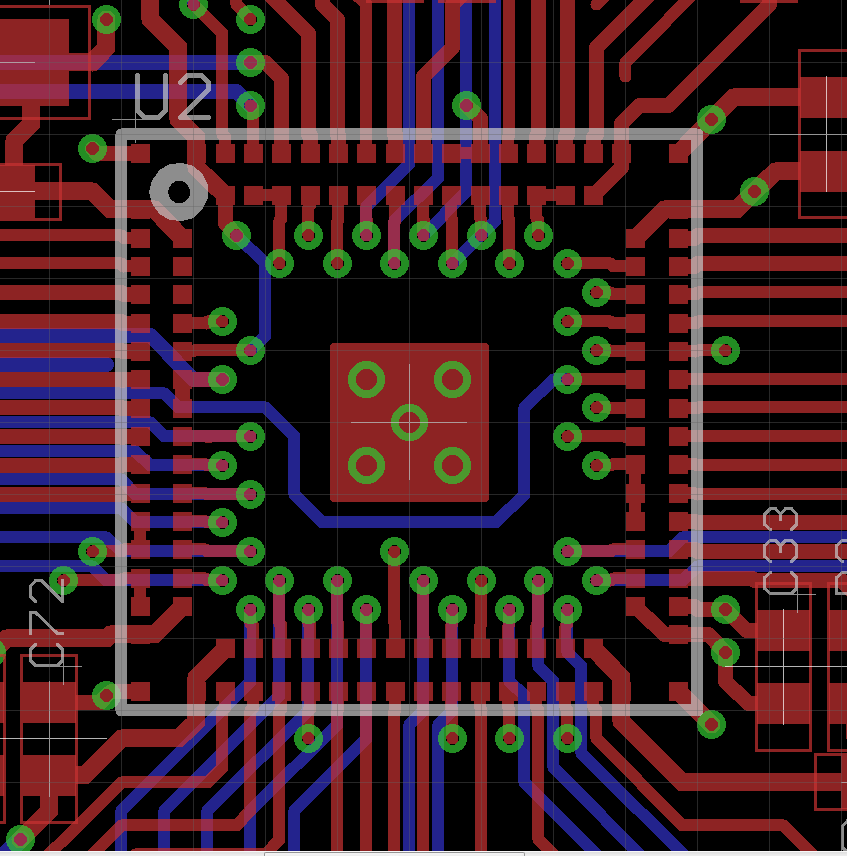
The one thing I expected to be fixed in v7 was vias in land patterns. Nope, still AWOL, in spite of a glaring need for thermal transfer to ground via the center pad on some parts. What gives? When is this coming?

  • Sign in to reply
  • Cancel

Top Replies

  • autodeskguest
    autodeskguest over 11 years ago +1
    On 9/18/2014 10:58 PM, Ryan Pettigrew wrote: The one thing I expected to be fixed in v7 was vias in land patterns. Nope, still AWOL, in spite of a glaring need for thermal transfer to ground via the center…
Parents
  • autodeskguest
    autodeskguest over 11 years ago

    On 9/18/2014 10:58 PM, Ryan Pettigrew wrote:

    The one thing I expected to be fixed in v7 was vias in land patterns.

    Nope, still AWOL, in spite of a glaring need for thermal transfer to

    ground via the center pad on some parts. What gives? When is this

    coming?
     

    --

    To view any images and attachments in this post, visit:

    http://www.element14.com/community/message/126808


    Hi Ryan,


    This is already possible. Here's what you would do:


    In the package:


    1. Place the thermal transfer through-hole pads(pads and vias are

    physically the same thing, the distinction we make in EAGLE is that pads

    are always associated with components and go through the hole board,

    vias are on the board and generally associated with transitions between

    layers).


    2. Draw polygons enclosing these pads on the Top, Bottom, tStop, bStop,

    tCream, and bCream layers. My assumption here is that the thermal pad

    shows up on both sides of the board, this isn't always the case but for

    the sake of generality I've included them here.


    3. In the device editor, assign all of those pads to the same pin of

    your symbol, because they're within the boundaries of the polygon the

    polygon is considered an extension of those pads.


    That's pretty much all you have to do, and EAGLE will handle it without

    errors. Section 8.14 of the EAGLE manual covers this in greater

    detail.The Help pages for PAD and SMD provide more details


    hth,

    Jorge Garcia


    • Cancel
    • Vote Up +1 Vote Down
    • Sign in to reply
    • Cancel
  • Former Member
    Former Member over 11 years ago in reply to autodeskguest

    CadSoft Guest wrote:


    That's pretty much all you have to do, and EAGLE will handle it without

    errors. Section 8.14 of the EAGLE manual covers this in greater

    detail.The Help pages for PAD and SMD provide more details


    Jorge, the problem is, you can't then assign it to the via layer, with all the other vias, where it belongs, and where it is convenient for the board assembler to find it, and know what it is, and what its purpose is supposed to be.


    I reiterate; I am NOT interested in ways of working around this problem; I am interested in this problem being fixed, so no workaround is required. If I wanted help getting around this limitation in the software, I would have posted in the help forum, not here in the suggestion forum.

    • Cancel
    • Vote Up 0 Vote Down
    • Sign in to reply
    • Cancel
  • autodeskguest
    autodeskguest over 11 years ago in reply to Former Member

    "Ryan Pettigrew"  skrev i nyhetsmeldingen:

    841402075.181411429316209.JavaMail.jive@flmspu-csapp-02.premierfarnell.com

    ...


    Jorge, the problem is, you can't then assign it to the via layer, with

    all the other vias, where it belongs, and where it is convenient for the

    board assembler to find it, and know what it is, and what its purpose is

    supposed to be.


    I do not see the need to differ those vias/pads from other vias/pads. Maybe

    you can explain why they need to know? Full through vias and pads are

    generally manufactured in the same process afaik.


    The only valid argument I can see is that sometimes, when working with

    blind/buried/micro-vias, you may want the heat transfer between controlled

    layers, but doing this in a library editor is not straight forward. It could

    be done with some "vitrual via" placement that needs to be placed manually

    in the board design, and would cause a DRC error if not present.


    • Cancel
    • Vote Up 0 Vote Down
    • Sign in to reply
    • Cancel
  • autodeskguest
    autodeskguest over 11 years ago in reply to Former Member

    On 9/22/2014 7:41 PM, Ryan Pettigrew wrote:


    Jorge, the problem is, you can't then assign it to the via layer, with

    all the other vias, where it belongs, and where it is convenient for the

    board assembler to find it, and know what it is, and what its purpose is

    supposed to be.


    Hi Ryan,


    I'm afraid I disagree, thermal vias within a package don't need to be on

    the vias layer. The distinction between pads and vias is something

    internal to EAGLE. When we generate gerber output, through-hole pads and

    vias are always included together, so they're indistinguishable to the

    board house. Even visually within EAGLE they're indistinguishable

    because the pads and vias layers use the same color.


    Has the assembler given any special instruction or complaint?


    hth,

    Jorge Garcia


    • Cancel
    • Vote Up 0 Vote Down
    • Sign in to reply
    • Cancel
  • autodeskguest
    autodeskguest over 11 years ago in reply to autodeskguest

    On 24/09/2014 4:11 a.m., Jorge Garcia wrote:


    A few 'not trues' here


    I'm afraid I disagree, thermal vias within a package don't need to be on

    the vias layer.


    They do if you don't want drills all the way through the PCB


      The distinction between pads and vias is something

    internal to EAGLE. When we generate gerber output, through-hole pads and

    vias are always included together,  so they're indistinguishable to the

    board house.


    True when talking of the copper for a layer but un-true  when talking

    drills for a multi layer board.


    There should be additional drill files for the holes that go between

    particular layers.


    Even visually within EAGLE they're indistinguishable

    because the pads and vias layers use the same color.


    Not when you specify the colour as the background colour. Then the

    layers they go between makes them visually different


    Has the assembler given any special instruction or complaint?


    Eagle's age is becoming an issue. I'm not talking of GUI's or WOW tools

    like 3D but rather not having keep up with the demands placed on the

    designer by reducing geometries of components and board size. There are

    a few basics that have been suggested repeatedly. I feel it will be the

    failure to deliver these that will reduce the Eagle market share. Sure

    add new features the marketing people can use but this should be

    balanced by correcting some basic short comings so the product remains

    solid and not let down by these deficiencies.


    hth,

    Jorge Garcia


    HTH

    Warren


    • Cancel
    • Vote Up 0 Vote Down
    • Sign in to reply
    • Cancel
  • autodeskguest
    autodeskguest over 11 years ago in reply to autodeskguest

    On 9/23/2014 3:47 PM, warrenbrayshaw wrote:

    On 24/09/2014 4:11 a.m., Jorge Garcia wrote:


    A few 'not trues' here


    I'm afraid I disagree, thermal vias within a package don't need to be on

    the vias layer.


    They do if you don't want drills all the way through the PCB


    Hi Warren,


         How often does this come up? Is that what the user is doing here?

    Sometimes it can be beneficial to simplify a discussion by only focusing

    on key aspects of an issue not all general cases. Heat dissipation on

    internal layers is nowhere near as good as on the outer layers. In high

    power situations you want to devote as much copper on the surface layers

    to aid in heat transfer.

         With that said, I should blanket my responses with statements

    indicating the simplifications or assumptions I'm making so thanks for

    keeping me honest.


      The distinction between pads and vias is something

    internal to EAGLE. When we generate gerber output, through-hole pads and

    vias are always included together,  so they're indistinguishable to the

    board house.


    True when talking of the copper for a layer but un-true  when talking

    drills for a multi layer board.


    There should be additional drill files for the holes that go between

    particular layers.


         See first comment

    Even visually within EAGLE they're indistinguishable

    because the pads and vias layers use the same color.


    Not when you specify the colour as the background colour. Then the

    layers they go between makes them visually different


         See first comment. Very few users are even aware that you can do this.

    Generally only users that make frequent use of blind and buried vias use

    it. I don't believe that's the case here.


    Has the assembler given any special instruction or complaint?


    Eagle's age is becoming an issue. I'm not talking of GUI's or WOW tools

    like 3D but rather not having keep up with the demands placed on the

    designer by reducing geometries of components and board size. There are

    a few basics that have been suggested repeatedly. I feel it will be the

    failure to deliver these that will reduce the Eagle market share. Sure

    add new features the marketing people can use but this should be

    balanced by correcting some basic short comings so the product remains

    solid and not let down by these deficiencies.


         I agree with this statement, there are a lot of little things that have

    added up and need to be corrected. They are reported and documented, not

    just in our forums but internally as well. I'm hoping for the best.


    Jorge Garcia


    hth,

    Jorge Garcia


    HTH

    Warren


    • Cancel
    • Vote Up 0 Vote Down
    • Sign in to reply
    • Cancel
  • Former Member
    Former Member over 11 years ago in reply to autodeskguest

    Thermal vias in center pads is standard practice. In general, if the manufacturer doesn't specify HOW MANY center pad thermal vias a part needs, and you can't get a decent answer out of the part manufacturer, you should assume it needs at least one, to be safe. We should easily be able to specify a via, fill, over-plating on either or both sides, and tenting on either or both sides, for a via in a Land Pattern. How many examples do you want, to justify implementing the feature?


    An extreme DQFN example, featuring thermal as well as regular vias, here: http://i.stack.imgur.com/itCYK.png


    itCYK.png


    Note that this is different from people putting wide thru-holes in a center pad so the center pad can be reached by a soldering iron through the board itself, to enable hand-soldering of the QFN. I don't want manufacturers confusing a hack like this with the Class 3 IPC Type VII vias I need.


    Please take the necessary steps to support this badly needed feature.

    • Cancel
    • Vote Up 0 Vote Down
    • Sign in to reply
    • Cancel
Reply
  • Former Member
    Former Member over 11 years ago in reply to autodeskguest

    Thermal vias in center pads is standard practice. In general, if the manufacturer doesn't specify HOW MANY center pad thermal vias a part needs, and you can't get a decent answer out of the part manufacturer, you should assume it needs at least one, to be safe. We should easily be able to specify a via, fill, over-plating on either or both sides, and tenting on either or both sides, for a via in a Land Pattern. How many examples do you want, to justify implementing the feature?


    An extreme DQFN example, featuring thermal as well as regular vias, here: http://i.stack.imgur.com/itCYK.png


    itCYK.png


    Note that this is different from people putting wide thru-holes in a center pad so the center pad can be reached by a soldering iron through the board itself, to enable hand-soldering of the QFN. I don't want manufacturers confusing a hack like this with the Class 3 IPC Type VII vias I need.


    Please take the necessary steps to support this badly needed feature.

    • Cancel
    • Vote Up 0 Vote Down
    • Sign in to reply
    • Cancel
Children
  • autodeskguest
    autodeskguest over 11 years ago in reply to Former Member

    "Ryan Pettigrew"  skrev i nyhetsmeldingen:

    1344087928.211411515235482.JavaMail.jive@flmspu-csapp-02.premierfarnell.com

    ...


    An extreme DQFN example, featuring thermal as well as regular vias,

    here: http://i.stack.imgur.com/itCYK.png


    To me that example does not look extreme at all. I have done this several

    times with different packages, and have some bad and good experience with

    it.

    Sometimes I have just left out the themal pads, but put a note on doc layer

    that I need to add via's manually, and sometimes I put PADs in the library

    and added fill manually. Now, after v7, I can even add the fill and not

    think about it. If you are pressured to put components on the opposite side

    of the themal (hence use a microvia heat transfer), you can always get

    around it by making a special package for it, with a "add thermal via" self

    notification on a doc layer. In the picture you linked, you will get a DRC

    warning if you forget all of them. (In other cases where the top cooling pad

    connects to gnd via wire on top, you won't)


    The thermal via recommendation is not so easy to follow anyway. Most of the

    times you dont have copperplugged vias, so you need to manually make cream

    mask to keep solder from going down the via holes when "cooked". If possible

    you can plug them with solder stop, but only if paste thinckness is

    significantly taller than solder stop. Also the amount of solder (solder

    mask openings) need to be matched to the thickness of the paste thats going

    to be used. My manufacturer usually insist manually editing these areas.


    The feature you request would be nice, but I think you just overfocus on one

    of the less important issues to be aware of when doing thermal vias.

    Besides, Eagle has a lot more important issues to fix first.


    • Cancel
    • Vote Up 0 Vote Down
    • Sign in to reply
    • Cancel
  • Former Member
    Former Member over 11 years ago in reply to autodeskguest

    CadSoft Guest wrote:


    The thermal via recommendation is not so easy to follow anyway. Most of the

    times you dont have copperplugged vias, so you need to manually make cream

    mask to keep solder from going down the via holes when "cooked". If possible

    you can plug them with solder stop, but only if paste thinckness is

    significantly taller than solder stop. Also the amount of solder (solder

    mask openings) need to be matched to the thickness of the paste thats going

    to be used. My manufacturer usually insist manually editing these areas.


    The feature you request would be nice, but I think you just overfocus on one

    of the less important issues to be aware of when doing thermal vias.

    No, I focus on the one thing that is out of the user's control, and thus, solely the responsibility of the software, which is the availability of vias in Land Pattern design. Tenting of vias is already available via the tstop and bstop layers, and a convenient checkbox if you want it on both layers (although separate checkboxes for each of the two layers would be better). And yes, while they're fixing vias, they should include fill and over-plating checkboxes. But I'm much more comfortable with the idea of the manufacturer seeing a via and checking notes for fill and over-plating, than seeing a through-hole, and hoping he'll figure out that it's supposed to be a via, and then do the additional checks.


    I think what you're really complaining about here, is that "Land Pattern design is too hard!". Get over it. Fixing that is not Cadsoft's job. Changes to industry trends in properties of thermal vias and shapes of the solder stencil layers are ongoing, and what may be standard practice today may be out the window tomorrow, due to one manufacturing reliability study or another. See page 19 of the following for what might (or might not) be the latest trend in high reliability thermal pad stencil design: http://www.smta.org/chapters/files/Capital_Nelson_Scott_Presentation.pdf Note how the stencil design places paste over the edge of the annular ring, but not into the via hole. Also note the use of diagonal stripes of paste, and the discouragement of rectangular windows of paste. Radical; may be good, may be bad, and there's no telling without a few years of data. Ultimately, how the solder mask and solder stencil are shaped necessarily MUST be left to the user. Meaningful automation of it just isn't in the cards. But allowing vias in Land Patterns is solely the responsibility of the software, can be changed, and should be changed; because vias in Land Patterns aren't going away, and are only getting worse! There's no trend on the horizon for the foreseeable future where vias in Land Patterns are going to completely go away; so Cadsoft should adapt Eagle to the problem, and probably should have done it a generation ago, if not for this generation.

    • Cancel
    • Vote Up 0 Vote Down
    • Sign in to reply
    • Cancel
  • Former Member
    Former Member over 11 years ago in reply to autodeskguest

    CadSoft Guest wrote:


    Besides, Eagle has a lot more important issues to fix first.

    The importance of an issue to be fixed is a matter of opinion, not of fact, and is no justification for an issue to not be fixed. Until Cadsoft decides to have a vote on which feature to fix next, opinions like this are better kept to yourself.

    • Cancel
    • Vote Up 0 Vote Down
    • Sign in to reply
    • Cancel
  • autodeskguest
    autodeskguest over 11 years ago in reply to Former Member


    Regarding tenting/via plugging, there are several methods to do that. It

    could be copper fill and stop mask fill in different ways. Both are

    manufacturer specific, and not something you can expect from a general pcb

    manufacturer. Only some manufacturers can do it reliable for the type of

    heat transfer we talk about. Eagle should not behave as this was an obvious

    thing to do. As with other packages, you need to define a package that suits

    your pcb manufacturer and pick and place manufacturing process.


    And I was not complaning about anything. I have learnt the lessons from real

    life and I see its up to the designer, not Eagle, to do this right. I can

    not see a general via placement in the package could solve all the

    manufacturing methods I know, so why bother Cadsoft with it. So far, Eagle

    allows me to manually change paste and stop masks as I need to.


    The diagonal fill you link to is fine, but thats not the method I use. The

    most important issue you need to think about is that solder doesnt get

    sucked into unplugged vias, and that your paste doesnt trap pockets of air

    that will pop during soldering. I used all kinds of openings myself. The

    favorite is the "+" shaped between vias, but diagonals may be good too. (I

    favor the "+" because that allows stencil detail stiffness, because the

    details doesnt get too long and thin and reduce its lifetime, wich I would

    question in the diagonal type.) Then you need to make sure there is not too

    much or too little solder stuck under it. Too much will lift it and in worst

    case end up with pads in the air, or too little gives bad heat transfer.


    To summarize, Eagle already offers what you need to do thermal vias. Imo,

    what you ask is not a general improvement, but a manufacturer spesific.


    • Cancel
    • Vote Up 0 Vote Down
    • Sign in to reply
    • Cancel
  • Former Member
    Former Member over 11 years ago in reply to autodeskguest

    CadSoft Guest wrote:


    To summarize, Eagle already offers what you need to do thermal vias. Imo,

    what you ask is not a general improvement, but a manufacturer spesific.

    Nonsense. All I am asking for is for actual vias to be available on the actual via layer in a Land Pattern. There's NOTHING manufacturer specific about that. It's a needless omission to the software, and should be fixed.

    • Cancel
    • Vote Up 0 Vote Down
    • Sign in to reply
    • Cancel
  • autodeskguest
    autodeskguest over 11 years ago in reply to Former Member

    "Ryan Pettigrew"  skrev i nyhetsmeldingen:

    1860534984.341411648578570.JavaMail.jive@flmspu-csapp-02.premierfarnell.com

    ...


    CadSoft Guest wrote:

    To summarize, Eagle already offers what you need to do thermal vias.

    Imo,

    what you ask is not a general improvement, but a manufacturer

    spesific.

    Nonsense. All I am asking for is for actual vias to be available on the

    actual via layer in a Land Pattern. There's NOTHING manufacturer

    specific about that. It's a needless software specific omission, and

    should be fixed.


    OK, lets just agree to disagree then. I've never seen a manufacturer care if

    its a via or pin through hole in my life, and I still don't get why they

    should.

    I give them a drill layer and a drill tool set, and they can filter drill

    diameter if they want to. One time I accidentially left 0.6mm microvias on a

    board, and they of course wanted to change them into 0.1mm, so they do check

    for their DFM rules.


    • Cancel
    • Vote Up 0 Vote Down
    • Sign in to reply
    • Cancel
  • Former Member
    Former Member over 11 years ago in reply to autodeskguest

    CadSoft Guest wrote:


    OK, lets just agree to disagree then.

    I'll agree to that so long as you agree to do your disagreeing in some other thread. Just because a manufacturer is willing to work around the flawed output, that doesn't mean it doesn't need to be fixed; nor does having a board successfully made with the existing files justify the status quo as not needing to be changed. I shouldn't have to depend on human intervention to get my board made correctly, and failing that, only as little intervention as possible should be required. Eliminating the misidentification of vias as through holes is an important step in keeping the mistakes of humans at bay. The ideal to strive for is NOT a successfully made board! The ideal to strive for is a successfully made board manufactured WITHOUT human intervention! This requires that as much of the construction details as possible be both present and correct in the board design file, including whether something is a via, or a through hole. If my manufacturer wants a separate file for vias that indicates which are to be filled, which are to be over-plated, and which are to be left empty, the software should accommodate them! It shouldn't be up to the manufacturer to adapt to the software! That's how support for software gets dropped; manufacturers calling it quits with a design file that refuses to keep up!

    • Cancel
    • Vote Up 0 Vote Down
    • Sign in to reply
    • Cancel
  • autodeskguest
    autodeskguest over 11 years ago in reply to autodeskguest

    On 2014-09-24 14:03:42 +0000, Morten Leikvoll said:

    Sometimes I have just left out the themal pads, but put a note on doc

    layer that I need to add via's manually,


    you can always get around it by making a special package for it, with a

    "add thermal via" self notification on a doc layer.


    I think you're missing his point.


    A great deal of work with Eagle involves "get around it by" and "make a

    note of" and "ignore/approve the DRC here" and other workarounds and

    hacks.


    Eagle is a mature product and there is a very large and growing list of

    BASIC features which we, the loyal Eagle user, is having to work around

    in order to use Eagle for what is becoming standard board designs. It's

    frustrating to keep hearing responses like "just do this" or "you can

    get around it by" or my personal favourite, "write a script" -- It's

    true that Eagle's power lies in its ability to script your way around

    (some) limitations, but the scripting language itself has some HUGE

    deficiencies which make the "just script it" answer unworkable because

    it involves me typing out net/part/class names (instead of being able

    to select or tab-complete) or otherwise interrupting a normal routing

    workflow.


    I believe THIS is the point that Ryan is trying to make.


    -A.


    • Cancel
    • Vote Up 0 Vote Down
    • Sign in to reply
    • Cancel
  • autodeskguest
    autodeskguest over 11 years ago in reply to Former Member

    On 2014-09-25 01:33:52 +0000, Ryan Pettigrew said:

    comfortable with the idea of the manufacturer seeing a via and checking

    notes for fill and over-plating, than seeing a through-hole, and hoping

    he'll figure out that it's supposed to be a via, and then do the

    additional checks.


    Your board manufacturer looks at your Eagle files (instead of the

    gerbers)? I've never had a board manufacturer want anything more than

    the gerbers, and on the gerbers there is absolutely no difference

    between (through-board) via and a pad. Could you elaborate?


    -A.


    • Cancel
    • Vote Up 0 Vote Down
    • Sign in to reply
    • Cancel
  • Former Member
    Former Member over 11 years ago in reply to autodeskguest

    No, I'm afraid I can't. Suffice it to say, though, if my board manufacturer wants a Gerber of the Via layer, I don't want to make excuses for not giving it to them. And I certainly shouldn't have to make excuses on the behalf of a piece of software.


    And it's not like vias don't have to be redone anyway. I was talking to someone last week who was using Diptrace, and wondered if he should be using Eagle. I was mentioning the footprint via issue, and someone nearby showed him a board he just had done, and commented that the vias on it were the smallest that Eagle could do. He responded, more or less, "What? That's all? I just had a board rejected from the manufacturer because the vias I wanted were too small!". I'm pretty sure he stopped worrying about his choice of software after that.

    • Cancel
    • Vote Up 0 Vote Down
    • Sign in to reply
    • Cancel
element14 Community

element14 is the first online community specifically for engineers. Connect with your peers and get expert answers to your questions.

  • Members
  • Learn
  • Technologies
  • Challenges & Projects
  • Products
  • Store
  • About Us
  • Feedback & Support
  • FAQs
  • Terms of Use
  • Privacy Policy
  • Legal and Copyright Notices
  • Sitemap
  • Cookies

An Avnet Company © 2026 Premier Farnell Limited. All Rights Reserved.

Premier Farnell Ltd, registered in England and Wales (no 00876412), registered office: Farnell House, Forge Lane, Leeds LS12 2NE.

ICP 备案号 10220084.

Follow element14

  • X
  • Facebook
  • linkedin
  • YouTube