element14 Community
element14 Community
    Register Log In
  • Site
  • Search
  • Log In Register
  • Community Hub
    Community Hub
    • What's New on element14
    • Feedback and Support
    • Benefits of Membership
    • Personal Blogs
    • Members Area
    • Achievement Levels
  • Learn
    Learn
    • Ask an Expert
    • eBooks
    • element14 presents
    • Learning Center
    • Tech Spotlight
    • STEM Academy
    • Webinars, Training and Events
    • Learning Groups
  • Technologies
    Technologies
    • 3D Printing
    • FPGA
    • Industrial Automation
    • Internet of Things
    • Power & Energy
    • Sensors
    • Technology Groups
  • Challenges & Projects
    Challenges & Projects
    • Design Challenges
    • element14 presents Projects
    • Project14
    • Arduino Projects
    • Raspberry Pi Projects
    • Project Groups
  • Products
    Products
    • Arduino
    • Avnet & Tria Boards Community
    • Dev Tools
    • Manufacturers
    • Multicomp Pro
    • Product Groups
    • Raspberry Pi
    • RoadTests & Reviews
  • About Us
    About the element14 Community
  • Store
    Store
    • Visit Your Store
    • Choose another store...
      • Europe
      •  Austria (German)
      •  Belgium (Dutch, French)
      •  Bulgaria (Bulgarian)
      •  Czech Republic (Czech)
      •  Denmark (Danish)
      •  Estonia (Estonian)
      •  Finland (Finnish)
      •  France (French)
      •  Germany (German)
      •  Hungary (Hungarian)
      •  Ireland
      •  Israel
      •  Italy (Italian)
      •  Latvia (Latvian)
      •  
      •  Lithuania (Lithuanian)
      •  Netherlands (Dutch)
      •  Norway (Norwegian)
      •  Poland (Polish)
      •  Portugal (Portuguese)
      •  Romania (Romanian)
      •  Russia (Russian)
      •  Slovakia (Slovak)
      •  Slovenia (Slovenian)
      •  Spain (Spanish)
      •  Sweden (Swedish)
      •  Switzerland(German, French)
      •  Turkey (Turkish)
      •  United Kingdom
      • Asia Pacific
      •  Australia
      •  China
      •  Hong Kong
      •  India
      •  Japan
      •  Korea (Korean)
      •  Malaysia
      •  New Zealand
      •  Philippines
      •  Singapore
      •  Taiwan
      •  Thailand (Thai)
      •  Vietnam
      • Americas
      •  Brazil (Portuguese)
      •  Canada
      •  Mexico (Spanish)
      •  United States
      Can't find the country/region you're looking for? Visit our export site or find a local distributor.
  • Translate
  • Profile
  • Settings
RoadTests & Reviews
  • Products
  • More
RoadTests & Reviews
Review Blogs TI SWIFT™︎ Power Module EVM RoadTest: Module Review and Test Setup
  • Blogs
  • RoadTest Forum
  • Documents
  • RoadTests
  • Reviews
  • Polls
  • Files
  • Members
  • Sub-Groups
  • More
  • Cancel
  • New
Join RoadTests & Reviews to participate - click to join for free!
  • Share
  • More
  • Cancel
  • Author Author: Jan Cumps
  • Date Created: 2 Mar 2018 2:32 PM Date Created
  • Views 3411 views
  • Likes 7 likes
  • Comments 20 comments
Related
Recommended
  • RoadTest
  • switching_controller
  • smps
  • dc dc converters
  • power electronics
  • ti_rt

TI SWIFT™︎ Power Module EVM RoadTest: Module Review and Test Setup

Jan Cumps
Jan Cumps
2 Mar 2018

I'm reviewing a single component DC converter for the TI SWIFTTm Power Module EVM RoadTest.

This article is a review of the switching device and the test setup.


Feel free to comment with the tests you'd like to see done with the module.

image


The Switching Device TPSM84A21


The TPSM84A21TPSM84A21 is a hybrid DC to DC Buck converter. All electronics to make it switch are in the package. It doesn't require external inductors or capacitors to work.

In the simplest setup, no other component is needed. The unit will then switch 8 - 14 V DC to 0.508 V. Maximum current of the output is 10 A.

image


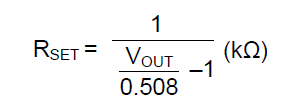
When you want to set the output to another value between 0.508 V to 1.35 V,  the only external component is a voltage selector resistor (RSET).

This component is not involved in power conversion and can be a low power small one.
image

For ripple reduction, the module has input and output capacitors on board.

If your application is OK with the ripple figures of the device (documented in the datasheet), you don't need external capacitors.

If you need better filtering, you can add input and output capacitors. Guidelines are in that datasheet.

image


The device has additional functionality such as Power Good, under-voltage lockout and a possibility to externally synchronise the 4 MHz switching frequency.

Check this functional block diagram for the possibilities.

image


The Evaluation Module


As expected with hybrid componenst, there's not much more on the evaluation board than the  TPSM84A21TPSM84A21.

The only passives are a set of resistors to select different outputs, and to test the device enable, current limit, sync and power good.


image

The board gives you good access to all the interesting measure points. It also has footprints for additional capacitors if you want to test such a setup.

For the input and output rails, there are test points very close to the device. They are intended to be probed with an oscilloscope probe with ground spring.

This doesn't work that well with the probes of the Tektronix and Rigol scopes I have.

Their pins are thinker and the distance between center pin and ground spring wider than what the measure point on the PCB takes.

All other test points are solder-on loops that allow easy access with meter test leads or oscilloscope probes.


image

There's an empty footprint for a coax connector to sync the switcher's clock externally.


Test Setup


The EVM is connected to an electronic load that draw a current of up to 7.5 A. It can log the current and voltage measured.

The load is connected to the EVM with short thick wires. With these low voltages and high currents, resistance of the wire matters.

I'm using a linear power supply that can deliver more than enough power to feed the EVM at maximum load.

image

For measuring, I have a few DMMs and a 4 channel oscilloscope.


The PSU, load and oscilloscope are programmable. I can measure and log info in scenarios where the input voltage and output loads change over time.

Things I can automatically log:

  • Current at EVM input and output
  • Voltage at the EVM output
  • Any 4 points that I probe with the scope.


Let me know in the comments below if you're interested in particular load operating conditions o the EVM.

I will try the ones that I can perform with the above setup without damaging one of the components.


Edit: requests received:

  • image. efficiency compare to spec and Frank's review
  • image.  noise specification
  • automate efficiency measurement for input and load ranges
  • transient check


Related blog
TI SWIFTTm Power Module EVM RoadTest: Module Review and Test Setup
TI SWIFTTm Power Module EVM RoadTest: Noise Measurements
TI SWIFTTm Power Module EVM RoadTest: Efficiency
  • Sign in to reply

Top Comments

  • fmilburn
    fmilburn over 8 years ago +4
    Hi Jan, It is nice to see your electronic load in action. I will be interested to see how well my efficiency measurements match yours. I am also interested in seeing how the TI transient response curves…
  • Jan Cumps
    Jan Cumps over 8 years ago +4
    Temperature after running 4 hours at 0.6 V 7.5 A, with a 14 V input: 42.5° C
  • Jan Cumps
    Jan Cumps over 8 years ago in reply to fmilburn +4
    He Frank, I'll do the efficiency measurements and compare. I'd be surprised if they'd differ significantly. For the transients, I don't know (yet) if I'm well equipped. jc2048 hes profiled the transient…
  • genebren
    genebren over 8 years ago

    Nice road test report.  I look forward to seeing more of your data as you move forward.  Have you characterized the noise levels on the output?  It would be interesting to see what the output looks like.  Nice to see your load in action.

    Gene

    • Cancel
    • Vote Up +3 Vote Down
    • Sign in to reply
    • More
    • Cancel
  • DAB
    DAB over 8 years ago

    Nice road test report.


    DAB

    • Cancel
    • Vote Up +1 Vote Down
    • Sign in to reply
    • More
    • Cancel
  • Jan Cumps
    Jan Cumps over 8 years ago in reply to fmilburn

    He Frank,

    I'll do the efficiency measurements and compare. I'd be surprised if they'd differ significantly.


    For the transients, I don't know (yet) if I'm well equipped. jc2048 hes profiled the transient capabilities of the load and they aren't cutting edge image.

    I haven't validated Jon's simulation data vs reality though. It's on the to-do list.

    • Cancel
    • Vote Up +4 Vote Down
    • Sign in to reply
    • More
    • Cancel
  • Jan Cumps
    Jan Cumps over 8 years ago

    Temperature after running 4 hours at 0.6 V 7.5 A, with a 14 V input: 42.5° C

    image

    • Cancel
    • Vote Up +4 Vote Down
    • Sign in to reply
    • More
    • Cancel
  • fmilburn
    fmilburn over 8 years ago

    Hi Jan,


    It is nice to see your electronic load in action. I will be interested to see how well my efficiency measurements match yours.  I am also interested in seeing how the TI transient response curves for load match your measurements as I did not have an electronic load suited to that measurement.


    Frank

    • Cancel
    • Vote Up +4 Vote Down
    • Sign in to reply
    • More
    • Cancel
<
element14 Community

element14 is the first online community specifically for engineers. Connect with your peers and get expert answers to your questions.

  • Members
  • Learn
  • Technologies
  • Challenges & Projects
  • Products
  • Store
  • About Us
  • Feedback & Support
  • FAQs
  • Terms of Use
  • Privacy Policy
  • Legal and Copyright Notices
  • Sitemap
  • Cookies

An Avnet Company © 2026 Premier Farnell Limited. All Rights Reserved.

Premier Farnell Ltd, registered in England and Wales (no 00876412), registered office: Farnell House, Forge Lane, Leeds LS12 2NE.

ICP 备案号 10220084.

Follow element14

  • X
  • Facebook
  • linkedin
  • YouTube