Hi there i have been away for a bit but now i am back with an update on my Little *** Project.
Little *** is my AI car i am building. I am no tech expert and i am putting this together through pure passion for modified cars and tech.
So lets get in to it....
Little *** AI – Project Update
The Little *** AI project is continuing to evolve from a modified car concept into a fully integrated AI-driven vehicle system combining embedded control, local AI processing, visual systems, sensors, and custom electronics.
The original goal was never to build a polished corporate system or a supercar-style showcase. The aim has always been to create something unique, experimental, modular, fun, repairable, and achievable using affordable hardware and a lot of hands-on design work.
This is still very much an active build and development project. A lot of the system is currently being prototyped, redesigned, rebuilt, and refined as the project evolves.
Current Core Hardware Direction
Planned Main AI System
-
Lenovo Legion 5 gaming laptop
-
Intel i7 CPU
-
RTX 3060 GPU
-
Local AI model hosting and processing
The next major step for the project is moving Little *** AI onto a dedicated RTX-powered laptop system to allow proper local AI processing inside the vehicle.
The goal is for the laptop to eventually handle:
-
local language models
-
voice processing
-
reasoning
-
future AI camera processing
-
advanced vehicle behaviours
The move to a dedicated RTX system comes from wanting faster local AI performance while still allowing the vehicle to operate offline when needed.
At the moment, I am still sourcing the laptop and hoping to have this side of the project moving properly by the end of June.
Vehicle Control & Embedded Systems
Current hardware already being integrated includes:
-
Raspberry Pi 5 (16GB)
-
M5Stack module
-
ESP32-S3 controllers
-
NodeMCU ESP8266 controllers
The Raspberry Pi 5 is currently acting as the main bridge between systems, controllers, sensors, networking, and future AI integration.
The M5Stack is planned to handle lightweight fast-response interaction and quick vehicle actions while the larger AI systems process deeper requests.
The ESP32-S3 and NodeMCU boards are being distributed throughout the vehicle to control:
-
lighting
-
visual effects
-
displays
-
sensors
-
future smart-mod systems
A lot of people ask why I use NodeMCUs and S3 boards instead of more expensive industrial hardware.
The answer is simple:
-
they are affordable
-
easy to replace
-
easy to prototype with
-
widely supported
-
ideal for modular experimentation
This project is heavily focused on practical iteration and learning through building rather than chasing expensive hardware for the sake of it.
Wiring Philosophy
Another thing people usually notice is the use of screw terminal adapters instead of permanently soldering every connection directly.
This is intentional.
The system is being designed to stay:
-
modular
-
serviceable
-
replaceable
-
easier to debug
When experimenting with large distributed electronics systems inside a vehicle, being able to quickly swap or isolate a controller is far more practical than repeatedly desoldering wiring.
Sensor Systems
Current and planned sensors include:
-
digital microphones
-
PIR sensors
-
human presence sensors
-
mmWave presence detection
-
AI camera systems
-
vehicle telemetry integration
The long-term goal is for the vehicle to eventually react differently depending on:
-
presence
-
interaction
-
environment
-
AI state
-
security/sentry conditions
Rear “Circuit Display” System
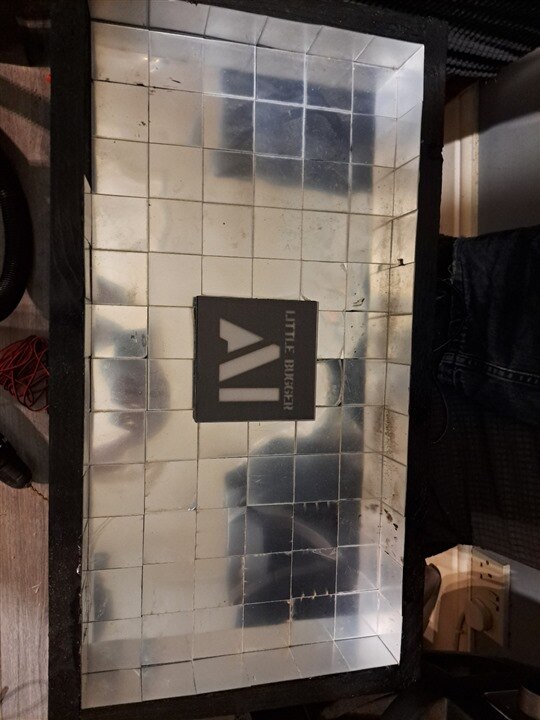
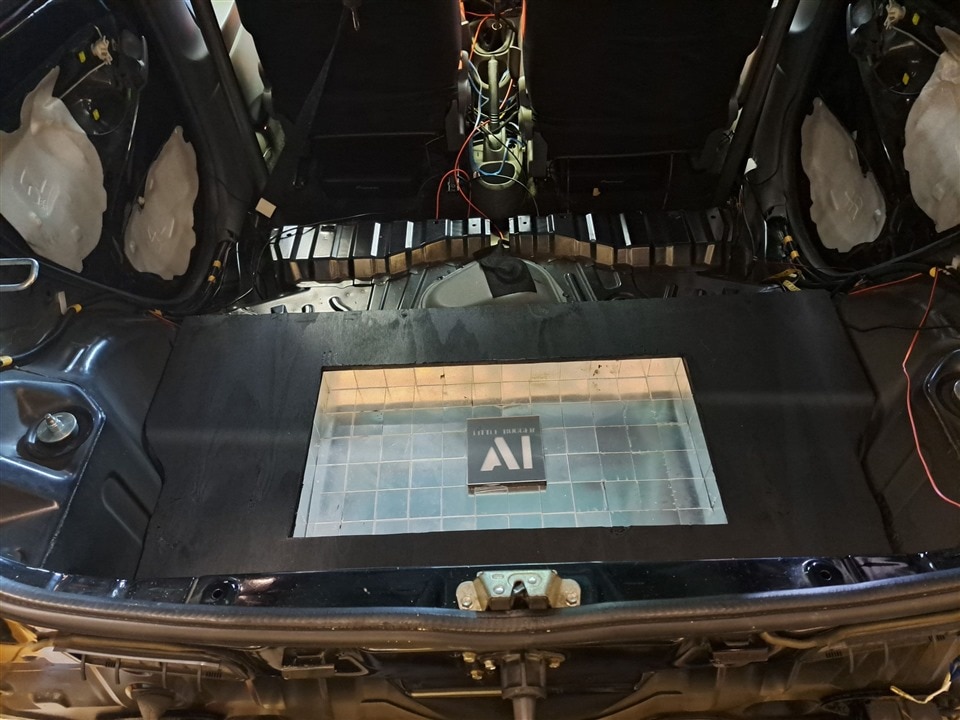
One of the biggest custom fabrication parts of the project so far has been the rear AI circuit display.
The display combines:
-
mirrored surfaces
-
custom-cut perforated hex paneling
-
distributed controller mounting
-
RGB lighting systems
-
a custom illuminated “processor core”
-
visible modular electronics
The processor core has recently been redesigned to use an 8x8 LED matrix behind an opal acrylic diffuser after earlier LED strip prototypes produced uneven lighting results.
The controller layout has also already gone through several redesigns to improve:
-
symmetry
-
accessibility
-
cable routing
-
serviceability
-
visual balance
The aim is to make the display feel less like decorative RGB lighting and more like an exposed AI-powered electronic system.
Software Direction
The software side is also slowly evolving into a more structured “Little *** AI” architecture.
The long-term goal is for the system to eventually support:
-
local-first AI operation
-
offline functionality
-
distributed controller communication
-
AI-assisted vehicle interaction
-
onboard visual and sensor feedback systems
-
sentry/security behaviours
-
Android head-unit integration
The system will likely eventually be designed around multiple layers including:
-
local AI reasoning
-
fast-response embedded systems
-
distributed controller nodes
-
vehicle state systems
-
visual feedback systems
A large amount of the AI side is still being actively planned and rebuilt as the hardware direction becomes more finalised.
Current Focus
Current development is mainly focused on:
-
controller integration
-
wiring architecture
-
visual system refinement
-
processor core behaviour
-
embedded communication systems
-
modular mounting systems
-
preparing the project for the future AI migration
There is still a huge amount left to build, redesign, and learn, but the project is finally starting to move from scattered prototypes into a more cohesive system.
More updates soon.