element14 Community
element14 Community
    Register Log In
  • Site
  • Search
  • Log In Register
  • Community Hub
    Community Hub
    • What's New on element14
    • Feedback and Support
    • Benefits of Membership
    • Personal Blogs
    • Members Area
    • Achievement Levels
  • Learn
    Learn
    • Ask an Expert
    • eBooks
    • element14 presents
    • Learning Center
    • Tech Spotlight
    • STEM Academy
    • Webinars, Training and Events
    • Learning Groups
  • Technologies
    Technologies
    • 3D Printing
    • FPGA
    • Industrial Automation
    • Internet of Things
    • Power & Energy
    • Sensors
    • Technology Groups
  • Challenges & Projects
    Challenges & Projects
    • Design Challenges
    • element14 presents Projects
    • Project14
    • Arduino Projects
    • Raspberry Pi Projects
    • Project Groups
  • Products
    Products
    • Arduino
    • Avnet & Tria Boards Community
    • Dev Tools
    • Manufacturers
    • Multicomp Pro
    • Product Groups
    • Raspberry Pi
    • RoadTests & Reviews
  • About Us
    About the element14 Community
  • Store
    Store
    • Visit Your Store
    • Choose another store...
      • Europe
      •  Austria (German)
      •  Belgium (Dutch, French)
      •  Bulgaria (Bulgarian)
      •  Czech Republic (Czech)
      •  Denmark (Danish)
      •  Estonia (Estonian)
      •  Finland (Finnish)
      •  France (French)
      •  Germany (German)
      •  Hungary (Hungarian)
      •  Ireland
      •  Israel
      •  Italy (Italian)
      •  Latvia (Latvian)
      •  
      •  Lithuania (Lithuanian)
      •  Netherlands (Dutch)
      •  Norway (Norwegian)
      •  Poland (Polish)
      •  Portugal (Portuguese)
      •  Romania (Romanian)
      •  Russia (Russian)
      •  Slovakia (Slovak)
      •  Slovenia (Slovenian)
      •  Spain (Spanish)
      •  Sweden (Swedish)
      •  Switzerland(German, French)
      •  Turkey (Turkish)
      •  United Kingdom
      • Asia Pacific
      •  Australia
      •  China
      •  Hong Kong
      •  India
      •  Japan
      •  Korea (Korean)
      •  Malaysia
      •  New Zealand
      •  Philippines
      •  Singapore
      •  Taiwan
      •  Thailand (Thai)
      •  Vietnam
      • Americas
      •  Brazil (Portuguese)
      •  Canada
      •  Mexico (Spanish)
      •  United States
      Can't find the country/region you're looking for? Visit our export site or find a local distributor.
  • Translate
  • Profile
  • Settings
FPGA
  • Technologies
  • More
FPGA
Blog Hardware Accelerator for Hyperspectral Image Processing
  • Blog
  • Forum
  • Documents
  • Quiz
  • Events
  • Polls
  • Files
  • Members
  • Mentions
  • Sub-Groups
  • Tags
  • More
  • Cancel
  • New
Join FPGA to participate - click to join for free!
  • Share
  • More
  • Cancel
Group Actions
  • Group RSS
  • More
  • Cancel
Engagement
  • Author Author: afernandez
  • Date Created: 14 Jul 2026 7:12 AM Date Created
  • Views 88 views
  • Likes 8 likes
  • Comments 3 comments
  • fpga_projects
  • fpga
  • vhdl
  • fpga-project
  • dsp
  • systemverilog
  • verilog
  • hardware_accelerators
Related
Recommended

Hardware Accelerator for Hyperspectral Image Processing

afernandez
afernandez
14 Jul 2026
Hardware Accelerator for Hyperspectral Image Processing

Hi, community!

I’m writing this post because I’d like to share one of the projects I have been working on, a hardware accelerator written in SystemVerilog for processing hyperspectral image vectors.

First of all, I want to give some context about this project.

Unlike a normal RGB image, a hyperspectral image can contain tens or even hundreds of spectral bands for each pixel. This makes this technology very useful for agriculture, environmental monitoring, remote sensing or material identification, but it also generates a large amount of data that must be processed.

For this reason, I wanted to explore how some vector operations could be moved from software to dedicated hardware, reducing the workload of the main processor.

The accelerator

The current version supports two operations:

  • Dot product
  • Cross product

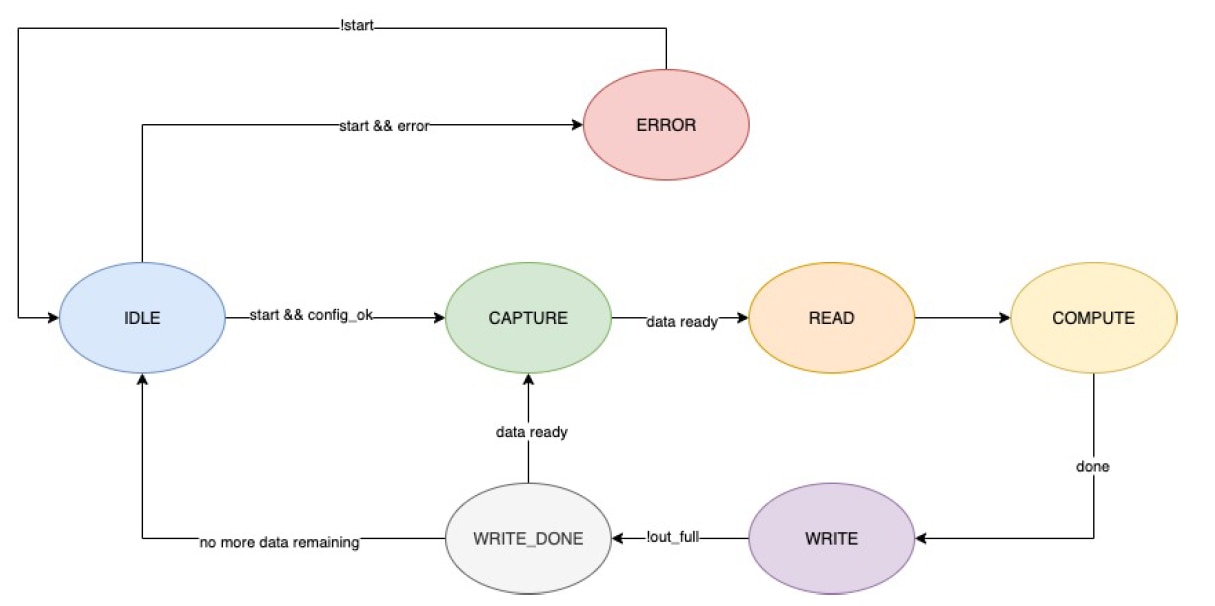
The design uses two input FIFOs and one output FIFO. Internally, a finite-state machine controls the complete process, from reading the vectors to calculating and storing the result.
image

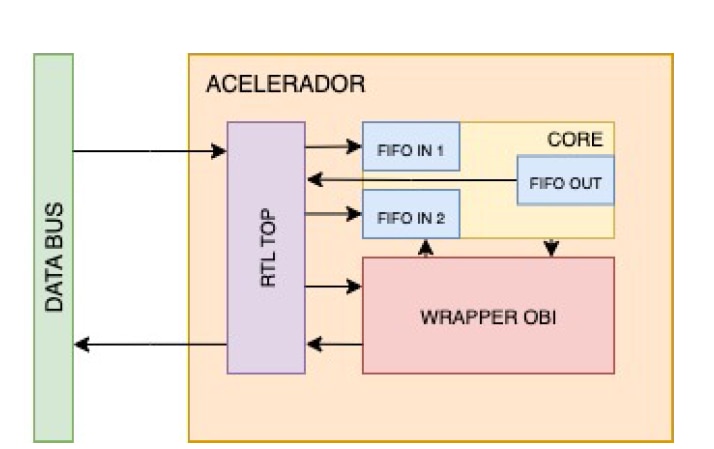
I also developed a wrapper with an OBI-compatible register interface, allowing the processor to configure the operation, select the number of bands, start the accelerator and read its busy, done and error status.
image

The accelerator was integrated into the X-HEEP ecosystem, using a RISC-V processor for control and a DMA controller to transfer the input and output data without requiring continuous CPU intervention.

Verification

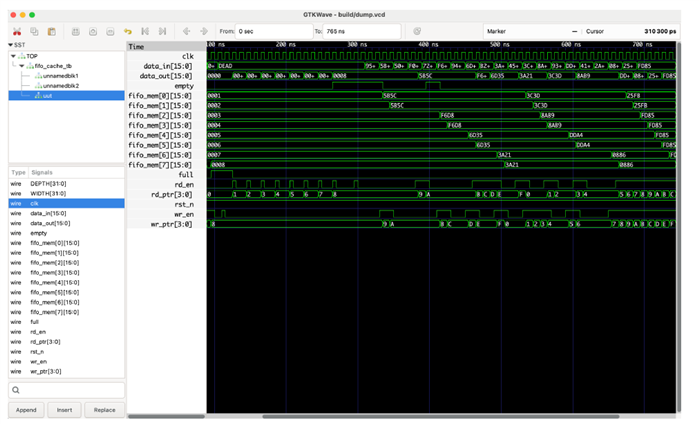
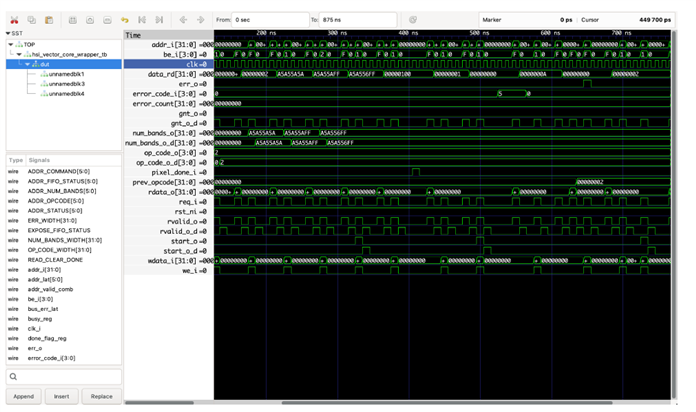
For verification, I used Verilator together with C++ testbenches.

I created individual tests for:

  • The FIFO memories
  • The vector processing core
  • The OBI wrapper
  • The complete integrated accelerator

The testbenches verify normal operations, invalid configurations, empty and full FIFO conditions, signed calculations and register access.
imageimage

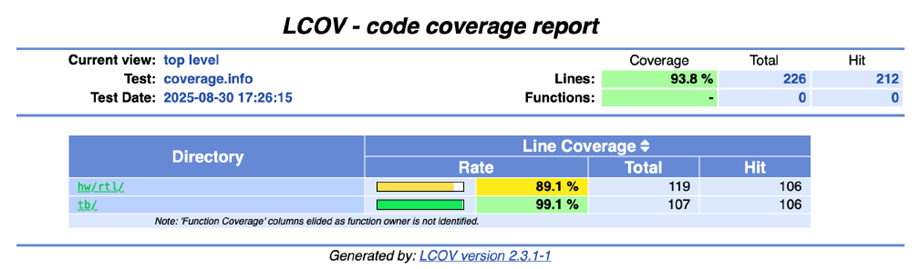
The simulations achieved more than 90% coverage over the instrumented lines and signals. I also generated VCD files to inspect the internal behaviour using GTKWave.
image

Results

The functional tests confirmed that the accelerator correctly performs the dot and cross products and responds correctly to invalid operations and boundary conditions.

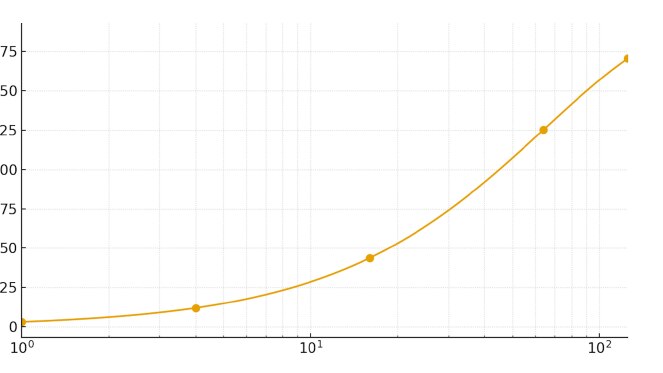
For the cross product, the latency per pixel becomes stable once the finite-state machine has started processing data.

For the dot product, the latency increases linearly with the number of spectral bands because the multiply-accumulate operations are performed sequentially.

The tests also showed something very important: the vector core itself was not the main bottleneck in the evaluated workloads.

The largest limitation came from moving data between memory and the accelerator.

The DMA introduces a fixed startup delay for every transfer. Because each operation requires two input transfers and one output transfer, this overhead has a significant impact when processing only a small number of vectors.

As a result, the software version can still be competitive for small datasets. The hardware accelerator becomes more useful with medium or large datasets, when the initial DMA cost can be distributed across more operations.

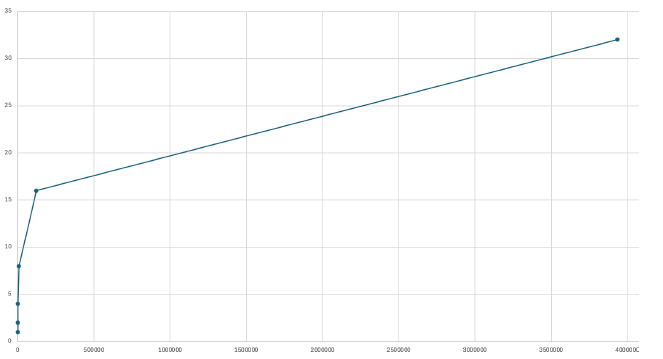
The measurements up to 4000000 vectors also showed a mostly linear behaviour, without clear memory saturation or cache-related steps in the evaluated range.
imageimage

Image above shows the latency vs the compute data size for the vectorial product operations.

Conclusions

The main conclusion from this project is that developing the arithmetic unit is only one part of hardware acceleration.

The complete system performance also depends heavily on the memory architecture, bus bandwidth and data-transfer strategy.

The accelerator demonstrated that a custom SystemVerilog block can be successfully integrated into an open RISC-V platform and operate autonomously through an OBI interface and DMA transfers.

However, using dedicated hardware does not automatically make every workload faster. For small datasets, the communication overhead can cancel out the benefit of the accelerator.

For larger workloads, the hardware solution becomes more interesting because the fixed transfer cost is amortised and the CPU is released to perform other tasks.

In future versions, I would like to explore double buffering and overlapping DMA transfers with computation. I also want to support larger spectral vectors, improve the internal accumulator and finally synthesise the design on an FPGA to analyse resource usage, maximum frequency and power consumption.

One of the biggest lessons I learned is that a good accelerator must not only calculate quickly: it must also receive and return data efficiently.

I’m very happy with the results so far, and I would love to hear your feedback and suggestions!

If any person want to get mor info about this project I can share the github link.

  • Sign in to reply
Parents
  • DAB
    DAB 14 hours ago

    I worked on an extensive hyperspectral analysis station before I retired.

    We did a lot of analysis on computer architectures available to process the data and create hyperspectral vectors for locating targets of interest in all of the data.

    We had a lot of technics for simplifying the data using fairly strait forward math.

    Your approach looks interesting for certain types of data operations.

    Send me your link so I can look at it in more detail.

    • Cancel
    • Vote Up 0 Vote Down
    • Sign in to reply
    • More
    • Cancel
Comment
  • DAB
    DAB 14 hours ago

    I worked on an extensive hyperspectral analysis station before I retired.

    We did a lot of analysis on computer architectures available to process the data and create hyperspectral vectors for locating targets of interest in all of the data.

    We had a lot of technics for simplifying the data using fairly strait forward math.

    Your approach looks interesting for certain types of data operations.

    Send me your link so I can look at it in more detail.

    • Cancel
    • Vote Up 0 Vote Down
    • Sign in to reply
    • More
    • Cancel
Children
  • afernandez
    afernandez 2 hours ago in reply to DAB

    Of course! This is the link to the github project!

    GitHub - afernandezLuc/HSI_ACCEL: SystemVerilog hardware accelerator for HSI vector operations, featuring reusable FIFO, Verilator/C++ testbenches and coverage reports. · GitHub

    I
    'm open to hear suggestions or make this project open to colaborate Slight smile

    • Cancel
    • Vote Up 0 Vote Down
    • Sign in to reply
    • More
    • Cancel
element14 Community

element14 is the first online community specifically for engineers. Connect with your peers and get expert answers to your questions.

  • Members
  • Learn
  • Technologies
  • Challenges & Projects
  • Products
  • Store
  • About Us
  • Feedback & Support
  • FAQs
  • Terms of Use
  • Privacy Policy
  • Legal and Copyright Notices
  • Sitemap
  • Cookies

An Avnet Company © 2026 Premier Farnell Limited. All Rights Reserved.

Premier Farnell Ltd, registered in England and Wales (no 00876412), registered office: Farnell House, Forge Lane, Leeds LS12 2NE.

Follow element14

  • X
  • Facebook
  • linkedin
  • YouTube