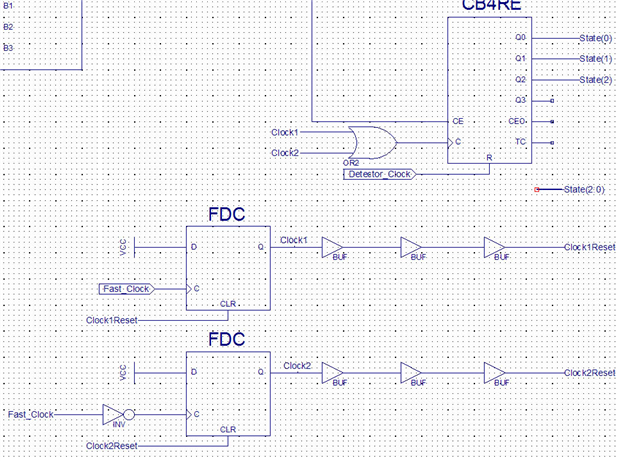
I tried to take a naïve approach to (if needed) toggle an output pin either on the rising or falling edge of clock signal.
Line 17 below:
entity variable_clock is
    Port (
      clk_i    : in  STD_LOGIC;
      resetn_i : in  STD_LOGIC;
      ticks_i  : in  STD_LOGIC_VECTOR (7 downto 0);
      clk_o    : out STD_LOGIC
    );
end variable_clock;

architecture Behavioral of variable_clock is
  signal counter_s: natural range 0 to 2**ticks_i'length-1 := 0;
  signal clk_out_s: STD_LOGIC := '0';
begin

process (clk_i, resetn_i)
begin
  if rising_edge(clk_i) then
    if resetn_i = '0' then
      counter_s <= 0;
      clk_out_s <= '0';
    else
      if counter_s >= unsigned(ticks_i) then -- >= because the value can change
        counter_s <= 0;
        clk_out_s <= not clk_out_s;
      else
        counter_s <= counter_s + 1;
      end if;
      clk_o <= clk_out_s;
    end if;
  end if;
end process;

end Behavioral;
This synthesises without errors, but the output is identical when I use
if rising_edge(clk_i) then
or
if (rising_edge(clk_i) or falling_edge(clk_i)) then
Not double speed when using both edges, as the naïve me would expect.
Internet has many opinions and warnings on this subject - both for simulation and synthesis. Your thoughts?