


My first bonus design is a remote light organ. I've built it with an Arduino Yún, the Infineon RGB Led Shield and a bunch of LEDs.
Part 1 was my log on the build, and trying out if the Arduino-to-Infineon-toLEDs works.
In part 2, I'm showing off the completed design.
It Didn't Work Just Like That
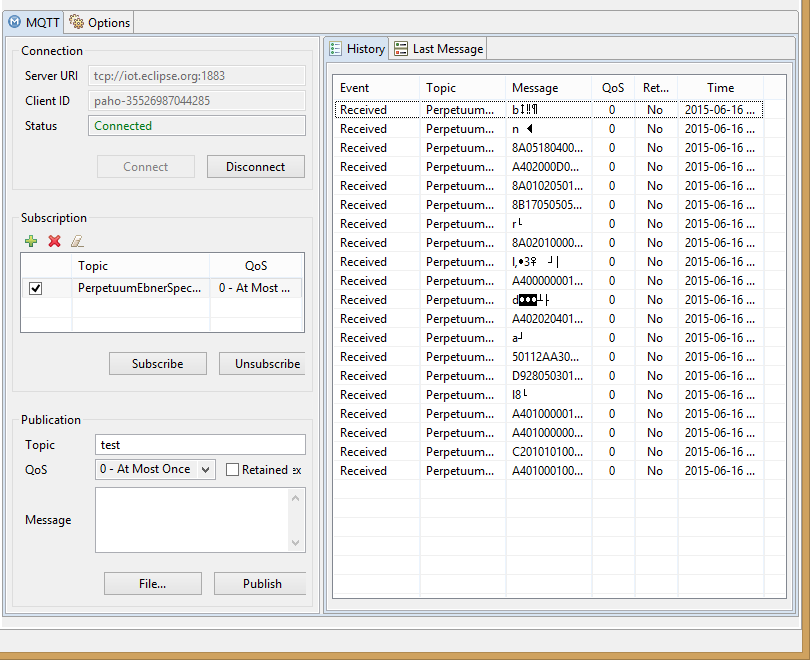
I had issues getting it to work with a 64 char payload. I have some candidate root causes for that, but it's hard to get to the bottom without debugger (I think it is my mechanism to use a char array as payload).
I spent some time riddling my code with println()s and stared at it for a long time, to no avail. So I took the easy way out.
I've reduced my frequency spectrum bucket array from 64 to 32 buckets. That's enough for my purpose - I want to drive a 16*2 LCD in Bonus 2, and 32 data points will be enough..
This video shows the action. Appreciate the huge delay that I have  This is nowhere near to real time light effects.
The next design challenge I promise to spend more time in sound programming and performance. This time I only spent time in getting things working somehow.
Why don't you improve my code? It's all here.
I bet I'm off where I'm reverting the 64 bucket list to smaller on the server, and again when I'm reading that same bucket list on the client.
Go ahead and slam those bugs in my face. That's how I learn.
The light organ server code, firmware for the Yún that's built into the turntable
// includes for servo
#include <Servo.h>


// includes for light organ
#include <fix_fft.h>


// MQTT  includes start
#include <Bridge.h>
#include <SPI.h>
#include <YunClient.h>
#include <IPStack.h>
#include <Countdown.h>
#include <MQTTClient.h>


#include <string.h>
// MQTT includes end


// servo declaration


Servo servo;


#define SERVO_PIN 9
#define SERVO_DELAY 25
#define SERVO_BASE 90
#define SERVO_TOP (SERVO_BASE + 61)


int servoPos = SERVO_BASE;
bool servoUp = false;


// light organ declaration


#define MUESTRAS 128           // Numero de muestras para el cálculo de la FFT
#define LOGM 7                 // Logaritmo en base 2 del número de muestras


#define BAJOS_MEDIOS 7         // Nº de banda para el corte entre Bajos y Medios
#define MEDIOS_AGUDOS 35       // Nº de banda para el corte entre Medios y Agudos


#define BPIN  13                // Pin de salida Bajos
#define MPIN  12               // Pin de salida Medios
#define APIN  11               // Pin de salida Agudos
#define TIMERPIN 8


#define MAX_PASADAS 10         // Nº de pasadas para el cálculo de los lÃmites


char data[MUESTRAS];           // Array con los valores muestreados (parte real)
char im[MUESTRAS];             // Array con los valores muestreados (parte imaginaria)


unsigned char salida[MUESTRAS/2];  // Valores obtenidos de la FFT (espectro de 64 bandas)
unsigned char bajos,medios,agudos; // Valores calculados para cada canal


byte  pasada,                            // nº de pasada para el cáculo de los lÃmites
      acumBajos,acumMedios,acumAgudos,   // acumuladores de veces que se supera el lÃmite
      limBajos,limMedios,limAgudos;      // lÃmites calculados para cada canal


// start MQTT declarations
YunClient c; // replace by a YunClient if running on a Yun
IPStack ipstack(c);
MQTT::Client<IPStack, Countdown> client = MQTT::Client<IPStack, Countdown>(ipstack);
char payLoadBuf[MUESTRAS/2] = {}; // I'm going to give one byte per range, so that I can choose to implement a graph if I want.
const char* send_topic = "PerpetuumEbnerSpectrum";
const char* _id = "1cfee8dd0afc_yun_syberia";
// end MQTT declarations


// both:
// decay is a decreasing counter that tells how long the servo will stay up after the last led flashed.
// reset to DECAY each time a led lights up
// looses one live each time no leds are active
#define DECAY 150U
unsigned int uDecay = 0U;


// servo functionality


void servoInit() {
    servoUp = false;
    servo.attach(SERVO_PIN);
    servoPos = SERVO_BASE;
    servo.write(SERVO_BASE);
    delay(1000);
}


void servoGoUp() {

  if (servoPos < SERVO_BASE) {
    servoInit();
  }

  if (servoPos < SERVO_TOP) {
    servoPos++;
    servo.write(servoPos);
    delay(SERVO_DELAY);
  }
}


void servoGoDown() {

  if (servoPos < SERVO_BASE) {
    servoInit();
  }

  if (servoPos > SERVO_BASE) {
    servoPos--;
    servo.write(servoPos);
    delay(SERVO_DELAY);
  }
}


void servoGo() {
  if (servoUp) {
    servoGoUp();
  } else {
    servoGoDown();
  }
}


// light organ fuctions


/*
* Funcion que aplica una ventana de Hann a los datos muestreados para reducir el
* efecto de las discontinuidades en los extremos
*/
void aplicaVentana (char *vData) {
    double muestrasMenosUno = (double(MUESTRAS) - 1.0);
  // Como la ventana es simétrica , se calcula para la mitad y se aplica el factor por los dos extremos
    for (uint8_t i = 0; i < MUESTRAS/2 ; i++) {
        double indiceMenosUno = double(i);
        double ratio = (indiceMenosUno / muestrasMenosUno);
        double factorPeso = 0.5 * (1.0 - cos(6.28 * ratio));
  vData[i] *= factorPeso;
  vData[MUESTRAS - (i + 1)] *= factorPeso;
    }
}


void lightOrganSetup() {
    // Configuramos el prescaler a 32 -> 16Mhz/32 = 500 KHz
    // como cada conversion son 13 ciclos 500/13 ~ 38.4KHz
    // Es decir podemos medir en teoria hasta unos 19KHz,
    // que para este proyecto sobra.
    bitWrite(ADCSRA,ADPS2,1);
    bitWrite(ADCSRA,ADPS1,0);
    bitWrite(ADCSRA,ADPS0,1);


    // Como la señal es muy baja,utilizamos la referencia interna
    // de 1.1 V en vez de la de defecto de 5 V.
    analogReference(INTERNAL);

    // Salidas para los canales de Bajos,Medios y Agudos
    pinMode(BPIN,OUTPUT);
    pinMode(MPIN,OUTPUT);
    pinMode(APIN,OUTPUT);


    // debug
    pinMode(TIMERPIN,OUTPUT);
    Serial.begin(9600);


    // Variables para el cálculo de los lÃmites
    pasada = 0;
    acumBajos = acumMedios = acumAgudos = 0;
    limBajos = limMedios = limAgudos = 50;

  }


void lightOrganGo() {
    // Realizamos el muestreo
//    Serial.println("Start sampling:");
    digitalWrite(TIMERPIN, HIGH);
    for( int i=0; i < MUESTRAS; i++) {
       data[i] = analogRead(0)/4 -128;  //Convertimos de 0..1024 a -128..127
       im[i] = 0;                       // parte imaginaria = 0
    }
    digitalWrite(TIMERPIN, LOW);

/*
    {
    Serial.println(" samples\n");
    for( int i=0; i < MUESTRAS; i++) {
      Serial.print(data[i], DEC);
      Serial.print(",");
    }
    Serial.println(" ---");

    }
*/


    // Aplicamos la ventana de Hann
    aplicaVentana (data);


/*
    Serial.println(" window\n");
    for( int i=0; i < MUESTRAS; i++) {
      Serial.print(data[i], DEC);
      Serial.print(",");
    }
    Serial.println(" ---");
*/
    // Calculamos la FFT
    fix_fft(data,im,LOGM,0);

    // Sólo nos interesan los valores absolutos, no las fases, asi que
    // calculamos el módulos de los vectores re*re + im*im.
    // Dado que los valores son pequeños utilizamos el cuadrado
    for (int i=0; i < MUESTRAS/2; i++){
       salida[i] = data[i] * data[i] + im[i] * im[i];
       // the cloud message contains half of the buckets, each pair of buckets is mediated
       if (i % 2) { // uneven
         payLoadBuf[i/2] = (salida[i] + salida [i-1])/2;
       }
    }
/*
    Serial.println(" result\n");
     for( int i=0; i < MUESTRAS/2; i++) {
      Serial.print(salida[i], DEC);
      Serial.print(",");
    }
    Serial.println(" ---");
*/

    // Ahora repartimos las bandas entre las 3 salidas
    // En vez de sacar la media, utilizo sólo el valor máximo de
    // una banda
    bajos = 0;
    for (int i=2; i < BAJOS_MEDIOS; i++){
      bajos += salida[i];
    }
    bajos = bajos/2;

    medios = 0;
    for (int i=BAJOS_MEDIOS ; i < MEDIOS_AGUDOS; i++){
      medios += salida[i];
    }
    medios = medios/2;

    agudos = 0;
    for (int i=MEDIOS_AGUDOS; i < MUESTRAS/2; i++){
      agudos += /*2**/(salida[i]);   // jc 20150604 undid because Yun ADC more sensitive or so // 20150601 doubled the highs sesitivity
    }
    agudos = agudos/2;

   // Calculamos si el canal correspondiente
   // supera le lÃmite para encenderlo
   int siBajos  =  bajos  > limBajos;
   int siMedios =  medios > limMedios;
   int siAgudos =  agudos > limAgudos;

   digitalWrite(BPIN,siBajos ? HIGH : LOW);
   digitalWrite(MPIN,siMedios? HIGH : LOW);
   digitalWrite(APIN,siAgudos? HIGH : LOW);

   // Utilizamos las veces que se supera para
   // recalcular el lÃmite y evitar que con los
   // cambios de volumen los canales se saturen
   // o no funcionen.
   acumBajos  += siBajos;
   acumMedios += siMedios;
   acumAgudos += siAgudos;

   if ( ++pasada > MAX_PASADAS ) {
      pasada = 0;
      limBajos  = 20 + acumBajos*5;
      limMedios = 20 + acumMedios*5;
      limAgudos = 20 + acumAgudos*5;
      acumBajos  = 0;
      acumMedios = 0;
      acumAgudos = 0;
   }


   if (siBajos | siMedios /*| siAgudos*/) { // jc 20150601 renew lift up decay if a led is on,
                                            // ignore highs because I've made them more sensitive above
     uDecay = DECAY;
   } else if (uDecay > 0) {
     uDecay--;
   }

}


// MQTT start


char printbuf[100];


void mqttInit() {
//  Ethernet.begin(mac); // replace by Bridge.begin() if running on a Yun
  Bridge.begin();


  connect();
}


void connect()  // connect to the MQTT broker
{
  char hostname[] = "iot.eclipse.org";
  int port = 1883;
  sprintf(printbuf, "Connecting to %s:%d\n", hostname, port);
  Serial.print(printbuf);


  int rc = ipstack.connect(hostname, port);
  if (rc != 1)
  {
    sprintf(printbuf, "rc from TCP connect is %d\n", rc);
    Serial.print(printbuf);
  }

  Serial.println("MQTT connecting");
  MQTTPacket_connectData data = MQTTPacket_connectData_initializer;
  data.MQTTVersion = 3;
  data.clientID.cstring = (char*)_id;
  rc = client.connect(data);
  if (rc != 0)
  {
    sprintf(printbuf, "rc from MQTT connect is %d\n", rc);
    Serial.print(printbuf);
  }

  Serial.println("MQTT connected");

}


void sendMessage() {
  if (!client.isConnected())
    connect();

  MQTT::Message message;


  int rc;
  // Send QoS 1 message
  // // Serial.println(payLoadBuf);
  message.qos = MQTT::QOS1;
  message.retained = false;
  message.dup = false;
  message.payload = (void*)payLoadBuf;
//  message.payloadlen = MUESTRAS/2;
  message.payloadlen = MUESTRAS/8;
  rc = client.publish(send_topic, message);
}


// end MQTT functionality ==============================


// arduino general


void setup()
{


  Serial.begin(9600);
  delay(10000); // give me time to start the yun monitor
servoInit();
  lightOrganSetup();
  // MQTT related tasks
  mqttInit();
}


void loop()
{
static unsigned int counter = 0;


      client.yield(10); // this takes 30 ms. May reduce the parameter // if you get duplicates, increase


  /*
  // lift debug
  while (Serial.available() > 0) {
    uDecay = (Serial.parseInt());
  }
  */


  servoUp = (uDecay > 0);


  servoGo();
  lightOrganGo();
  if (uDecay > 0) {
    counter++;
    if (counter == 30) {


      counter = 0;
      sendMessage();
    }
  }

}
The light organ client code, firmware for the Yún that's built into the remote light organ
// needed for MQTT and Process lib
#include <Bridge.h>


// MQTT  includes start
#include <SPI.h>
#include <YunClient.h>
#include <IPStack.h>
#include <Countdown.h>
#include <MQTTClient.h>


#include <string.h>
// MQTT includes end


// INFINEON includes start
#include <Wire.h>
#include "Infineon.h"


// INFINEON declaration
  Infineon RGBLEDS = Infineon();


// light organ declaration
#define MUESTRAS 128           // Numero de muestras para el cálculo de la FFT


#define BAJOS_MEDIOS 4         // Nº de banda para el corte entre Bajos y Medios
#define MEDIOS_AGUDOS 10       // Nº de banda para el corte entre Medios y Agudos


#define MAX_PASADAS 10         // Nº de pasadas para el cálculo de los lÃmites


unsigned char bajos,medios,agudos; // Valores calculados para cada canal


byte  pasada,                            // nº de pasada para el cáculo de los lÃmites
      acumBajos,acumMedios,acumAgudos,   // acumuladores de veces que se supera el lÃmite


      limBajos,limMedios,limAgudos;      // lÃmites calculados para cada canal


// start MQTT declarations
char printbuf[100];


YunClient yc; // replace by a YunClient if running on a Yun
IPStack ipstack(yc);
MQTT::Client<IPStack, Countdown> client = MQTT::Client<IPStack, Countdown>(ipstack);
char payLoadBuf[MUESTRAS/2] = {}; // I'm going to give one byte per range, so that I can choose to implement a graph if I want.
const char* subscribe_topic = "PerpetuumEbnerSpectrum";
const char* _id = "1cfee8dd0afc_yun_paradise";
boolean bDataReceived = false;
// end MQTT declarations


// start timer functionality ============================================================
boolean bRunSeconds = false;
boolean bIsRunningSeconds = false;
boolean bRunMinutes = false;
boolean bIsRunningMinutes = false;
boolean bRunHours = false;
boolean bIsRunningHours = false;


void runSeconds() {
  bIsRunningSeconds = true;

  Serial.print("s"); // remove when confident


  if (bDataReceived) {
    bDataReceived = false;
    // Ahora repartimos las bandas entre las 3 salidas
    // En vez de sacar la media, utilizo sólo el valor máximo de
    // una banda
    bajos = 0;
    for (int i=2; i < BAJOS_MEDIOS; i++){
      bajos += payLoadBuf[i];
    }
    bajos = bajos/2;

    medios = 0;
    for (int i=BAJOS_MEDIOS ; i < MEDIOS_AGUDOS; i++){
      medios += payLoadBuf[i];
    }
    medios = medios/2;

    agudos = 0;
    for (int i=MEDIOS_AGUDOS; i < MUESTRAS/8; i++){
      agudos += /*2**/(payLoadBuf[i]);   // jc 20150604 undid because Yun ADC more sensitive or so // 20150601 doubled the highs sesitivity
    }
    agudos = agudos/2;

   // Calculamos si el canal correspondiente
   // supera le lÃmite para encenderlo
   int siBajos  =  bajos  > limBajos;
   int siMedios =  medios > limMedios;
   int siAgudos =  agudos > limAgudos;


   /*
   digitalWrite(BPIN,siBajos ? HIGH : LOW);
   digitalWrite(MPIN,siMedios? HIGH : LOW);
   digitalWrite(APIN,siAgudos? HIGH : LOW);
   */

  sprintf(printbuf, "Writing rgb: %d, %d, %d\n",
  siBajos, siMedios, siAgudos);
  Serial.print(printbuf);
    RGBLEDS.I2CWRITE6BYTES(ADDRESS, INTENSITY_RGB, siBajos*0xFFF, siMedios*0xFFF, siAgudos*0xFFF);


   // Utilizamos las veces que se supera para
   // recalcular el lÃmite y evitar que con los
   // cambios de volumen los canales se saturen
   // o no funcionen.
   acumBajos  += siBajos;
   acumMedios += siMedios;
   acumAgudos += siAgudos;

   if ( ++pasada > MAX_PASADAS ) {
      pasada = 0;
      limBajos  = 20 + acumBajos*5;
      limMedios = 20 + acumMedios*5;
      limAgudos = 20 + acumAgudos*5;
      acumBajos  = 0;
      acumMedios = 0;
      acumAgudos = 0;
   }

  }

  bRunSeconds = false;
  bIsRunningSeconds = false;
}


void runMinutes() {
  bIsRunningMinutes = true;


  bRunMinutes = false;
  bIsRunningMinutes = false;
}


void runHours() {
  bIsRunningHours = true;


  bRunHours = false;
  bIsRunningHours = false;
}


void timerInit() {
  // initialize timer1 for 1 second ticks; ISR(TIMER1_COMPA_vect) will be called as interrupt handler
  noInterrupts();           // disable all interrupts
  TCCR1A = 0;
  TCCR1B = 0;
  TCNT1  = 0;


  OCR1A = 62500;            // compare match register 16MHz/256/1Hz
  TCCR1B |= (1 << WGM12);   // CTC mode
  TCCR1B |= (1 << CS12);    // 256 prescaler
  TIMSK1 |= (1 << OCIE1A);  // enable timer compare interrupt
  interrupts();             // enable all interrupts
}


ISR(TIMER1_COMPA_vect)          // timer compare interrupt service routine
{
  static unsigned int uSeconds = 0;
  uSeconds++; // every call is a second
  bRunSeconds = true; // so yes, flag that the seconds handler should be called
  bRunMinutes = ! (uSeconds % 60); // each 60th second, flag that the minutes handler should be called
  if (uSeconds > 3599) { // every hour
    bRunHours = true; // flag that the hours handler should be called
    uSeconds = 0; // and start over
  }
}


void timerTasks() {
  if (bRunSeconds && ! bIsRunningSeconds) { // timer interrupt flagged that seconds handler should be called
    runSeconds(); // but we only run it if it's not active
  }
  if (bRunMinutes && ! bIsRunningMinutes) { // timer interrupt flagged that minutes handler should be called
    runMinutes(); // but we only run it if it's not active
  }
  if (bRunHours && ! bIsRunningHours) { // timer interrupt flagged that hours handler should be called
    runHours(); // but we only run it if it's not active
  }
}


// end timer functionality =====================================


// start MQTT functionality ====================================


void mqttInit() {
//  Ethernet.begin(mac); // replace by Bridge.begin() if running on a Yun
  Bridge.begin();


  Serial.println("Enchanted Objects Remote Light Organ");
  connect();
}


void messageArrived(MQTT::MessageData& md) // this handler is called when a subscribed MQTT message arrives
{
  MQTT::Message &message = md.message;
  bDataReceived = true;

  // big chance that I'm off here by translating bytes, words, chars. But I Don't Have A Debugger in the Arduino IDE to Check.
  for (int ii = 0; ii < message.payloadlen; ii++ ) {
    payLoadBuf[ii] = ((char*)message.payload)[ii];
  }
  // debug code
  sprintf(printbuf, "Message arrived: len %d, retained %d, dup %d, packetid %d\n",
  message.payloadlen, message.retained, message.dup, message.id);
  Serial.print(printbuf);
/*
  sprintf(printbuf, "Payload %s\n", (char*)message.payload);


  Serial.print(printbuf);

  // sprintf(printbuf, "Topic len %d\n", md.topicName.lenstring);
  int i;
  for (i = 0; i < (md.topicName.lenstring.len); i++) {
    printbuf[i] = md.topicName.lenstring.data[i];
  }
  printbuf[(md.topicName.lenstring.len)]=  '\n';
  printbuf[md.topicName.lenstring.len + 1]=  0;

  */
}


void connect()  // connect to the MQTT broker
{
  char hostname[] = "iot.eclipse.org";
  int port = 1883;
  sprintf(printbuf, "Connecting to %s:%d\n", hostname, port);
  Serial.print(printbuf);
  int rc = ipstack.connect(hostname, port);
  if (rc != 1)
  {
    sprintf(printbuf, "rc from TCP connect is %d\n", rc);
    Serial.print(printbuf);
  }

  // // Serial.println("MQTT connecting");
  MQTTPacket_connectData data = MQTTPacket_connectData_initializer;
  data.MQTTVersion = 3;
  data.clientID.cstring = (char*)_id;
  rc = client.connect(data);
  if (rc != 0)
  {
    sprintf(printbuf, "rc from MQTT connect is %d\n", rc);
    Serial.print(printbuf);
  }
  Serial.println("MQTT connected");
  rc = client.subscribe(subscribe_topic, MQTT::QOS1, messageArrived);
  if (rc != 0)
  {
    sprintf(printbuf, "rc from MQTT subscribe is %d\n", rc);
    Serial.print(printbuf);
  }
  Serial.println("MQTT subscribed");

}


// end MQTT functionality ==============================


// start INFINEON functionality =====


void rgbSetup() {
    Wire.begin();
    Serial.println("polling led shield...");
    while (RGBLEDS.on != 1) // Wait for shield to respond, keep setting the values till it does
    {

      Serial.println("led shield setup");


      RGBLEDS.I2CWRITE2BYTES (ADDRESS, FADERATE, 0x0000); // Immediate fade
      Serial.println("faderate set up");
      RGBLEDS.I2CWRITE2BYTES (ADDRESS, DIMMINGLEVEL, 0x0000); // 0% brightness level
      RGBLEDS.on = RGBLEDS.I2CREAD(ADDRESS, READ_DIMMINGLEVEL); // Request for brightness level
      if (RGBLEDS.message == 1 && RGBLEDS.on == 0) // If message received and dimming level = 0%, "message" is set in the I2CREAD function
      {
        Serial.println("message check for 0");
        RGBLEDS.message = 0;
        RGBLEDS.on = 1; // break out of loop
      }
    }
    RGBLEDS.I2CWRITE2BYTES (ADDRESS, OFFTIME_RED, 0x38); // Set off-time of red channel to 0x38
    RGBLEDS.I2CWRITE2BYTES (ADDRESS, OFFTIME_GREEN, 0x38); // Set off-time of green channel to 0x39
    RGBLEDS.I2CWRITE2BYTES (ADDRESS, OFFTIME_BLUE, 0x38); // Set off-time of blue channel to 0x38
    RGBLEDS.I2CWRITE6BYTES (ADDRESS, CURRENT_RGB, 0x05, 0x05, 0x05); // max:  0x80 = 780mA, I need 15 for standard leds, (0x03), but dimmed down to 0x02 because that's enough as max
    RGBLEDS.I2CWRITE2BYTES (ADDRESS, FADERATE, 0x0000); // Fade Rate between intensities --> 0.0s
    RGBLEDS.I2CWRITE2BYTES (ADDRESS, WALKTIME, 0x0000); // walk time between colors = 0s
    RGBLEDS.I2CWRITE6BYTES (ADDRESS, INTENSITY_RGB, 0x0555, 0x0555, 0x0555); // low level White Light
    RGBLEDS.I2CWRITE2BYTES (ADDRESS, DIMMINGLEVEL, 0x0FFF); // Maximum dimming level means inensity settings are directly used
    Serial.println("led shield active \n");
}


// end infineon functionality ======


void setup()
{


  Serial.begin(9600);
  delay(10000); // give me time to start the yun monitor


  // MQTT related tasks
  mqttInit();

  // INFINEON related tasks
  rgbSetup();


  // timer related tasks
  timerInit();
}


void loop()
{

  timerTasks();


   // task: keep MQTT alive
  client.yield(10); // this takes 30 ms. May reduce the parameter // if you get duplicates, increase


}
.